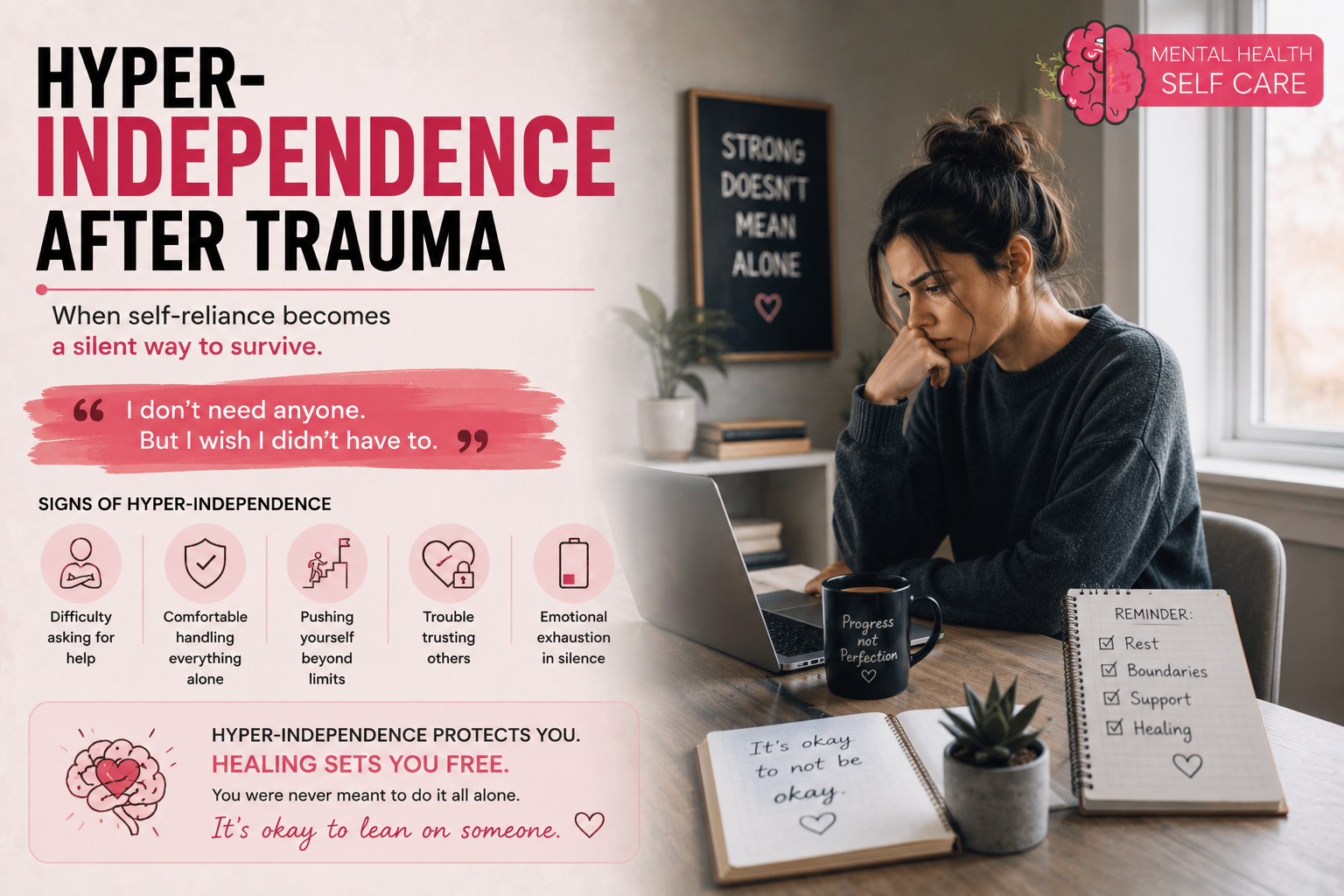
Hyper-Independence After Trauma explains a situation where previous emotional pain, abandonment, betrayal, or instability can lead a person to feel more secure when she does everything independently than when relying on other individuals. Health in itself is independent. The issue starts with self-reliance standing so tall that the idea of seeking help arouses anxiety, vulnerability becomes a cause of danger, and the feeling of being helped cannot be easily achieved.
External signs can make people with hyper-independence appear very competent. They work things out by themselves, seldom seek assistance, and are proud to need no one. Internally, this autonomy can be motivated by the feeling that other people can be relied upon or that relying on somebody will lead to disappointment later.
Learning about the relation between hyperindependence and trauma may assist individuals in clarifying the difference between true self-confidence and a survival mechanism that now might be restricting relationships and emotional health.
Why Does Hyper-Independence After Trauma Develop?
Hyper-independence cannot be considered a mental health diagnosis; neither can everyone who prefers to be independent be affected by trauma. Nevertheless, harsh experiences can teach certain individuals that relying on others is unsafe. What starts as an emotional defense can later become a pattern that continues automatically, even in the presence of supportive individuals.
You Learned Not to Depend on Others
Abuse during childhood: emotional neglect, being inconsistently attended to, abandoning a child, or failing to help an orphan (or someone else) are all ways of teaching people that support is not always guaranteed. They start learning to meet their needs instead of risking disappointment again. This reaction would have come in handy in a volatile setting. Later in life, this belief can become hard to get along with due to the fact that it is still emotionally dangerous to get help.
Vulnerability Became Associated With Pain
Victims of criticism, manipulation, rejection, or betrayal after displaying vulnerability might be taught to keep their emotional needs secret. They no longer seek reassurance or say when they are going through something. Soon, it becomes a defense mechanism to look good. Hyper-Independence After Trauma may thus extend beyond doing things independently. It may also mean rejecting emotional support, since openness feels scarier than carrying the burden alone.
Control Creates a Sense of Safety
Reliance creates an element of uncertainty. They may frustrate you, misinterpret you, or choose differently. Doing it all yourself eliminates some of that confusion and may eventually create an illusion of control. The challenge is presented when emotional safety needs to be controlled. Passing tasks on, trusting someone, or asking for help can then cause unequal uneasiness.
Signs Hyper-Independence After Trauma Is Unhealthy
Resourcefulness and ability should not be a problem per se. Healthy independence enables an individual to work independently while remaining open to receiving assistance when reasonable. Hyper-Independence After Trauma becomes problematic when refusing assistance repeatedly leaves you exhausted, strains relationships, or prevents true emotional intimacy.
Asking for Help Feels Uncomfortable
You might spend hours struggling with something you would easily ask another person to help with. Requesting assistance may bring guilt, embarrassment, or anxiety, even in the face of defeat. You might fear that the fact that you need help makes you weak or that you have something you are obliged to do that is beyond your power. Such denial may transform manageable issues into unwarranted emotional and physical fatigue.
You Struggle to Trust People
Hyper-independent people may believe that depending on someone will end in disappointment. They often make contingencies, avoid assigning key duties, and stay emotionally closed even with trusted individuals. Reasonable as caution may be, when you more or less automatically suspect everyone who fails to pass your scrutiny, existing relationships are not able to be judged on their own merits.
You Take on Too Much
The initial desire to do it all on your own might seem efficient, as you are in charge. In due course, duties build up. Work, household chores, family and emotional issues, and personal difficulties are all handled without the assistance of others until fatigue sets in. Hyper-independence as a consequence of trauma may thus lead to chronic stress owing to the fact that they never have support as part of their coping process.
Relationships Stay Emotionally Distant
Healthy relationships require some degree of mutual reliance. When an individual denies the need, care, or opportunity to be assisted by others, his counterpart or friends will feel unwanted or excluded. The hyper-independent individual can be very fond of others, and he may not be emotionally detached. Self-protection may inadvertently lead to the loneliness it was meant to guard against in the long run.
How to Heal From Hyper-Independence After Trauma?
To recover does not mean becoming dependent on other human beings or losing inner personal power. The aim is to build healthy interdependence, understand that you can look after yourself, and realize there is nothing wrong with getting relevant support. The process of changing hyper-independence after trauma involves gradually shifting the belief that you must always be safe and do everything by yourself.
Start With Small Requests
Trust doesn’t have to start with immense personal vulnerability. Get somebody to do you a little favor, leave a task that you can handle, or take someone up on his offer. These experiences bring up new evidence that support is not always accompanied by failure and a loss of control.
Notice Automatic Refusal
Listen for instances when you are sure you can handle it. Ask whether it is really easier to deal with it on your own or whether it is merely uncomfortable to accept anyone helping you. Understanding the distinction between capability and emotional avoidance can reveal areas where hyper-independence is dictating your choices.
Build Trust Gradually
Trust problems that are caused by trauma are irreversible. Give others an opportunity to prove themselves and be reliable, rather than forcing trust. Healthy boundaries can exist as emotional openness builds slowly. The idea is not to trust everybody. The lesson is that some people are trustworthy.
Consider Professional Support
Where Hyper-Independence After Trauma is so intricately linked with trauma, abandonment, neglect, or betrayal, professional counseling may assist in determining the beliefs that serve to perpetuate the pattern. Mental Health Self-Care offers individualized treatment that helps people examine feelings, triggers, and reinforcing beliefs, restore trust, and develop more effective support strategies.
Conclusion
Extreme self-reliance may appear to be a strength due to their hyper-independence, but trauma can conceal fear, mistrust, emotional exhaustion, and lack of acceptance of support. Leading a life without any support can be good, but that independence isn’t healthy when you believe no one can be contacted and that you are safe alone.
You don’t need to give up autonomy to heal. It means building enough emotional safety to decide when self-reliance suits you better and when dependence is more appropriate.
Mental health self-care assists people in coping with hyper-independence after trauma, emotional patterns, problems with trust, and relationship issues. With proper guidance and gradual change, you can still cope without having to bear all the weight single-handedly.
FAQs
1. What is Hyper-Independence After Trauma?
It describes extreme self-reliance that may develop after difficult experiences make depending on others feel unsafe, unreliable, or emotionally risky.
2. Is hyper-independence a trauma response?
It can be associated with trauma for some people, but it is not automatically evidence of trauma and is not a standalone clinical diagnosis.
3. What causes trauma-related hyper-independence?
Possible contributors include emotional neglect, abandonment, betrayal, inconsistent support, controlling relationships, or experiences where vulnerability resulted in emotional pain.
4. Is being highly independent unhealthy?
No. Independence becomes problematic when refusing support causes exhaustion, emotional isolation, relationship difficulties, or an inability to trust reliable people.
5. Can hyper-independence affect relationships?
Yes. Partners or friends may feel emotionally excluded when someone consistently refuses help, hides vulnerability, or avoids relying on others.
6. How do you heal hyper-independence?
Start by recognizing automatic self-reliance, accepting small amounts of help, building trust gradually, maintaining healthy boundaries, and addressing underlying emotional experiences.
7. Can counseling help with hyper-independence after trauma?
Counseling can help individuals explore why dependence feels unsafe, understand trauma-related patterns, develop healthier trust, and build balanced relationships without sacrificing autonomy.