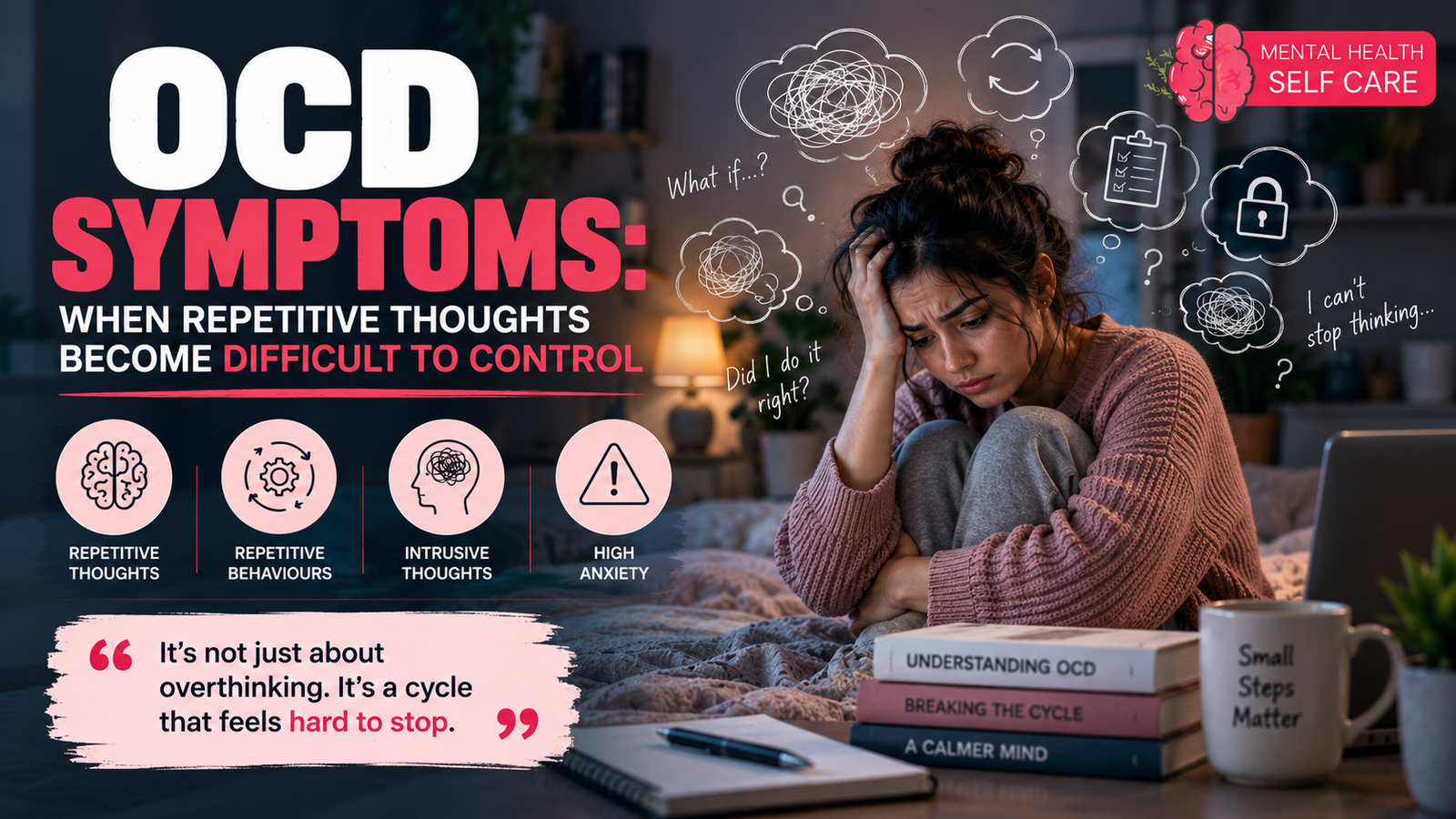
OCD Symptoms can include embarrassing thoughts, images, urges, or fears that cause distress, as well as the actions or mental rituals that a person feels the need to perform over and over again. Intrusive thoughts are normally intermittent, but when intrusive thoughts are difficult to cope with or interrupt normal life, OCD is more troubling.
People may then clean, inspect, count, seek reassurance, or practice psychological rituals to feel more secure. OCD is not just being persistently orderly, perfectionist, and over-vigilant. It is an established mental health condition, and there is proper scientific management.
How OCD Symptoms Develop
OCD is usually cyclic in nature, consisting of obsessions, anxiety and compulsions. An intrusive thought causes distress, and a ritual or repetitive behaviour temporarily alleviates it. Because the relief works, the individual may be motivated to use the same reaction each time the fear returns.
Intrusive Thoughts Feel Unwanted
Obsessions may take the form of unwanted thoughts, images, doubts, or urges. An individual can be afraid of contamination, causing someone harm (accidentally), making a severe error or doing something that is contrary to his/her values. These thoughts can contradict what the individual believes or desires. An intrusive thought does not mean a person wants to do it.
Compulsions Bring Temporary Relief
Compulsions are repeated actions or thoughts used to alleviate anxiety or avoid a feared outcome. Examples include handwashing, lock checking, arranging objects, counting, repeating words mentally, or seeking reassurance. The individual may know the ritual is excessive yet feel significant discomfort if they don’t give in. Because relief is not permanent, the process can repeat.
Common OCD Symptoms
OCD is not identified in all individuals. Some symptoms are observable, while others occur in the mind and are private.
Repeated Checking
Someone may repeatedly check whether the door is locked, an appliance is switched off, an email was sent correctly, or a task was completed. Once is normal. In OCD, the individual can repeat and repeat again and again even after being sure that they checked something, just to be certain that it does not seem strong enough.
Contamination Fears
Some people experience intense fears involving germs, illness, chemicals, bodily fluids, or contamination. These phobias can cause excessive washing and cleaning, avoiding certain places, or refusing to touch things. Avoidance may gradually affect work, travel, relationships, and daily routines.
Order and Mental Rituals
OCD Symptoms may include a need for things to be precise, symmetrical, or just right. An individual might repeat actions, count, perform repetitions, revisit memories, pray, or replace a negative thought with a positive one. Because most of these rituals happen internally, other people may not realise how much time and energy they take.
When Thoughts Become a Problem
Intrusive thoughts are normal at times, and habits are not necessarily signs of OCD. What matters is how hard the thoughts and rituals are to control, how much distress they cause, and whether they disrupt normal life.
They Consume Too Much Time
OCD can take over parts of the day. It can be more time-consuming to prepare because of cleaning or checking, and work can slow down because you have to check everything every time. NIMH observes that individuals with OCD usually spend over an hour a day on obsessions or compulsions, but diagnosis relies on the complete clinical picture.
You Start Avoiding Triggers
Another coping mechanism for obsessive fears can be avoidance. A person who is concerned about contamination might not want to go to a public place and another person who fears errors might not want to be responsible. Avoidance may offer short-term relief, but it progressively limits daily life.
Daily Life Starts Suffering
OCD Symptoms can have an impact on concentration, sleep, relationships, school, work and confidence. In cases where decisions become controlled by the symptoms or there is a restriction to normal activities, professional evaluation is significant.
How OCD Is Treated?
OCD is a curable disorder and evidence-based treatment can alleviate its effects. Anxiety, depression, trauma, and other conditions can also be accompanied by repetitive thoughts, which means that they need to be treated individually.
ERP and CBT
A specific type of cognitive behavioural therapy applied to OCD is exposure and response prevention or ERP. With professional guidance, an individual slowly learns to confront triggers without engaging in the usual compulsive response. With time, this may help to loosen the linkage between intrusive thoughts and compulsive responses.
Medication and Assessment
OCD may also be treated with medication, possibly in conjunction with psychotherapy. A doctor or other qualified prescribing professional can decide whether to use medication. Self-diagnosis using an online symptom list is not sufficient. Correct evaluation will assist in differentiating OCD from other disorders and finding appropriate treatment.
Why Choose Mental Health Self Care?
Repeating thoughts and emotional stress are tiring to live with. Mental Health Self Care offers stress and overthinking counselling, relationship problems, emotional burnout counselling, and other mental health issues. In case of symptoms indicative of OCD, diagnosis and evidence-based treatment by a duly qualified mental health care provider might be required as well.
500+ Counselling Sessions
Mental Health Self Care has had over 500+ counselling sessions, offering one-on-one counselling on various emotional and mental wellbeing issues.
5+ Years of Experience
With 5+ years of counselling experience, Radheshyam More can help people learn about emotional patterns, stressors, and coping challenges and refer them to specialist care when needed.
50+ Video Testimonials
There are over 50 video testimonials of clients who have been supported by Mental Health Self Care. Outcomes vary.
Conclusion
OCD Symptoms do not merely entail a fondness of cleanliness, order or routine. These could include intrusive thoughts and compulsive actions or mental rituals that go out of control and disrupt normal lives.
If time spent on repeated checking, washing, reassurance, mental rituals or avoidance is taking considerable time or causing distress, it is important to talk to a qualified mental health professional. ERP and CBT are evidence-based treatment methods that can assist a large number of individuals in handling OCD.
Mental health self-care can promote overall emotional health, reduce stress and overthinking, and help people identify when specialised clinical care may be appropriate. Radheshyam More offers individualised counselling that emphasises learning to interpret emotional challenges and develop healthier coping strategies.
FAQs
1. What are Symptoms of OCD?
The common symptoms are intrusive thoughts, repetitive checking, over-washing, counting, arranging, seeking reassurance, avoidance and mental rituals.
2. Do repetitive thoughts necessarily constitute OCD?
No. Repetitive thoughts may be present when stressed, anxious, depressed, traumatised, or due to other factors. OCD requires professional evaluation to determine whether it exists.
3. Is it possible that OCD can occur without any compulsions appearing?
Yes. Compulsions may be psychological, such as checking or questioning memories, using phrases repeatedly, counting, praying, or attempting to counteract unwanted mental states.
4. Do intrusive thoughts imply that I will act on them?
No. Intrusive thoughts may be unwanted and contrary to an individual’s values. Their existence alone does not mean someone wants to act on them.
5. Will OCD symptoms worsen due to stress?
Yes. During times of increased stress, OCD symptoms may become more pronounced or manifest.
6. What is the common treatment of OCD?
ERP is an evidence-based OCD treatment that is based on CBT. Depending on the individual, a doctor may also prescribe medication.
7. When do I need assistance?
Seek professional help when repetitive thoughts or rituals cause significant distress, take up much time, or disrupt daily functioning.