
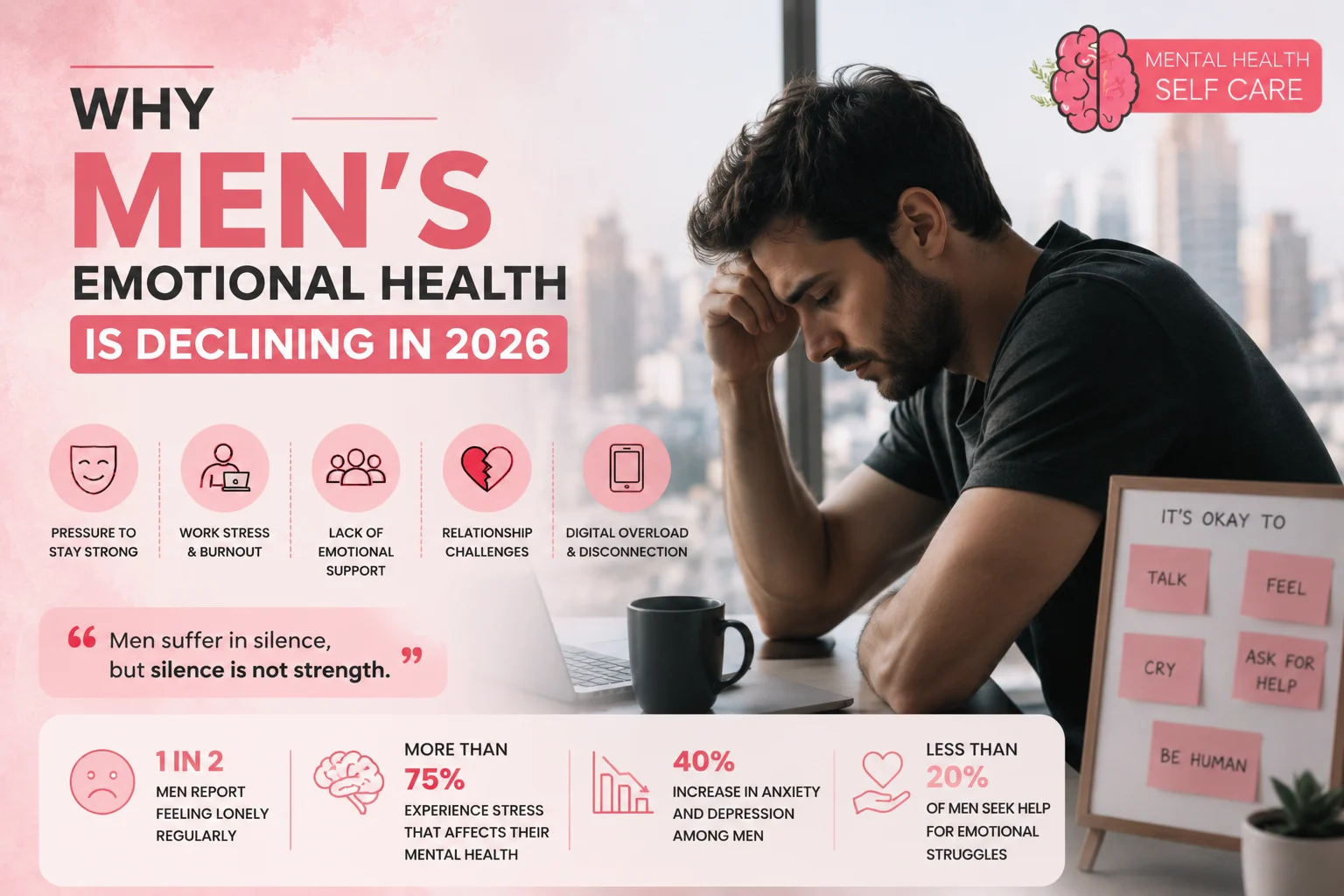
In 2026, men’s emotional health is experiencing a decline because of accumulated stress, emotional repression, financial issues, relationships, social pressures, and a lack of emotional support systems. There are a lot of men who keep on operating normally and yet face anxiety, burnout, loneliness, emotional drainage, and being under pressure in their minds. Since in most cases these problems are hidden, Men’s Emotional Health still gets worse and worse without the attention it deserves.
Men have been conditioned to be powerful, self-reliant, and unemotional over the generations. Although the term “resilience” is crucial, most men have used such demands as an excuse to deny their feelings and not seek assistance. Current pressures in modern life have increased, leading to a situation in which, in most cases, men have been left to bear the emotional burden themselves.
Career expectations and financial obligations, together with family demands and personal crises, usually make men feel they must cope with it all without showing weakness. Consequently, men’s emotional health is turning out to be among the most neglected of mental health issues within contemporary society.
What Is Men’s Emotional Health?
Men’s Emotional Health refers to a man’s ability to understand, manage, express, and cope with emotions in a healthy way. It influences how men:
- Handle stress
- Build relationships
- Respond to challenges
- Communicate feelings
- Maintain mental well-being
Having good emotional health does not imply that they will never experience negative emotions. It is knowing how to deal with and cope with them.
The degradation of Men’s Emotional Health can affect all areas of life, including career performance, relationships, confidence, physical health, and overall happiness.
Why Men’s Emotional Health Is Declining in 2026
Unable to escape these issues, modern men face complicated problems. Although there has been change in society, most men have not mastered emotional expectations, where they dislike showing vulnerability and expressing their emotions.
Growing Financial Pressure
One of the biggest factors affecting Men’s Emotional Health is financial stress. Stress accompanies you everywhere due to rising living costs, career uncertainty, debt, and financial instability.
Many men feel responsible for:
- Supporting families
- Achieving financial success
- Maintaining stability
- Meeting societal expectations
When financial goals become difficult to achieve, stress levels rise, and emotional well-being often suffers.
Emotional Suppression Remains Common
Several men are still taught that showing feelings means being weak. Consequently, they are taught to repress feelings rather than feel them.
This often leads to:
- Emotional isolation
- Increased stress
- Anxiety
- Emotional exhaustion
Over time, emotional suppression can significantly damage Men’s Emotional Health.
Work Pressure Has Intensified
Modern workplaces demand constant performance, productivity, and availability.
Many men face:
- Long working hours
- Job insecurity
- Performance targets
- Career competition
This ongoing pressure leaves little time for emotional recovery and contributes to mental fatigue.
Loneliness Is Increasing
Nevertheless, despite being more interconnected than ever before, many men feel more isolated. Men do not necessarily have a source of support and can be quite reluctant to share their personal problems. This deficiency in substantial emotional attachment is detrimental to Men’s Emotional Health and leads to increased loneliness.
Social Media Creates Unrealistic Expectations
People are always bombarded with social media images of success, wealth, fitness, and achievement.
Many men measure themselves against unrealistic standards and start to doubt how they are developing. This analogy may result in:
- Reduced self-esteem
- Increased stress
- Feelings of inadequacy
These emotional pressures continue to affect men’s emotional health.
Relationship Challenges Are Becoming More Complex
Contemporary interpersonal relationships demand vulnerability, emotional intelligence, and emotional communication.
Nevertheless, most men were not taught how to communicate about emotions effectively. Subsequently, they might have difficulties with:
As a result, they may struggle with:
- Communication issues
- Emotional connection
- Conflict resolution
- Relationship stress
Relationship difficulties can significantly impact emotional well-being.
Constant Digital Stimulation Is Affecting Mental Balance
Most men lose hours of their lives reading information using phones, social media, news stations, and entertainment.
This constant stimulation reduces opportunities for:
- Reflection
- Relaxation
- Emotional processing
The result is increased mental fatigue and emotional overload.
Burnout Has Become Common
Many men spend years chasing professional and personal goals without prioritizing recovery.
Over time, this can lead to:
- Emotional exhaustion
- Loss of motivation
- Mental fatigue
- Emotional numbness
Burnout has become one of the biggest threats to Men’s Emotional Health in 2026.
Signs Men’s Emotional Health Is Declining
Early identification of warning signs may prevent more severe mental health problems.
Constant Irritability
Small problems trigger unusually strong emotional reactions.
Emotional Withdrawal
Men may begin distancing themselves from family, friends, and social interactions.
Chronic Stress
Stress remains present even when there is no immediate crisis.
Lack of Motivation
Activities that once felt meaningful become difficult to pursue.
Sleep Problems
Difficulty sleeping often accompanies emotional distress.
Increased Overthinking
Negative thought patterns become more frequent and difficult to control.
Emotional Numbness
Some men stop feeling emotionally engaged with life and relationships.
Physical Symptoms
Mental stress may contribute to headaches, fatigue, muscle tension, and digestive problems.
How Declining Emotional Health Affects Men
Reduced Quality of Life
Life becomes more focused on survival and responsibilities rather than enjoyment and fulfillment.
Relationship Difficulties
Communication and emotional connection often suffer.
Lower Productivity
Mental fatigue affects focus, creativity, and performance.
Increased Risk of Burnout
Unaddressed emotional struggles frequently lead to exhaustion.
Poor Physical Health
Chronic stress impacts overall physical well-being.
Which Men Are Most Vulnerable?
High-Achieving Professionals
Success often comes with significant emotional pressure.
Business Owners and Entrepreneurs
Responsibility and uncertainty increase stress levels.
Fathers and Family Providers
Balancing financial and family responsibilities can be emotionally demanding.
Men Experiencing Major Life Changes
Divorce, job loss, relocation, and personal setbacks increase vulnerability.
Men Who Avoid Discussing Emotions
Suppressing emotions prevents healthy emotional processing.
How Men Can Improve Emotional Health
Learn to Recognize Emotions
Awareness is the first step toward emotional well-being.
Build Strong Support Systems
Healthy friendships and trusted relationships provide valuable emotional support.
Prioritize Recovery
Rest, relaxation, and self-care are essential for emotional balance.
Improve Work-Life Boundaries
Protecting personal time reduces stress and burnout risk.
Reduce Social Comparison
Focusing on personal growth instead of external comparisons improves self-esteem.
Stay Physically Active
Regular exercise supports both emotional and physical health.
Seek Professional Support
Professional guidance can help men develop healthier coping strategies and emotional resilience.
Why Choose Mental Health Self Care?
Mental Health Self Care offers assistance in developing Emotional Health among Men by providing structured support, professional counseling, and practical recovery measures, aiming to develop solutions to modern challenges.
500+ Counseling Sessions Successfully Completed
Helping individuals overcome stress, anxiety, burnout, and emotional struggles.
5+ Years of Mental Health Experience
Extensive expertise in emotional wellness and recovery.
50+ Video Testimonials
Real stories from individuals who have improved their emotional well-being.
Trusted and Reliable Support
Personalized guidance tailored to each individual’s needs.
End-to-End Emotional Wellness Support
Comprehensive assistance from assessment through long-term recovery.
Conclusion
In 2026, Men’s Emotional health will face severe challenges. Many men are experiencing mounting stress levels and pressures never seen before due to financial pressure, work demands, emotional suppression, loneliness, burnout, and social expectations. Unluckily, such battles are usually kept secret, as men are usually advised to show strength even when they are overwhelmed with emotions.
The fact that emotional health is fixable and obtainable with understanding, lifestyle modifications, solid support networks, and professional advice is good news.
Mental Health Self-Care offers resources, guidance, and skills to help men restore emotional balance, enhance their mental health, and create a more viable future. Being truly strong does not mean being emotionless; it means learning to handle your emotions in a healthy, sustainable way.

Pingback: Hyper-Independence After Trauma: The Complete Guide
Pingback: OCD Symptoms: When Repetitive Thoughts Become Hard to Control