
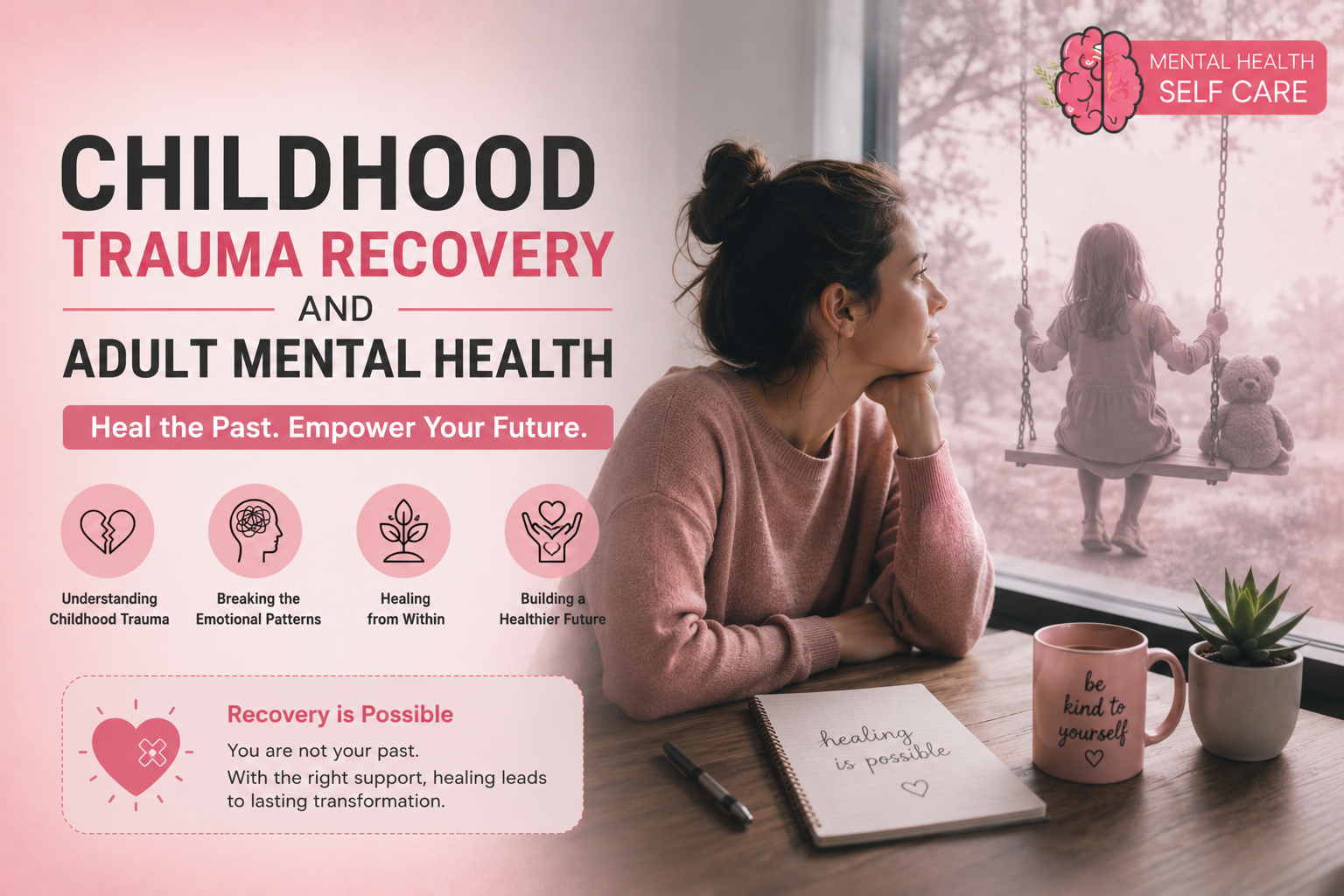
Childhood Trauma Recovery is a healing process for emotional injuries related to bad childhood events that persist into adulthood, including mental health, relationships, confidence, and emotional state. Although it is impossible to alter the past, successful Childhood Trauma Recovery allows people to interpret dysfunctional emotional patterns and develop resilience and control over their lives. Long-term healing can be achieved with the right guidance and support.
Most adults are anxious, depressed, emotionally numb, lack trust, or have low self-esteem without being aware that these difficulties can start in childhood. Emotional neglect, family conflict, bullying, abuse, or having been raised in an unstable environment may have caused emotional trauma that can still affect an adult’s behavior.
The knowledge of the impact of childhood trauma on adult mental health is the initial step in overcoming the unhealthy patterns and developing a healthier and more balanced emotional state in the future.
Why Do Childhood Experiences Continue Influencing Adult Mental Health?
The stage in which emotional beliefs, coping mechanisms, and relationship patterns are developed is during childhood. As children continue to grow up feeling unprotected, unsupported, criticized, or emotionally neglected, survival mechanisms are developed by their minds to stay safe.
Though these strategies can be useful in childhood, they tend to become a hindrance in adulthood. This is the reason that Childhood Trauma Recovery is about restoring the emotional influence of the traumatic experiences in the past and not a mere control of the existing symptoms.
Anxiety Becomes a Daily Survival Mechanism
Lots of adults with unresolved childhood trauma live in a state of constant anxiety due to the fact that their nervous system is in readiness of danger even when there is not a real danger. They can overthink their conversations, think they will be rejected, think about the future too much or may not be able to relax after work. Such a constant level of alertness affects focus, sleep quality, emotional stability, and overall happiness. Childhood Trauma Recovery assists in retraining the brain to prioritize safety, reducing chronic anxiety and fostering more healthful emotional reactions to daily events.
Trust Issues Make Healthy Relationships Difficult
Young people who are betrayed, abandoned, given inconsistent parenting, or abused emotionally will find it hard to trust anyone as adults. Some fear being hurt again and become emotionally distant, while others fear being left and become emotionally clingy. Such unhealthy attachment patterns lead to misunderstanding and emotional distance within relationships. With the help of Childhood Trauma Recovery, a person learns to trust, open up, and develop safe relationships founded on respect rather than fear.
Low Self-Esteem Develops From Years of Negative Experiences
When a child hears criticism over and over again, becomes the victim of rejection, or the target of emotional neglect, she tends to develop into an adult who is constantly in doubt of her value. They might keep thinking they are not good enough, even after they have become an achiever, either personally or in their careers.
This unfavorable self-perception affects the choice of career, relationships and confidence. Childhood Trauma Recovery focuses on replacing restrictive thinking with healthier patterns to help people experience their worthiness without needing others’ validation.
Emotional Reactions Become Difficult to Control
Carrying unresolved childhood trauma, adults tend to respond more vigorously to circumstances that evoke memories of the traumatic events of their childhood. Even small misunderstandings, critiques, or unforeseen developments can lead to deep sorrow, hate, apprehension, or emotional avoidance.
Such reactions do not imply any weakness but rather acquired survival mechanisms learned many years ago. Childhood Trauma Recovery teaches people to realize these triggers, better manage their emotions, and react rather than respond when they see them.
Hidden Emotional Patterns That Often Indicate Unresolved Childhood Trauma in Adult Life
Many adults fail to understand at once that emotional difficulties are related to childhood. Rather, they believe that their nervousness, relationship issues or emotional burnout is a part of their character.
Nevertheless, unresolved trauma will tend to manifest itself in repetitive emotional and behavioral patterns. Detecting these indicators helps people begin productive Childhood Trauma Recovery before these patterns take hold across all spheres of life.
Constant Need for Approval From Others
Most trauma survivors find themselves desiring to be accepted because they were not given emotional validation in childhood. They may always want to be praised, not to disappoint anyone, or their self-esteem may be pegged to the thoughts of others.
Although external approval might give temporary confidence, it very seldom gives enduring emotional security. Childhood Trauma Recovery is a way of helping people develop true self-confidence from self-acceptance, not from constant confirmation from others.
Difficulty Saying No Without Feeling Guilty
Growing up in emotionally demanding situations, children tend to understand that it is always best to quickly escape conflict by first considering others’ needs. Being adults, they might have difficulty with effective boundaries, even when they are emotionally drained. What they often accept are obligations they are unable to handle, as saying no would cause a great deal of guilt or fear of rejection. Childhood Trauma Recovery educates people about establishing respectful boundaries, keeping healthy relationships, and safeguarding their emotional health.
Fear of Making Even Small Mistakes
Individuals with unresolved childhood trauma experiences, which have not been resolved, tend to relate error to criticism, punishment, or rejection. This leads to perfectionism in adulthood, self-pressure, and overall anxiety about performance.
The slightest mistake can be emotionally devastating, as the mind is still reacting to childhood experiences rather than the present reality. Childhood Trauma Recovery assists people in becoming healthier in their expectations, more tolerant to imperfection, and to perceive mistakes as growth opportunities and not as personal defeat.
Feeling Emotionally Numb During Difficult Situations
Not all people react to trauma with overt emotional responses. Others are emotionally numb, as this was their most secure way of coping in the past. As adults, they may have trouble feeling happy, sad, excited, or emotionally connected with others. Life starts off emotionally flat even when life is outwardly successful. Childhood Trauma Recovery helps people re-establish contact with their emotions, avoid feeling overwhelmed, and build healthier emotional awareness.
How Unresolved Childhood Trauma Quietly Affects Adult Life?
Childhood trauma seldom has an emotional health impact only. Emotional wounds may also affect career preferences, health, personal relationships, love life, family relationships, and happiness depending on how they go unresolved as an individual matures. Most adults take years to work out their individual problems without realizing that another emotional problem is guiding them. Awareness of these long-term impacts makes Childhood Trauma Recovery more significant, as it aims to address the core issue rather than just the symptoms displayed on the surface.
Personal Relationships Become More Emotionally Challenging
Healthy relationships need trust, communication, emotional safety, and vulnerability. Adults who have unresolved childhood trauma tend to lose these qualities, as they were taught about love and connection by childhood events.
Others become emotionally numb so as not to be hurt, and others become over-dependent on their partners to distract them. These trends tend to produce a lack of understanding, insecurity and conflicts. Childhood Trauma Recovery assists people in improving their attachment style, their approach to communication and in establishing relationships founded on trust, rather than on fear or emotional survival.
Career Growth Is Often Limited by Self-Doubt
Most of the prosperous experts harbor silent thoughts of inadequacy due to childhood trauma, since it impacts confidence even after childhood experiences are long gone. They can refuse promotions, undervalue their talents, be afraid to express their ideas, or always fear failure, even though they have the required skills. This self-doubt prevents them from fulfilling their potential.
Childhood Trauma Recovery assists one to question restrictive thinking and develop self-esteem and career choices that are grounded on real capabilities rather than historical emotional conditioning.
Physical Health Begins Reflecting Emotional Stress
A long term emotional stress does not stay in the mind. The nervous system of the body is subject to chronic anxiety, unresolved fear and emotional suppression resulting in headaches, digestive issues, muscle tension, fatigue, poor sleep, and low immunity. Most people will treat these physical symptoms without realizing the emotional aspects involved. Childhood Trauma Recovery facilitates emotional healing coupled with assisting to minimize chronic stress on the body in the long-term effects of sustained psychological stress.
Parenting Patterns Often Repeat Across Generations
A good number of parents would like to give their children a healthier childhood; however, without realizing it, they repeat the same behaviors they experienced. Neglect of emotions, criticism, ineffective communication, or inappropriate coping styles might be perpetuated across generations unless addressed.
Trauma that is not resolved enables the parents to be more emotional, patient, and sensitive. Not only does Childhood Trauma Recovery help an individual in enhancing his or her mental health, but it also provides a healthier emotional environment for future generations.
Practical Recovery Strategies That Help Heal Childhood Trauma and Strengthen Adult Mental Health
There is no forgetting and no pretending that the past did not happen. Healing trauma as a child involves forgetting painful memories and moving on.
Rather, recovery entails learning to comprehend how those experiences still play a role in current feelings and how to progressively overcome the patterns of unhealthy survival and adopt healthier coping mechanisms. Regular practice, self-discipline, and proper encouragement can enable people to restore a sense of emotional fitness and enhance all the facets of their mental health.
Accept That Your Emotional Struggles Have Valid Reasons
Most adults criticize themselves for being anxious, emotional, or in a relationship without realizing that such behaviors were rather survival tactics during childhood. Coming to terms with the fact that your misery may have explicable causes eliminates unwarranted self-accusation and guilt. Childhood Trauma Recovery starts with people refusing to pose questions like, What is wrong with me? and rather pose questions like, What happened to me that created these emotional patterns? This transformation sets a more healthy stage of long-term recovery.
Identify Emotional Triggers Instead of Reacting Automatically
Emotional triggers do not usually appear to be associated with childhood up until a time when individuals start to identify repeating patterns. Whatever might be causing a disagreement, a criticism from an employer, or a late text message can arouse emotions far greater than the incident itself.
When these triggers are identified, they help people dissociate current experiences from past emotional trauma. Childhood Trauma Recovery helps individuals stop, understand why something is triggering a response, and act intentionally rather than letting their past survival mechanisms dictate their actions.
Practice Self-Compassion Instead of Constant Self-Criticism
Individuals with childhood trauma often consist of their greatest scolds themselves. They have high expectations, fault themselves, and seldom note their own improvement. Substituting such negative inner talk with self-compassion is a key component of emotional healing.
Being compassionate toward yourself and believing you would do the same to someone you care about helps you build confidence, emotional strength, and overall well-being. Patience, as opposed to punishment, is a better guide in childhood trauma recovery.
Build Healthy Boundaries Without Feeling Guilty
A large number of trauma survivors find it hard to say no since they had been taught at an early age that they had to please others in order to be accepted or safe in their emotions. This usually leads to emotional burnout, resentment, and exhaustion as adults.
The art of developing healthy boundaries helps conserve emotional energy and enhance relationships. Childhood Trauma Recovery helps people understand that setting boundaries is not egoistic but a vital aspect of healthy emotional and mental well-being.
Why Professional Guidance Can Make Childhood Trauma Recovery Safer?
Childhood trauma will seldom have a linear healing process. Although self-awareness and changes in lifestyle are important, lots of emotional wounds are deep and can hardly be processed without adequate support.
Professional guidance provides a protective setting in which one can make sense of one’s experiences, learn to recognize unhealthy emotional habits, and acquire coping strategies. Instead of treating symptoms, professional support aims at helping people attain permanent Childhood Trauma Recovery and enhance their general mental health status.
- Professional Support Helps Identify Hidden Emotional Patterns
- Healthy Coping Strategies Replace Unhealthy Survival Mechanisms
- Emotional Healing Happens in a Safe and Supportive Environment
- Long-Term Recovery Focuses on Building a Better Future
Conclusion
Such childhood experiences permanently affect emotional health, even though they may seem far off. Unresolved emotional wounds usually result in anxiety, low self-esteem, emotional numbness, issues with trust, perfectionism, and relationship problems; these are not personal weaknesses. The identification of these patterns is the initial and most valuable step towards significant healing.
Childhood Trauma Recovery helps people understand how past events relate to current emotional concerns and how to become healthier in thinking, feeling, and responding to life’s demands. Through professional assistance, greater self-awareness, and realistic recovery plans, one can break the negative cycles of emotional patterns and build stronger relationships, greater confidence, and sustainable mental health.
Mental Health Self Care is dedicated to aiding individuals at each stage of Childhood Trauma Recovery. Our personalized counseling program, coupled with careful guidance and instruction and a time-tested system of healing, allows individuals to overcome the constraints of the past and build healthier, happier, and more emotionally resilient futures.
If you want to go for an easier option, reading the life-changing book The Superhuman Lifestyle, Dopamine discipline and PMO Recovery book can be the go-to choice for you.