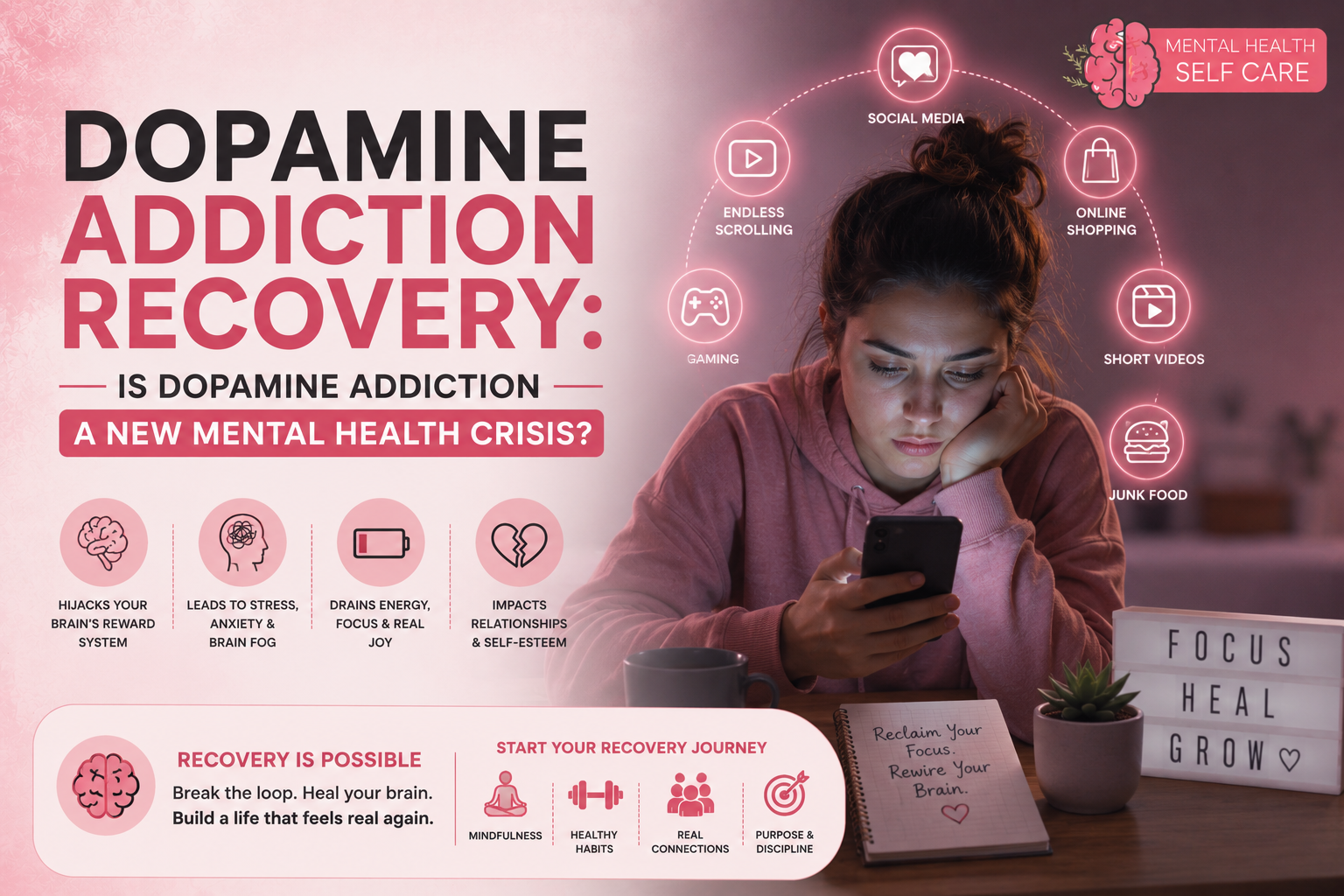
Dopamine Addiction Recovery is gaining significance as individuals are becoming addicted to many bad habits, which constantly activate the reward system of the brain without understanding the consequences for their mental health in the long term.
Overspending on instant gratification through social media, digitized amusements, gameplay, shopping, pornography, or scrolling indefinitely may diminish attention, heighten anxiety, decrease self-control, and make daily life less fulfilling. The knowledge about Dopamine Addiction Recovery will allow people to restore emotional balance and adopt healthier patterns of behavior that can be used in the long term to maintain mental health.
New technology has ensured the rewarding of behavior instantly within seconds. Each notification, video, online purchase, or social media like gives a little burst of dopamine, which will motivate the brain to do it again.
Although dopamine itself is needed for motivation and learning, the continual pursuit of quick rewards may eventually result in boredom and dissatisfaction with relatively ordinary activities.
Over time, the cycle can affect productivity, relationships, emotional stability, and overall mental health. The first step to meaningful recovery is recognizing these patterns.
Why Is Dopamine Addiction Growing?
Active rewarding experiences are natural motivators of the human brain since dopamine promotes learning, motivation, and goal-oriented behavior. The issue starts with artificial sources of stimulation that offer immediate, easy rewards, which the brain begins to demand more frequently. Rather than engaging in fulfilling pursuits, most people are hooked on unceasing digital stimulation, and Dopamine Addiction Recovery is becoming much more applicable in this busy world.
Instant Gratification Is Available Everywhere
Compared to past generations, current lifestyles offer unlimited entertainment, social media, games, online shopping, and short video content all day long. Each swipe, notification, or new content is another chance to get immediate gratification. After some time, the brain becomes accustomed to instant gratification and starts demanding it more often. As this trend grows, patience is reduced, concentration becomes more fragile, and more meaningful work can only be completed with more difficulty without constant stimulation.
Social Media Constantly Triggers Reward-Seeking Behavior
Social media sites are strategically designed to stimulate repeated consumption through likes, comments, notifications, and infinite scrolling. Each interaction leaves a sense of anticipation that makes users check their phones over the day. This vicious circle conditions the brain to seek external rewards and regular dopamine discharges rather than derive fulfillment from individual accomplishment or real-life connections. It is common to initially have a reduction of this dependency during the Dopamine Addiction Recovery.
Digital Entertainment Replaces Meaningful Activities
Hobbies, exercise, reading, family chats or outdoor activities are replaced with hours of screen entertainment by many ignorant people due to the fact that it offers instant pleasure with little effort.
Though this habit seems calming initially, it eventually decreases the desire to engage in activities that demand patience and long-term focus. The less meaningful the experience, the less emotional fulfillment one may feel, even as one spends more time with digital devices in search of entertainment.
Stress Encourages People to Seek Quick Escapes
Whenever people are stressed, lonely, bored or their emotions are uncomfortable, they tend to engage in very stimulating activities to relieve them momentarily. Videos, social media, games, compulsive shopping, or other types of immediate entertainment offer a momentary emotional distraction.
Sadly, such habits seldom resolve the root cause and tend to form more and more dependency as time passes. Dopamine Addiction Recovery assists the person in substituting these unhealthy coping habits with other emotional habits that are healthier.
Signs You May Be Developing Unhealthy Dopamine-Seeking Habits
Dopamine addiction tends to develop over a long period of time, and it is hard to notice until the routine, productivity, and moods start to change. When many people fail to be motivated or disciplined, as it might be, their brain is already conditioned to receive constant stimulation. Being able to identify such early warning signs can be a great way to simplify Dopamine Addiction Recovery and avoid poor habits that are harder to break.
Everyday Tasks Feel Increasingly Boring
The loss of interest in usual daily activities, which were considered fun is one of the first signs of this problem. Reading a book, work assignments, exercising, studying or quiet time with family may all become instantly less rewarding than scrolling social media or reading fast digital material. This occurs because the brain starts anticipating a greater degree of stimulation before being satisfied. It should be a gradual process to eliminate reliance on instant gratification, which is the way to reinvent pleasure in routine endeavors.
You Constantly Reach for Your Phone Without Thinking
It is a common practice for many to open their phones dozens or even hundreds of times a day, with no particular purpose. They look at their notifications automatically, use social media on breaks, or scroll through it just because they feel bored at the given moment.
These behaviors become so routine that people become unaware of how often they break work, discussions, or relaxation. Dopamine Addiction Recovery makes an effort to become aware of these automatic actions before substituting them with more health-conscious behaviors.
Concentration Has Become More Difficult Than Before
Due to the constant stimulation, the brain is accustomed to it, which means it is no longer comfortable with the activities that demand constant attention. Consequently, it can be mentally draining to read lengthy articles, study, conduct meetings, or handle a crucial project. Most people are always task-switching since they can easily get distracted by a more interesting activity. Once excessive dopamine-stimulating behaviors are minimized and new healthy attention habits are formed, improving focus becomes much easier.
You Feel Restless When Nothing Is Happening
Silent times that used to be peaceful would start becoming uncomfortable, as the brain is used to being entertained all the time. Being in a line, riding a train, sitting alone, or even relaxing without the phone/digital devices usually leaves a temptation to check the phone every moment. This suffering is a solid sign that external excitation has taken the place of being the main source of emotional gratification by the brain. Dopamine Addiction Recovery helps people learn to be at ease with the stillness and find pleasure in small yet real-life activities.
How Dopamine Addiction Quietly Affects Mental Health and Overall Quality of Life
Though dopamine itself is a normal and necessary brain chemical, a continuous pursuit of artificial stimulation can slowly have an impact on emotional health, productivity, relationships, and self-control. Many individuals feel that they are just not disciplined enough, yet the problem here is usually a reward system that has been conditioned to want instant gratification. Learning about these impacts renders Dopamine Addiction Recovery an effective measure towards long-term recovery of mental stability.
Motivation for Meaningful Goals Begins to Decline
A major effect of overstimulation of dopamine is decreased interest in activities that demand patience and perseverance. Career building, education, fitness, personal development, and long-term projects do not provide as much satisfaction as they used to due to the fact that the brain has gotten used to instant gratification. Consequently, people constantly delay urgent tasks as they spend more time on those that offer instant gratification but do not bring much benefit in the long run.
Anxiety and Emotional Instability Become More Common
The mind is hardly given an opportunity to relax, as it is constantly stimulated. It is harder to balance emotions as people just keep chasing their quick rewards all through the day. When deprived of stimulation, many people feel more anxious, irritated, moody, or emotionally restless. These emotional shifts are usually very slow to build up, and may be ignored until they start influencing relationships, performance at work and mental health.
Relationships Receive Less Time and Attention
The need to be digitally stimulated usually replaces meaningful discussions and emotional attachment with relatives, friends, and partners.
Rather than focusing on enjoying special occasions together, most people are distracted by status updates, videos or social networks.
This ultimately impairs emotional intimacy and brings about a sense of loneliness, despite online communication being incessant. Dopamine Addiction Recovery promotes healthier digital boundaries, which will enable closer relationships to form considering authentic communication and experience.
Self-Control Gradually Becomes Weaker
When one repeatedly makes the decision to take instant gratification instead of long term goals, it becomes a habit taught by the brain to focus on immediate rewards. This complicates the efforts of avoiding distractions, living healthy lifestyles and being dedicated to obligations.
People might be aware of what they are expected to do and they fail to act because their reward system is having continuous ways of seeking easy points of satisfaction. One of the most useful results of effective Dopamine Addiction Recovery will be the restoration of self-discipline.
Practical Dopamine Addiction Recovery Strategies
The process of healing unhealthy dopamine-seeking behaviors does not involve having to get rid of technology and entertainment altogether. Rather, it entails developing more health-related habits that will enable the brain’s natural reward system to work well again. Minor, regular changes in your lifestyle tend to bring long-term effects in terms of motivation, emotional stability, and mental wellness.
Reduce Digital Stimulation Gradually
Trying to cut all sources of agitation at night is usually impractical and hard to sustain. The better way to go is to just cut down on screen time, minimize time on social media, turn off non-essential notifications, and come up with device-free intervals throughout the day. These minor changes help the brain adapt and reduce reliance on the constant rewards of digital devices. It is much better to be consistent than to make radical changes in lifestyle and then struggle to maintain.
Rediscover Activities That Require Patience
Reading books, working out, learning new hobbies, spending time in the open air, engaging in some sort of creative activity, or even having in-depth conversations make the brain work in a different way than instant digital entertainment.
They might not be as exciting at first, but as time goes by, these activities do restore the capacity of the brain to take pleasure in slower and healthier forms of satisfaction.
This process adds to concentration, resilience, and helps in Long-term Dopamine Addiction Recovery because it substitutes artificial rewards with significant experiences in life.
Become Comfortable With Moments of Boredom
It is common to find many individuals accessing their phones as soon as they feel bored within even a few minutes. But boredom brings the brain time well deserved, to relax, meditate and come up with an idea.
Training to sit and watch around, or just have moments without interruption, will lessen the need to be constantly stimulated. Gradually, people get less emotionally responsive and increasingly feel at ease without constant digital connectivity.
Create Daily Habits That Support Mental Balance
Regulatory responses to the brain’s reward system can be supported by healthy sleep, exercise, healthy dieting, mindfulness, and daily routines. Such habits enhance emotional stability and decrease the urge to get instant gratification all the time. The task of Dopamine Addiction Recovery is simplified when healthy lifestyle habits allow the brain to enjoy feeling motivated, focused, and satisfied by the daily accomplishments, rather than being stimulated artificially.
Why Choose Mental Health Self Care?
More than sheer will power may be needed to overcome unhealthy dopamine-seeking behaviors. Mental Health Self Care offers organized care, practical advice, and individual counselling to allow people to recognize the emotional patterns underpinning their habits as they build healthier coping mechanisms to achieve a permanent recovery.
500+ Counselling Sessions Long-term Mental Wellness.
We have worked with clients and assisted them in overcoming anxiety and emotional burnout, digital addiction, compulsive disorders, and other contemporary mental health issues. Each session will be devoted to the determination of the cause of the bad habits along with the development of achievable recovery strategies that promote the attainment of sustainable emotional development.
5+ Years of Experience Helping Individuals Build Healthier Habits
Mental Health Self Care has assisted people who have experienced all sorts of emotional and behavior difficulties. Having this experience, we can offer real-life strategies to enhance self-control and emotional strength and recover successfully in Dopamine Addiction without unrealistic expectations.
50+ Video Testimonials Reflecting Genuine Recovery Stories
The credibility that our clients have on Mental Health Self Care is depicted by the true recovery stories in their own words. These testimonials serve to illustrate how expert advice has enabled a large number of people to be better emotionally balanced, sharpen their focus and establish healthier daily routines.
Trusted Guidance Tailored to Individual Recovery Goals
All individuals have different recovery processes. We offer unique and friendly support that is personal, confidential, and caring to meet one on one emotional requirements rather than provide a one-shoe-fits-all approach. Our methodology assists clients to design practical solutions which bring about the enduring changes in their mental health and life.
Complete Support for Sustainable Lifestyle Change
Much more than decreasing screen time or altering daily habits is the process of recovery. We assist people to become more emotionally aware and disciplined, enhance healthier coping skills and routines, which can be sustained to help them sustain their mental health and personal development over time.
Conclusion
It is not dopamine but the relentless seeking of artificial rewards that are slowly altering the way the brain feels motivated, satisfied, and emotionally balanced. Once instant gratification turns into a routine, quality goals, proper relationships, productivity, and mental health usually start to decline, and people are unaware of what is causing it.
Dopamine Addiction Recovery assists patients in taking back control by decreasing unhealthy stimulation, re-establishing self-discipline, and returning the brain to enjoying real-life experiences. Even simple and gradual shifts in everyday routines can contribute greatly to attention, emotional stability, self-confidence, and overall quality of life.
Mental Health Self Care offers empathetic advice, realistic recovery measures, and customized counseling to assist people in meeting unhealthy dopamine-seeking habits and lead healthier and more rewarding lives. Through proper encouragement, permanent recovery can be achieved, and people will be able to substitute their short-term gratification with long-term happiness and emotional fulfillment.
FAQs
1. So what is Dopamine Addiction Recovery?
Dopamine Addiction Recovery refers to the process of decreasing reliance on immediate gratification and restoring healthier habits that enhance focus, emotional regulation, motivation, and control.
2. Is dopamine itself harmful?
No. Dopamine is a natural chemical in the brain that helps in motivation, learning, pleasure, and achievement of goals. The issue is that people become addicted to continuous artificial stimulation that causes the release of dopamine to be repeated several times.
3. What are the typical symptoms of unhealthy dopamine-seeking behavior?
The main indicators are the excessive use of phones, the constant presence on social media, the inability to focus on work, the lack of interest in doing things that matter, constant agitation and dissatisfaction with the absence of a device, and the desire to achieve instant satisfaction.
4. Does too much screen time influence dopamine?
Yes. Constant exposure to overstimulating digital information can train the brain to anticipate the constant reward and thus slower and more valuable activities will become less rewarding with time.
5. How long does Dopamine Addiction Recovery take?
The recovery process is different according to personal habits and lifestyle. It takes a few weeks before many people begin to feel better due to the elimination of unhealthy stimulation and the formation of healthier habits.
6. Can Dopamine Addiction Recovery improve mental health?
Yes. Following the reduction of unhealthy dopamine-seeking behaviors, many people enjoy enhanced concentration, increased emotional stability, increased self-control, stronger relationships, and increased motivation.
7. In what situations should I use professional help with Dopamine Addiction Recovery?
It is advisable to seek professional help in case compulsive digital behaviors, immediate gratification tendencies, and over-stimulation start influencing your mental health, relationships, productivity, sleep, and the quality of life overall, regardless of your attempts to change.