
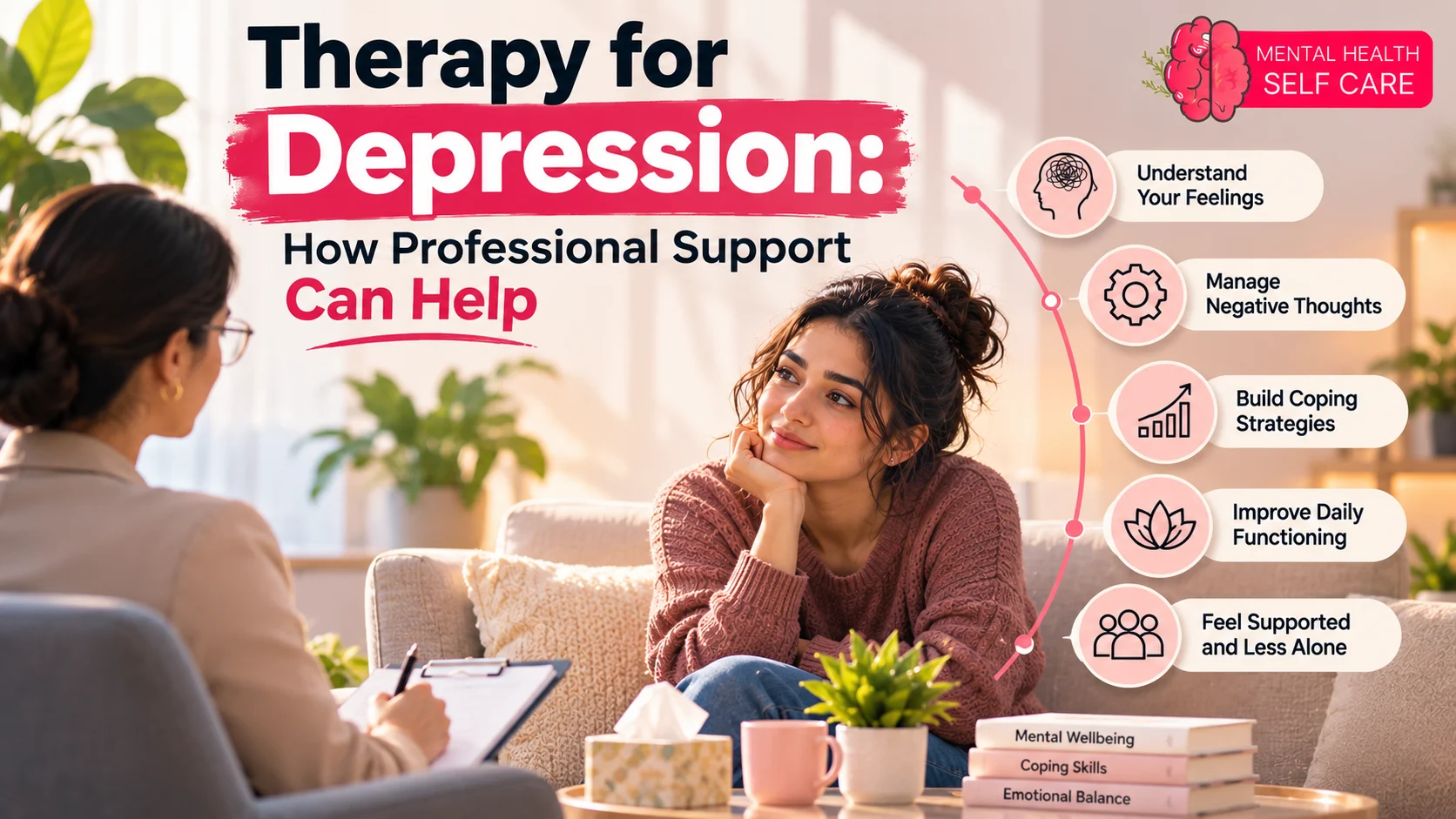
Therapy for Depression will teach you that depression is about being sad, having little energy and motivation, being negative and feeling emotionally drained, and dealing with depression in ways that are healthy.
Symptoms of depression are not only caused by a difficult situation. It may affect sleep, eating, concentration, relationships, work, and even enjoyment of activities that used to be meaningful. With a professional roadmap, you can stay informed about what is going on and how to manage it.
These medications will not cure the issue; however, ongoing appropriate help will assist somebody or several individuals in identifying unhealthy patterns, learning coping skills and initiating emotional healing.
Understanding Depression
Depression is a mental illness that impacts a person’s way of thinking, feeling, and functioning. It has a wide range of symptoms. People may feel sad all the time; some may have mostly emotional symptoms, while others may have more physical symptoms, including irritability, low energy, numbness, or loss of interest.
Common Signs of Depression
Depression can be insidious, and the initial symptoms are easy to dismiss. A person might have trouble getting out of bed, lose interest in socialising, lose hope for the future, or lose interest in their hobbies. Other symptoms may include appetite changes, difficulty sleeping, difficulty concentrating and feelings of self-worthlessness.
Some people may not have all of these symptoms. Others may continue to meet obligations but feel emotionally upset and alone. If you are having these difficulties, or if the problems get so bad that they interfere with your life, a professional assessment can give you a clue about what’s happening.
Why Depression Should Not Be Ignored
Depression can have a negative impact on relationships, the body, work and responsibilities if not treated. When someone repeatedly refuses to see family members and friends, they may eventually lose important support. Sleep troubles and a lack of motivation can also make life challenging.
Depression is not a personal fault or personal weakness. So, it’s important to treat it like any other health issue. Being familiar with signs or symptoms that can indicate poor mental health can also help people to know when they might need additional help.
How Therapy Helps
Therapy gives an individual the opportunity to understand their experiences with the help of a therapist, rather than trying to address each difficult thought independently. It is rooted in understanding symptoms, identifying patterns, and using practical strategies tailored to each individual’s needs.
Identifying Negative Thought Patterns
Depression can affect the attitude with which one views oneself and the world. A small error can be experienced as a total failure, and uncertainty can be interpreted as it definitely bad. Such thoughts can foster guilt, helplessness, and self-condemnation.
During Therapy for Depression, an individual can learn to acknowledge adverse thoughts and also whether the thoughts are accurate or emotional presumptions. It is not a way of being “positive. It means gaining a more balanced understanding of challenging situations and reacting to them more consciously.
Developing Healthier Coping Skills
When depression becomes too much to deal with, people may use coping strategies such as avoiding the situation, becoming withdrawn, excessive sleep or other coping strategies that give quick relief but don’t stop the challenges.
Depression counseling can assist people in identifying these patterns and responding in a healthier manner. Depending on the individual’s needs, possible coping strategies include emotional expression, problem-solving, planned activity increases, relaxation, and changes in daily routine. Progress doesn’t always happen the first time you talk to them.
Rebuilding Confidence and Motivation
Quite normal chores can become challenging with depression. They may be afraid or reluctant to start, so as to give up on trying to reach their goals.
Therapy for Depression can help break bigger tasks into smaller ones. Small activities can build a sense of capability. This doesn’t mean you must be productive all the time; it means having realistic routines in place that support recovery without added pressure.
Types of Therapy for Depression
Depending on individual symptoms, situations, personal preferences, and clinical judgment, different therapies may help with different symptoms. A licensed mental health practitioner can assess the situation and help decide which course of action is suitable.
Cognitive Behavioural Therapy
Cognitive Behavioural Therapy (CBT) is based upon the connection between thoughts, emotions and behaviours. It helps individuals identify negative thinking and develop healthier responses.
An example of this is putting meaning behind the thought, “A setback by one professional means I can’t do it. CBT can also include activities to engage the individual with daily activities and responsibilities over time. While it is known to be a treatment for depression, it is not the only one that may be suitable.
Interpersonal Therapy
Interpersonal Therapy for Depression focuses on the relationships and life changes on how they affect functioning and emotions. Depressive symptoms may be caused by conflict, grieving, loneliness, communication problems and major transitions.
This helps individuals identify relationship patterns, communicate their needs more effectively, and respond to difficult relationships. It can be even more significant when clear emotional stress is tied to changes in relationship or social functioning.
Supportive and Individual Therapy
Supportive therapy is a safe place to process emotional experiences, talk about how things are going for you, and develop strategies to help you through difficult experiences. 1:1 counselling can also help someone discuss areas of concern at a comfortable pace.
Don’t use a one-size-fits-all approach. In the case of severe or persistent depression, the therapy may have to be supplemented with psychiatric evaluation, medication, or other clinical treatment.
Daily Habits That Support Recovery
Although you need professional assistance, having daily activities can help in emotional health. These habits are not intended to supplant the proper treatment for depression but are encouraged to go along with it.
Improve Sleep and Daily Structure
Sleeping habits can be affected by depression. Some people sleep excessively; others wake up many times during the night or struggle to fall back asleep. Sleep disruptions make it difficult to focus, stay vigorous and energetic, and regulate emotions.
A structured sleep routine, limited screen time before bed, and a structured morning routine can support sleep. It is also possible for people with sleeping issues that continue to persist to learn about and understand how poor sleep can relate to mental health disorders and to receive medical guidance and recommendations if needed.
Include Gentle Physical Activity
Physical activity may promote mood and general feeling of well-being. Lack of structure to think about; offer an opportunity for getting people to move around, stretch, cycle or gentle exercise.
The key is to start off with a realistic approach. An intensive workout program may not be appropriate for a person with a severe case of depression. Don’t be frightened off by too much activity, a few minutes or a short walk may be a more realistic starting point. Be consistent, rather than putting too much pressure on yourself.
Stay Connected With Supportive People
Being alone is the first option, although in some cases it could be the worst one, when it comes to depression. Knowing you have someone to talk to can reduce loneliness and make it easier to work through difficult experiences.
Some problems can’t be solved by friends or family members. Being a non-judgmental listener, offering concrete support, and respecting boundaries can make a meaningful difference. When personal conversations aren’t sufficient, professional emotional support can help.
When to Seek Professional Help
But most of the time, this self-help isn’t sufficient, and knowing when to get assistance is an aspect of coping with depression. Don’t wait until your life feels unbearable to get help.
Symptoms Affect Everyday Responsibilities
Seek professional assistance if feelings of sadness, a lack of interest, hopelessness, and/or a lack of energy persist and begin to interfere with work, school, relationships, or self-care. If this is happening more often than usual, the child may need more support to complete a common activity.
It may help to talk through these concerns with a mental health counsellor to understand what may have caused them and discuss next steps. A qualified clinician can assess symptoms and recommend appropriate treatment.
Symptoms Become Severe
If someone is feeling very hopeless or has difficulty taking care of basic tasks, if they think about hurting themselves or about suicide, or they can’t get things better on their own, it’s time for professional assessment.
If disaster is a possibility, call the local emergency services or bank to go to the nearest emergency room. Help is available for crisis situations across the U.S. by calling or texting 988 or using a crisis text line, or visiting a professional.
For instance, treatment is not always necessary consider treatment opportunities first. Treatment for depression may involve medication or a combination of treatments, depending on the individual, and may be recommended by a psychiatrist or other health care provider.
Conclusion
Therapy for Depression can help the person understand issues with their feelings, as well as identify negative thoughts and develop coping skills. Recovery may not be swift or easy and varies from person to person. Although some daily practices and supportive relationships can help, symptoms can persist or worsen, and that’s when it is time to seek professional help.
Mental Health Self Care has been designed to help people examine their emotional struggles and find the help and guidance they need, instead of doing everything on their own.
Consistently making it happen, along with realistic expectations and appropriate support, can help you achieve emotional stability and a better, easier day-to-day life.