Stress Reduction is important to maintain emotional stability, health, and a healthier routine of everyday life. Stress can be a natural reaction to challenging situations, and the continuous pressure of work, finances, relationships, family issues, and self-demands can be very hard to handle. You develop headaches, irritability, insomnia, and a lack of concentration or feel overwhelmed all the time.
The issue does not necessarily lie in your responsibilities. Occasionally, it is the duration of being strained without considerable rest. Stress management involves identifying what triggers your stress, replacing bad habits, finding workable ways to cope, and getting professional help when needed. Knowing how to do this can help you respond to pressure constructively.
Understanding Stress
Stress is the body’s response to situations perceived as demanding, threatening, or challenging. Short-term stress can sometimes help you respond to deadlines or solve problems. However, prolonged stress can affect emotional well-being and physical health.
Common Causes of Stress
Stress may be evoked by different situations. Examples include workplace deadlines, financial uncertainty, family issues, relationship issues, academic pressures, and health issues. There are times when multiple challenges occur at once, so there is no time to rest.
It may also stem from personal expectations. Continuous self-comparison with others, trying to live to unrealistic standards, or blaming yourself for everything that is your fault can add to mental pressure. Our article on career and family pressure explains how competing responsibilities can affect emotional well-being.
Signs and Symptoms of Stress
Stress may impact individuals emotionally, physically and behaviourally. The symptoms may be irritability, excessive worrying, headaches, muscle tension, fatigue, other sleeping difficulties, and alterations in eating behaviour.
Some people become withdrawn, whereas others are quick-tempered over simple circumstances. Decision-making and focus can also be problematic. Take an opportunity to discuss with a medical professional in case these changes continue to occur or disrupt daily duties. Another way to know to seek more help is to read information about mental health symptoms to determine when the extra help is needed.
You can also read about the signs of poor mental health to understand when additional support may be necessary.
Effective Stress Management Strategies
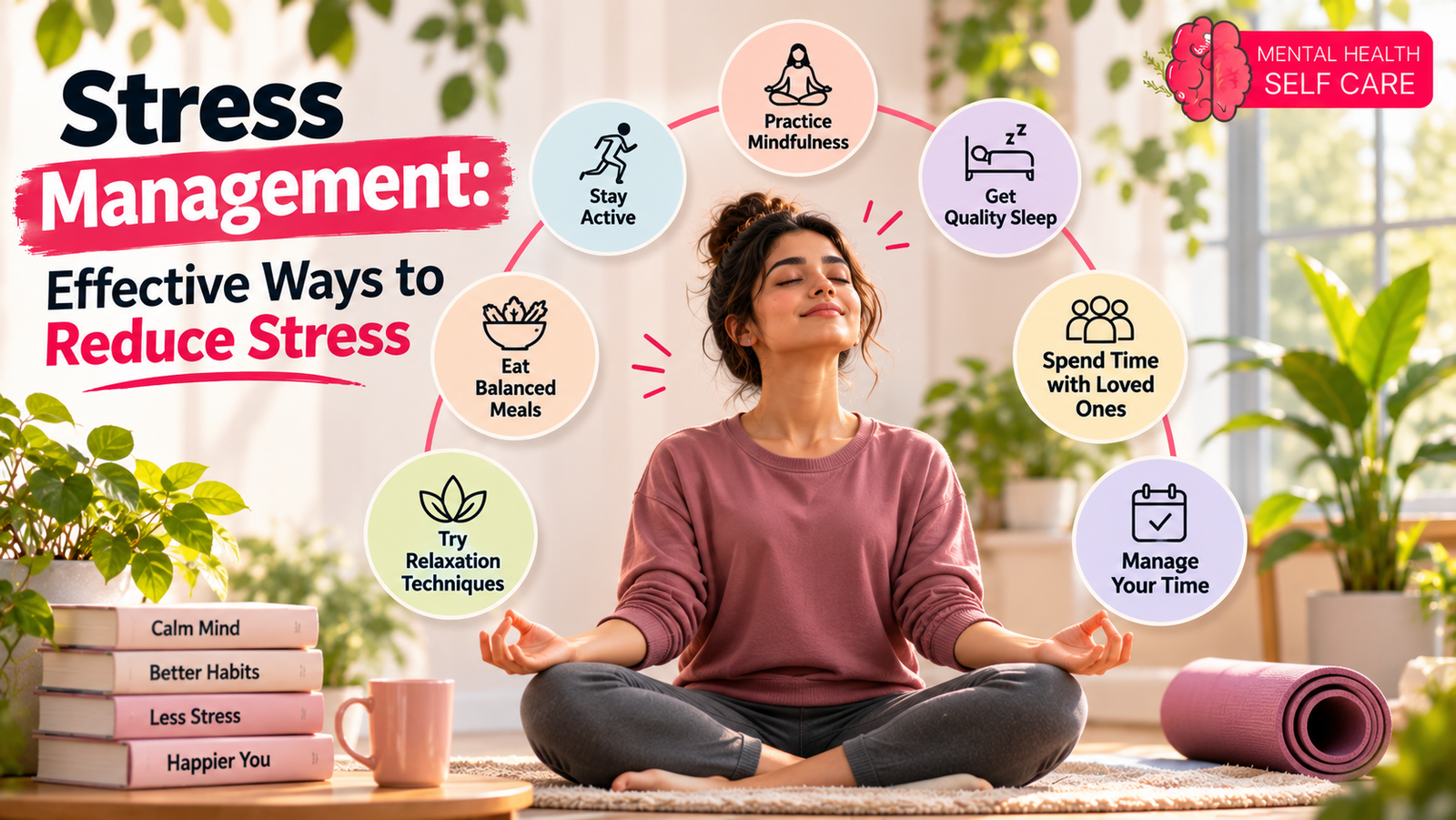
Managing stress requires practical changes rather than temporary distractions. The following approaches can help you respond to everyday pressure and develop healthier habits.
Practise Deep Breathing
Your breathing can also be rapid and shallow when you are upset. Breathing slowly and deliberately can help quiet your stress response and bring your focus to the present moment.
Try to breathe in and out softly through your nose, letting your abdomen expand, and exhale slowly. Keep breathing for a few minutes without undue effort. This can be practiced before an arduous meeting, during a challenging commute or even to facilitate sleep. Break when you feel dizzy or uncomfortable.
Exercise Regularly
Exercise is able to combat mood swings and stress. The possibilities to walk, cycle, swim, do yoga and other exercises offer a chance to get rid of tension and improve overall well-being.
You don’t need a vigorous exercise program. An inexpensive goal can be a daily walk, a few minutes long, or a few light stretches. Choose an activity you can sustain instead of a strenuous routine that causes more stress.
Improve Sleep Quality
Inadequate sleep can make daily tasks more complicated. You can have problems concentrating, being patient, and emotional control may be affected when you frequently sleep less than you need.
Ensure you have a regular bedtime, minimize screen time before bed, and have a comfortable place to sleep. It is best to keep work at a distance when you are in bed. If sleep issues persist, consult a health care provider to identify the underlying reasons. Our guide to self-care tips for mental health includes additional habits that support better rest.
Organise Your Daily Responsibilities
An excessive workload can cause unnecessary mental stress. Once all the tasks seem urgent, deciding where to begin becomes a problem.
List your duties and prepare what exactly has to be done at the moment. Break bigger projects down into smaller bits and take realistic time toward breaks. Study to postpone or delegate activities when necessary. An excellent organisation does not get all the problems out, however, it may help to organise the responsibilities more easily.
Build Healthier Emotional Habits
Stress management is not only about changing your schedule. Your emotional responses, thought patterns, and relationships also influence how you experience difficult situations.
Challenge Negative Thinking
People can also tend to catastrophize under strain. A slight misstep can be taken to mean a total failure, or an uncertain stance might be perceived as definitely ending in a bad situation.
Go stop and analyze the thought when that occurs. Ask yourself whether you have sufficient reason to justify the conclusion you have made or whether you are acting largely out of fear. This does not entail turning a blind eye to real issues. It is responding by not being as one-sided, but by letting every negative assumption dictate your choices.
Stay Connected With Others
When you tell a trusted person about your hardships, it may make it easier to help you cope. It can be a friend, family member, or even a colleague who is supportive, offers a different point of view, or just listens without judgment.
Stress is intensified by isolation, especially when you feel you should do everything alone. Take time and have meaningful talks and good connections. If personal support is insufficient, professional mental health counselling may provide a structured space to discuss ongoing difficulties.
Set Healthy Boundaries
Taking on continuous obligations would leave you with minimal time to relax. One of the key things to learn in pressure management is learning how to express your limits.
Establish achievable working hours; extra commitments are not necessary and make explanations when your workload becomes unmanageable. Discuss household task allocation at home rather than carrying it alone. Boundaries do not always mean you are selfish; they help guard your time and energy.
Lifestyle Changes That Reduce Stress
Everyday habits influence how well you cope with demanding situations. Small, consistent changes can support emotional and physical health over time.
Maintain Balanced Nutrition
Skipping breakfast or eating a lot of highly processed foods can affect your energy and overall health. Attempt to have regular meals with an intake of vegetables, fruits, whole grains, sources of proteins, and adequate fluids.
Limit caffeine when it causes restlessness or prevents sleep. There is no single food that can solve chronic stress, but nutritious, regular meals benefit your overall health and help make everyday life a little more manageable.
Spend Time Outdoors
Being in nature can be a relief to never-ending duties and devices. A stroll in a park, sitting in the open air or gardening or spending time in the daylight might make you feel better settled.
You don’t need to plan a fancy outdoor adventure. Having a little time out of your regular life can give you time to rest and refocus.
Make Time for Enjoyable Activities
Hobbles and recreation are some of the initial thing that people forego when their schedules are taken over by responsibilities. Nevertheless, fun activities present chances at rejuvenating everyday expectations.
You can make your routine more balanced by reading a book, listening to the music, cooking, drawing a picture, playing a sport, or hanging out with your friends. Such activities do not substitute treatment in case of severe stress, but they may help with overall health.
When Stress Becomes a Serious Concern
Occasional stress is normal. The concern arises when pressure becomes persistent, difficult to control, or disruptive to important areas of life.
Recognize Chronic Stress
Chronic stress cells are formed when the body and the mind are subjected to continuous stress. You might feel tired even though you are taking breaks, be more irritable, have difficulty concentrating, or have frequent sleep difficulties.
Stress may also lead to relationship problems, job performance issues, and long-term physical health problems.
Our article on types of mental illness explains how stress-related difficulties differ from recognized mental health disorders. Persistent symptoms deserve proper assessment rather than self-diagnosis.
Seek Professional Support
If reasonable lifestyle modifications have not helped alleviate the stress, consider talking with a mental health professional. Counselling may help you learn about triggers and how to respond emotionally, as well as coping skills applicable to your situation.
If stress is observed as constant sadness, excessive anxiety, or loss of interest in daily activities, it may be possible to make an appropriate clinical assessment. Our depression treatment guide describes the help that can be given to depressed individuals by means of professional treatment. Our guide to therapy for depression explains how professional treatment can support people experiencing depressive symptoms.
Support From Mental Health Self Care
Mental Health Self Care counters stress, anxiety, overthinking, emotional burnout and personal issues with counselling-based support. Radheshyam More provides a way to learn to be aware of their emotions and work out practical methods for reacting to difficult situations.
Experience and Client Feedback
Mental Health Self Care brags over 500 counselling sessions that have been successfully completed over five years as well as over 50 video testimonials. These numbers reflect the experience reported by the service and client feedback. They do not promise recovery or clinical outcomes.
Personalized Counselling Support
Everyone responds differently to stress. There are those who cannot cope with work pressure, and some cannot cope with family, relationship issues or incessant overthinking.
Individuals can discuss appropriate support options through stress counselling, anxiety counselling, online counselling, individual counselling, depression counselling and professional emotional support.
The right method will depend on the individual’s needs. Individuals with worsening or chronic symptoms are supposed to be evaluated by an appropriate, qualified clinical specialist.
Through stress counselling, anxiety counselling, online counselling, individual counselling, depression counselling, and professional emotional support, individuals can explore suitable support options.
The appropriate approach depends on the person’s needs. People experiencing severe or persistent symptoms should seek assessment from a suitably qualified clinical professional.
Conclusion
Strategies to Reduce Stress include managing stress triggers, building positive daily habits, establishing healthy relationships, setting limits, and developing realistic coping skills. Stress cannot always be avoided; however, your reaction to it can improve with regular practice and appropriate support.
Waiting until the pressure affects all aspects of your life is a bad idea. Take small steps, notice when changes make you feel alone, and seek professional help when you need it.
Mental Health Self Care provides advice to people to take their emotional state seriously and find out the right support to help them live happier and much more balanced lives.