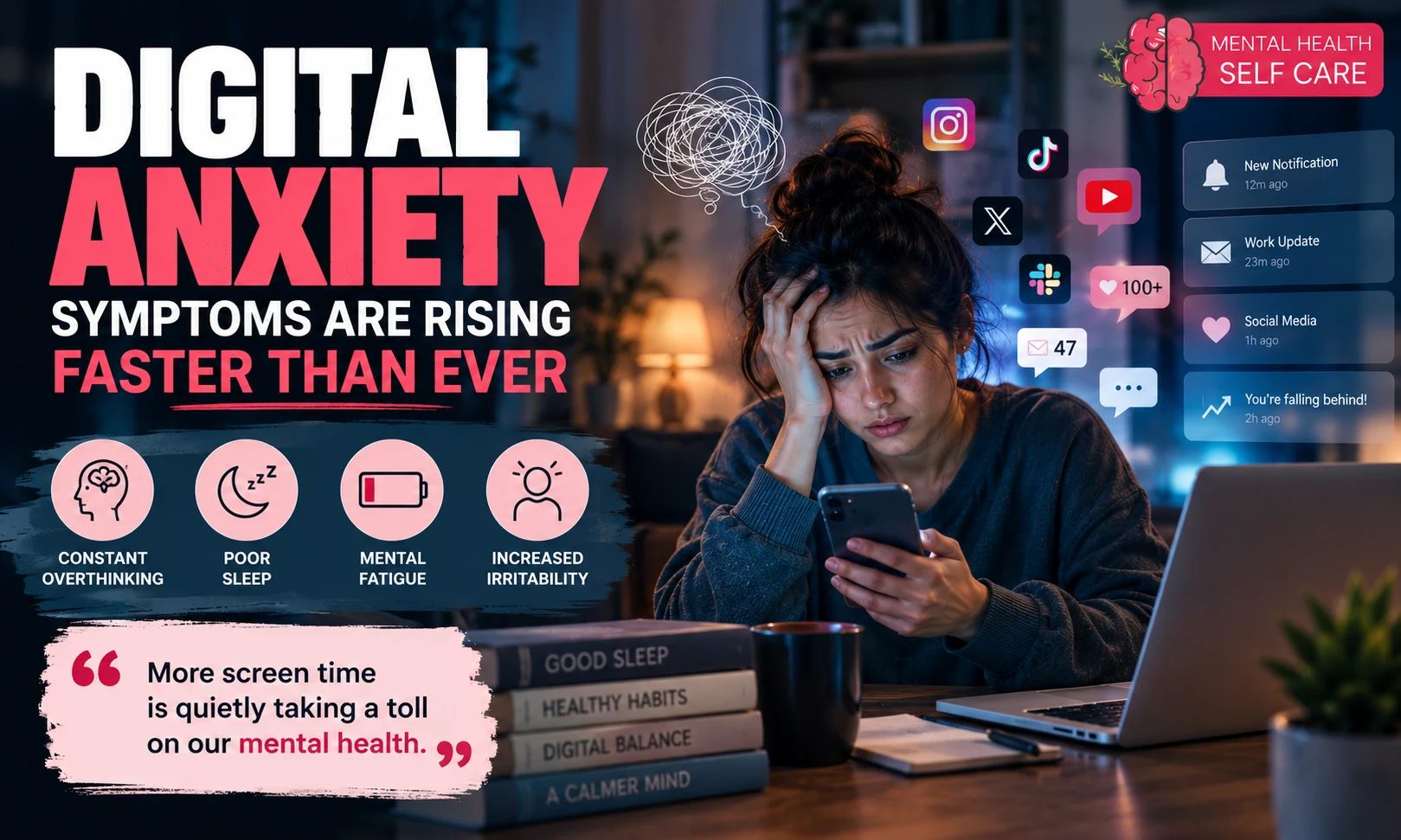
Digital anxiety Symptoms are becoming more widespread with constant notifications, pressure on social media, information overload, work messages, and being able to always be connected online, causing the mind to have a harder time truly turning off.
These effects may include obsession with checking the phone, discomfort when offline, weak attention, sleep disturbance, irritability, social comparison, and obsessive worry related to digital technology use. Left unattended, they might gradually disrupt emotional health and daily life.
Technology is not the enemy. The issue arises when digital stimulation is so constant that the brain rarely has time to rest. Work comes home with people, social media fuels endless comparisons, and breaking news keeps people anxious and on alert throughout the day.
Understanding how digital habits affect emotional health can help people identify unhealthy behaviours and build a more positive relationship with technology.
Why Digital Anxiety Is Increasing
Rarely is there only a single app or device that brings about digital anxiety. It comes from constant exposure to messages, facts, societal pressure, and the sense that you must be available at all times.
When these pressures persist throughout the day, the brain doesn’t have enough chance to check out mentally. The Digital Anxiety Symptoms are becoming more and more impossible to deny due to several factors of contemporary digital life.
Being Available Feels Mandatory
Smartphones have blurred the line between being reachable and being everywhere. At just about any time of day, there could be work emails, family groups, social messages, and notifications. Even when nothing is urgent, some people feel guilty or anxious when they don’t respond quickly.
This creates a low-level mental alertness, as the mind keeps waiting for the next message. In the long run, it may become extremely hard to truly rest because one is always monitoring communication.
Information Never Really Stops
People are now bombarded with a huge amount of information from the news, social feeds, videos, podcasts, emails, and messaging apps. The issue is less the amount of information than the rate at which focus shifts to something unrelated.
The brain can process work stress and troubling news, amusement, and personal messages in minutes. Persistent mind-shifting may cause heaviness, distraction, and even emotional exhaustion without anyone knowing why.
Social Comparison Happens Daily
Social media gives people unprecedented visibility into others’ careers, connections, looks, holidays, homes, success, and lifestyles. Since users usually share curated moments rather than their full reality, the comparison becomes distorted.
One might rationally understand that the information on the internet has been narrowed down to a few similar pieces, yet still feel unsatisfied after reading the same details several times.
The more this comparison becomes a habit, the less confidence, the greater the dissatisfaction, the stronger the desire to be like someone or be in a particular situation, and the more anxiety.
Work Has Entered Personal Time
Apple work and smartphones have facilitated professional communication but have also blurred traditional boundaries around working hours. After dinner, employees can check email, answer messages before bed, or ruminate on unfinished work whenever they receive an alert.
The body can be out of the workplace, but the mind is professionally active. In the absence of digeseses of the self, unremitting exposure to the digital realm may be a source of stress, fatigue, and other digital anxiety symptoms.
Digital Anxiety Symptoms to Notice
Digital anxiety may not necessarily appear like blatant panic and extreme distress. The first signs are also associated with the development of common habits that can slowly develop into a control addiction.
One can continue employment, communicate, fulfil duties, and become more and more addicted to digital stimulation. Recognising these behavioural and emotional shifts can help you avoid developing a new unhealthy technology habit that becomes part of your daily routine.
You Check Your Phone Automatically
Checking your phone right after you wake up, during a conversation, while waiting a few minutes, or when challenged by work can signal that checking has become a habit, not a conscious choice.
Other individuals open their machines without knowing what they were supposed to check. This can be especially worrisome when stepping away from the phone brings observable nervousness or unease. Repeated checking further disrupts attention, making concentration progressively harder.
Notifications Create Immediate Tension
An alert should be no more than a notification, yet for some people, every vibration or alert triggers a stress reflex. They might also worry that an issue has arisen at work, someone is in a fix, or they have overlooked something necessary.
Someone may be alone and hear another person’s notification, which may trigger the urge to check their phone. The nervous system has less time to rest in a truly relaxed state when several alerts bring tension throughout the day.
Your Mind Struggles With Silence
Digital stimulation seems unstoppable, and even quiet feels surprising.
Being left alone, travelling without distraction, or waiting in a queue or eating without observing anything can lead to restlessness and an immediate need for stimulation. This does not necessarily portray an instance of a mental illness, but it may represent the extent to which attention has been influenced by digital habits.
Another aspect of alleviating digital anxiety symptoms and restoring mental clarity is learning how to be comfortable in the unstimulated moments.
How Digital Anxiety Affects Daily Life
The effects of overstimulation from digital devices can last longer than the hours spent on a device. Once the mind gets used to continuous interruptions and frequent sources of information, concentration, relationships, emotional control and rest may be affected. These changes can come over time; this is why not all people immediately relate challenges in daily life to constant digital anxiety symptoms.
Concentration Becomes Harder to Maintain
Constant switching between emails, social media, messages, videos, and work activities conditions attention to switch at a high frequency. Over time, activities that require deep focus may start to feel strangely challenging. Individuals might have to read the same paragraph more than once, struggle to complete tasks without looking at their smartphones, or get distracted during discussions.
This distracted concentration may make the process less productive and more frustrating because it takes longer to complete tasks. Taking attention breaks can give the brain a chance to reestablish healthier attention patterns.
Real Relationships Can Feel Less Connected
Emotional connection isn’t necessarily built through digital connection. Family, couples, and friends can spend much time together and constantly break the conversation to check their gadgets. These small disruptions can leave people feeling neglected or emotionally unimportant over time.
Online comparison can also create unrealistic expectations about relationships. Setting aside technology-free time for meaningful conversations can help reestablish presence and ensure technology doesn’t silently withhold the emotional bond people need when they’re not online.
Emotional Reactions Become Stronger
Mental overload can reduce emotional patience. Even after hours of notifications, work messages, online debates, news, and social media, small daily irritants can still cause emotional burnout or irritability. Sometimes people believe their short temper is solely due to work or relationships, without realizing they are digitally overstimulated. By limiting input, the mind has time to rest, and emotional responses can be controlled more easily.
Relaxation Stops Feeling Restful
Passive digital consumption is not always psychologically replenishing, and scrolling can be considered relaxation. One may sit on the sofa and talk on their phone for an hour and still end up mentally exhausted because the brain has been processing information the whole time.
Reducing Digital Anxiety
The treatment of digital anxiety does not imply erasing every social media platform or quitting technology. That would be impractical for most people. A more realistic approach is to regain control over when, why, and how technology enters your attention. Some careful limits can minimise unproductive distractions while maintaining the benefits of digital communication, entertainment, and work.
Turn Off Non-Essential Notifications
Not everything applications require is worthy of your immediate attention. One way to reduce how often your focus is diverted is to turn off promotional alerts, social messages, and other low-priority notifications.
You can leave important calls or messages and leave everything to wait until an instance when you specifically glance into it. This small change can turn technology from something that demands your attention at all times into something you can choose to use at any time.
Create Daily Phone-Free Periods
Setting aside special times when you are free of your phone can help your mind get used to being unstimulated. Practical places to start include mealtime, physical activity, the first part of the morning, family discussions, or the hours leading up to bedtime.
This isn’t about proving you can live without technology. It’s about setting aside predictable times when you can refocus and give your full attention to what matters.
Stop Using Scrolling as Your Default Escape
Automatic scrolling often comes from stress, boredom, loneliness, and uneasy feelings. Think about what you require at a particular time before opening an app. You might need rest, a walk, a talk, a meal, sleep, or even a quick mental refresh. Responding to the actual need, instead of reaching for digital stimulation, can help break compulsive habits over time and strengthen emotional sensitivity.
Seek Support When Anxiety Persists
Technology should not be entirely blamed because lifestyle changes can assist, but it requires ongoing anxiety.
If anxiety, sleep disturbances, emotional problems, or concentration issues continue to affect daily functioning, talking with a certified mental health expert can help identify what may be worsening it.
Professional help may also offer personalised approaches to dealing with digital anxiety symptoms and not resort to generic advice or extreme digital detoxes.
Why Choose Mental Health Self-Care?
When digital habits begin interfering with emotional well-being, simply being told to use your phone less is rarely enough. Mental Health Self-Care focuses on understanding the emotional patterns behind anxiety and helping individuals develop practical coping strategies that fit their real lives. Support can address digital triggers alongside stress, overthinking, emotional exhaustion, and other factors contributing to poor mental well-being.
- 500+ Counselling Sessions
- 5+ Years of Experience
- 50+ Client Video Testimonials
Conclusion
Digital anxiety symptoms may arise silently with people experiencing real-time social connectivity, constant notifications, social comparison, information overload, and work pressure being projected at the mind, allowing the mind little respite. What started as normal phone time may eventually affect attention, sleep, relationships, mood, and the ability to feel genuinely relaxed.
Technology isn’t something to ignore. It is about developing a healthier relationship with it.
Mental health self-care will assist people to be aware of the emotional antecedents of unhealthy digital habits and how to come up with pragmatic approaches to alleviating anxiety.
With individualized mental health counselling and structured support, individuals can work toward healthier boundaries, stronger emotional control, and a life where technology supports them rather than dominating their attention and awareness.
FAQs
1. What are digital anxiety symptoms?
Digital anxiety symptoms can include compulsive phone checking, restlessness without a device, notification-related stress, poor concentration, sleep difficulties, irritability, social comparison, and difficulty mentally disconnecting from online activity.
2. Can excessive phone use increase anxiety?
Excessive or compulsive phone use may contribute to anxiety for some people, particularly when it involves constant notifications, stressful content, social comparison, disrupted sleep, or difficulty disconnecting.
3. Can social media cause digital anxiety?
Social media can contribute to digital anxiety through comparison, fear of missing out, information overload, online conflict, and pressure to remain constantly available or responsive.
4. Why do I feel anxious without my phone?
Habitual checking can make periods without digital stimulation feel uncomfortable. Anxiety without a phone may also relate to fear of missing messages, social updates, work communication, or other important information.
5. How can I reduce digital anxiety symptoms?
Start by limiting unnecessary notifications, creating phone-free periods, reducing late-night scrolling, taking intentional breaks, protecting offline relationships, and identifying situations that trigger compulsive device use.
Pingback: Panic Attack Symptoms: Signs You May Be Having an Attack