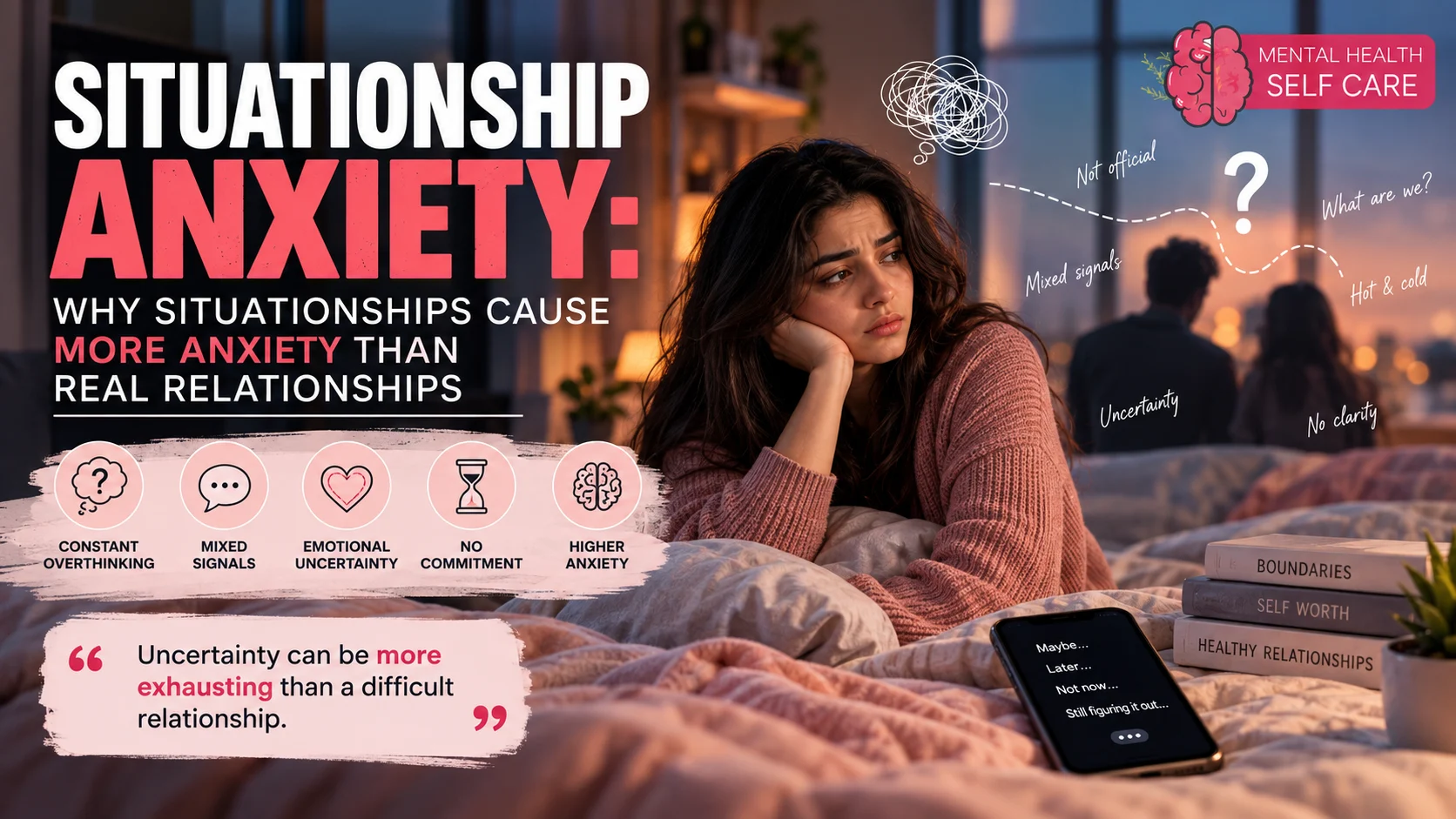
When a romantic relationship is found to be emotionally significant yet without explicit commitment, expectations, or direction, situationship anxiety may arise.
In contrast to a definite relationship, a situationship can leave people in constant uncertainty of where they are, what the other wants, and whether the relationship is going to continue or not. This uncertainty can lead to overthinking, insecurity, attachment issues, and an inability to feel personally settled.
Not all situationships are unhealthy. Some people feel comfortable with undefined relationships that last. The challenge starts when the two individuals have different expectations or when uncertainty persists even as emotions grow stronger.
One person might see the relationship as casual, while the other quietly hopes it will become real. In the case of a lack of honesty, it might lead to great anxiety due to the lack of clarity.
Understanding why situationships create emotional uncertainty can help people identify unhealthy patterns and make clearer choices about their emotional needs.
Why Situationships Create Anxiety
The largest psychological dilemma of a situationship is uncertainty. It can include love and closeness, frequent contact, and emotional connection, without the security of an explicitly defined relationship. When expectations aren’t clear, the mind tries to fill in the gaps, and in most cases, it creates unclear questions with no clear-cut answers.
You Never Know Where You Stand
In a serious relationship, both individuals tend to know what it entails and what they can expect from one another. A situationship can eliminate that certainty. You might spend a lot of time together yet not know whether you are a couple.
Such ambiguity may turn something as simple as a change in communication into something meaningful. A delayed response or a cancelled plan can lead to questions about whether the other person’s feelings have changed. Lack of clarity is taxing emotionally.
Mixed Signals Encourage Overthinking
The individual could act affectionate and affected one day and aloof another. These conflicting signals make the relationship hard to understand in real life. Rather than reacting to clear, explicit information, you start interpreting messages, conversations, social media activity, and behavioural changes.
This relentless interpretation may escalate situationship anxiety since the psyche continues its search to find out some form of certainty that the relationship itself has failed. Emotional inference offers no security.
Emotional Investment Has No Security
Relationship labels don’t necessarily match feelings. You can form a serious attachment without either person ever signing any mutual agreement of commitment to the relationship. When we put a lot of emotion into a relationship, it can be horrifying to think about losing the bond.
However, receiving reassurance can feel uncomfortable because you may worry that your definition of the relationship could drive the other person away. This puts one in an awkward emotional situation: you care about losing them but you are unsure enough to believe that you cannot request that they be secure.
The Future Remains Unclear
Future planning can be emotionally complex in a situationship. You might question whether this individual will want commitment in the future, whether you should keep investing, or whether your time will ultimately pay off.
Because the future is unclear, each possibility remains unknown. This may give anxiety to situationships, especially where one individual is expecting the relation to progress and the other individual is content with the existing setup.
Struggling with dating app burnout? Explore the complete blog here.
Signs Your Situationship Is Affecting Your Mental Health
Not all undefined relationships cause distress. The question is how do you feel when listening to the connection? If the uncertainty has started to affect your confidence, sleep, concentration, or emotional stability, the situationship might be affecting your mental well-being.
You Constantly Analyze Their Behavior
You can waste a lot of time deciphering messages, reaction time, social media activity, or shifts in affection. You replay something so basic over and over in your mind. And you get caught up in figuring out what each behaviour means. This tendency can transform, over time, the core doubt in romance into long-term mental fatigue.
Your Mood Depends on Their Attention
You are relieved or excited when they message. When they go away, you feel so low. Their availability can make or break your day when it comes to your security or worth. This dependency can turn the relationship into a never-ending game of reassurance and worry. Over time, you become emotionally tied to another person’s inconsistent availability.
You Are Afraid to Ask What They Want
When you crave clarity but don’t want to ask because you are afraid of losing the connection, something significant is happening. You might hesitate to raise the subject of devotion, lest you be accused of seeming imperious or drive the other out of view.
Even if you withhold your needs, you can hold the situation together, but you are likely to inflame it and cause emotional unease.
You Feel Lonely Despite Being Connected
Emotional loneliness as a result of having someone in your life but being emotionally alone is one of the most painful parts of a relationship. You can have sex, talk, and see each other frequently and still not feel reassured and emotionally safe. This mix is even more baffling than being single, since the relationship exists without the emotional assurance you need.
How to Manage Situationship Anxiety
The first step in minimising situationship anxiety is to unravel your emotional needs as opposed to attempting to filter through the behaviour of another person indefinitely. You cannot control someone’s desire to commit, but you can decide how much uncertainty you’re willing to accept.
Identify What You Actually Want
Ask yourself whether you are truly satisfied with an imprecise relationship or secretly wish it would become serious. Be truthful and do not answer in the way that appears most likely to maintain the interest of the other person. Knowing what you need will help you share yourself more easily and understand when the current situation is no longer emotionally sustainable.
Have an Honest Conversation
Communication is typically needed to bring about clarity. Describe your experience of the relationship and inquire of the other person how they are experiencing it. This isn’t to coerce someone into committing, but to see whether your expectations are healthy.
Telling the truth can be painful and far more emotionally exhausting than a long period of doubt.
Stop Treating Potential as Commitment
Someone can claim that he or she loves you and yet does not need an exclusive relationship. Focus on regular behaviour instead of creating expectations about what will happen one day. Staying emotionally engaged with a situation that isn’t immediately fulfilling means hoping they will change their mind someday.
Protect Your Emotional Boundaries
One can create healthy boundaries through contact limiting (when the interaction is too emotional), friendships, and personal interests and refuse treatment that invariably leads to distress.
If situationship anxiety doesn’t fade even when you try to communicate and set boundaries, professional counselling can help you better understand attachment patterns, heart needs, and relationship behavior.
Conclusion
Situationship anxiety is frequently an outcome of confusion instead of bondage. Unclear expectations about whether affection, intimacy, and emotional investment will work can leave the mind circling questions of commitment, compatibility, and the future.
Situationships may work when those involved share similar expectations. Nonetheless, when emotional equilibrium is disrupted, where the former desires a certain level of clarity or commitment whereas the latter desires ambiguity, the former can find this situation to be exhausting.
Knowing what you need, speaking mindfully, behaving consistently, and creating and maintaining healthy boundaries may help you regain a sense of detachment.
Want to ensure that, despite relationship uncertainty, your confidence, sleep, mood, or life in general, Mental Health Self Care can provide professional counselling and individualised emotional support to help you frame your relationship patterns and make well-informed health-related decisions that help you lead a better life.
FAQs
1. What is Situationship Anxiety?
Situationship Anxiety is the stress, uncertainty, overthinking, and emotional insecurity that can develop when a romantic connection lacks clear commitment or shared expectations.
2. Why are situationships so emotionally confusing?
They can involve intimacy and emotional attachment without clearly defining the relationship. This creates uncertainty about expectations, exclusivity, commitment, and the future.
3. Can a situationship cause anxiety?
Yes. For some people, prolonged uncertainty, inconsistent communication, emotional attachment, and fear of losing the connection can contribute to significant anxiety.
4. How do I know if my situationship is unhealthy?
Consider how consistently the connection affects you. Persistent anxiety, overthinking, low self-esteem, emotional dependence, loneliness, or fear of expressing your needs can indicate that the arrangement is not working well for you.
5. Should I ask my situationship partner what they want?
If you need clarity, an honest conversation can help you see whether your expectations align. The goal is to communicate your needs, not pressure someone into a particular answer.
6. How can I stop overthinking a situationship?
Focus on clear information rather than assumptions, communicate directly, maintain your personal life, establish boundaries, and avoid interpreting every message or behaviour as evidence about the relationship.
7. Can counselling help with Situationship Anxiety?
Yes. Counselling can help individuals understand anxiety, attachment patterns, emotional needs, boundaries, and relationship behaviours that may be contributing to distress.