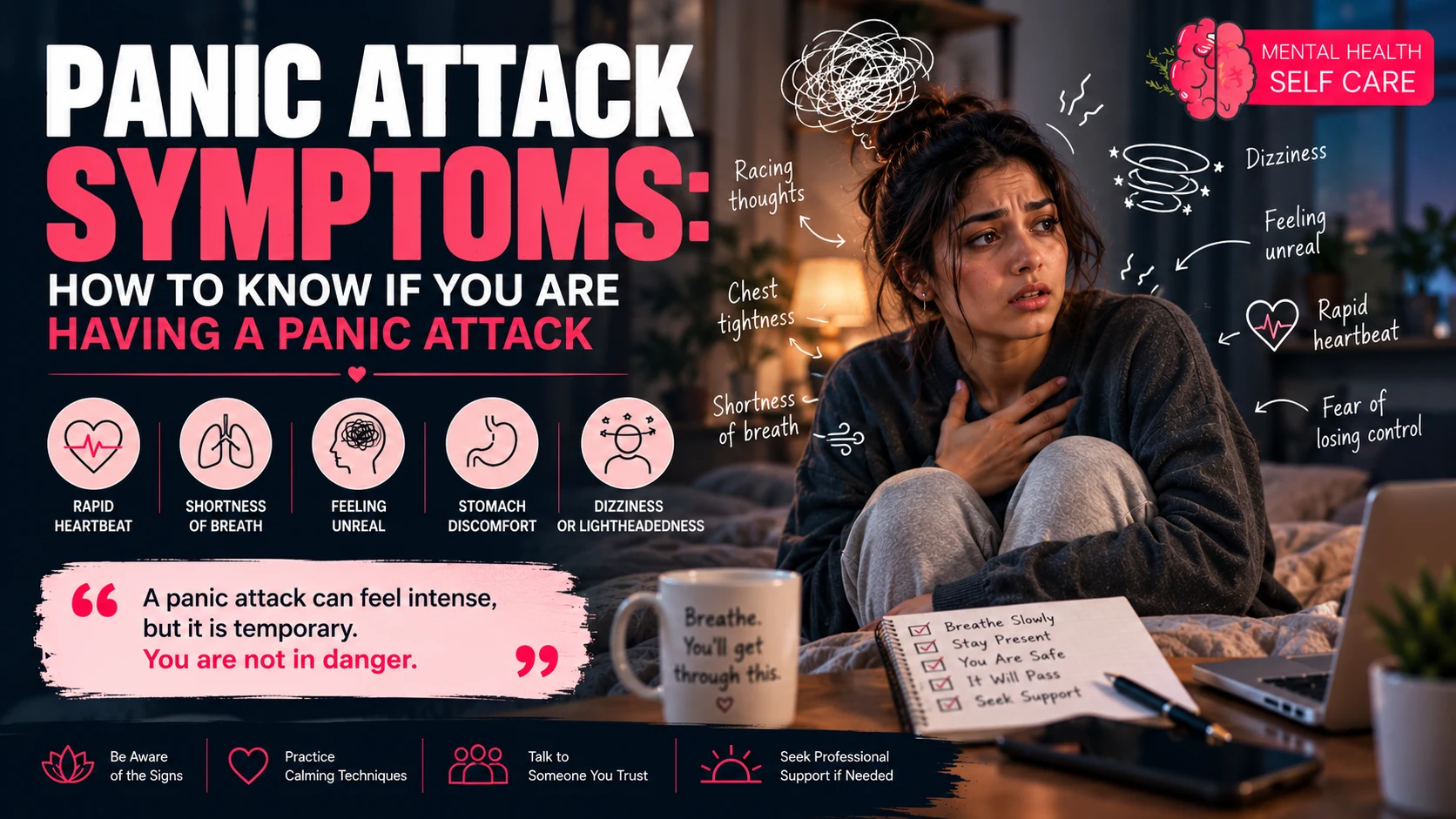
Panic attack symptoms may include a sudden rapid heartbeat, chest tightness, shortness of breath, dizziness, sweating, shivering, nausea, and intense fear that something awful is happening. The sudden onset of a panic attack can be very frightening, and this can be easily confused with a heart attack or any other emergency.
The experience can be frightening because the body reacts as if it faces immediate danger, even when no clear threat is present. Others fear losing control, fainting, or dying during an episode.
Learning about Panic Attack Symptoms can help you recognise what might be happening, but you may not always be able to self-diagnose. Seek medical evaluation if you have new or severe chest pain, fainting, unusual difficulty breathing, or symptoms that don’t feel like your previous ones.
Common Panic Attack Symptoms
Panic attacks can affect both the body and mind. Panic Attack Symptoms vary from person to person, but some signs are commonly reported.
Racing Heartbeat
One of the most common Panic Attack Symptoms is a sudden, quick, or rapid heartbeat. You may hear your heartbeat in your chest, neck, or ears. This feeling may cause the attack to seem even more threatening since individuals tend to think that the increased heart rate is a sign of a severe health issue. Fear-induced stress responses can make the heartbeat even faster.
Shortness of Breath
Some people believe they are not getting enough air. Breathing may become rapid, shallow, or uncomfortable. You may breathe in and out a couple of times and yet feel that something is amiss.
This feeling can cause more panic because it is hard to breathe naturally and can feel threatening.
Controlled, slow breathing can help some people feel less stressed, but major or unusual difficulty breathing should not automatically be assumed to be anxiety.
Chest Pain or Tightness
Chest discomfort is another symptom that can occur during panic. It can be as though it is pressing, tight, burning, or painful around the chest.
Because heart-related conditions can mimic these symptoms, take new or severe chest pain seriously. When you are not sure whether your symptoms are a panic attack or a medical emergency, call an ambulance instead of diagnosing yourself.
Dizziness and Shaking
Panic can cause dizziness, trembling, weakness, or the feeling that you are about to faint.
People sometimes describe feeling detached from their surroundings or as if everything suddenly feels unreal.
These sensations may heighten fear and lead to thoughts like, “I am losing control.” Knowing these experiences can happen during panic can help calm some fears, but repeated attacks should be evaluated by a professional.
Mental Symptoms of Panic
Panic attacks are not only physical. The thoughts that come to mind during an episode can be just as intense.
Fear of Dying
An individual can really feel that he/she is dying in the process of a panic attack. That fear can feel entirely real, especially with chest discomfort, changes in breathing, dizziness, and a racing heart.
This is why reassurance like “just calm down” is usually not helpful. The individual is undergoing an intense threat response that seems real to him or her at that time.
Fear of Losing Control
Another common experience is feeling that you might collapse, scream, behave irrationally, or lose control of your mind.
These phobias may persist even after the attack. Individuals can then start to fear that they might have another attack at work, when driving, on public transport, or when away.
This fear of recurring episodes may at times be more disruptive than the original attack.
Feeling Detached
Some people feel out of touch or unreal when panicking. The setting can be alien, remote, or unreal. Some are temporarily out of touch with themselves.
These sensations are disturbing but may happen in the case of high anxiety. If they are a common occurrence or persist even beyond panic attacks, it would be useful to talk to a professional in the field of mental health to understand what is occurring.
Panic Attack or Anxiety?
A panic attack is characterised by a sudden surge of intense fear or discomfort that peaks quickly.
General anxiety can accumulate over a longer time and can be long-term.
Without a sudden panic attack, someone with frequent anxiety may feel worried, tense, nervous, unable to concentrate, or sleep poorly.
Understanding this difference can help, but you should still discuss persistent Panic Attack Symptoms with a healthcare or mental health professional.
What to Do During an Attack
Panic attack may be uncontrollable, yet there are some practical steps that can help to make it easier to cope with.
Slow Your Breathing
Avoid deep breaths that come one after another; instead, slow down the breathing rate. Breathe slowly and softly, and focus on a longer exhale.
This isn’t to drive the panic away immediately, but to give your nervous system a more relaxed beat.
Ground Yourself
Bring attention back to what is happening around you. Notice what you can see, hear, feel, or touch under your feet.
Grounding can redirect your focus from catastrophic thoughts to your current environment.
Remind Yourself It Will Pass
Panic gives the illusion that the emotion will last forever. Remind yourself that the intensity will eventually decrease. Avoid fighting every sensation. Instead, observe whatis happening as the episode runs its natural course.
When Panic Attacks Keep Returning
A single panic attack does not necessarily imply that one has panic disorder. However, repeated attacks or ongoing fear about future episodes can begin affecting everyday life.
People might avoid travelling, visiting crowded places, exercising, driving, attending meetings, or returning to places where they previously experienced panic.
This is where anxiety counselling or mental health counselling can help. A professional counsellor will assist you in comprehending triggers, thought patterns and coping strategies; a clinical assessment might be advised in case the symptoms indicate a particular anxiety disorder.
Evidence-based care can involve psychotherapy, including cognitive behavioural therapy, and certain individuals might require medical evaluation or medication.
Conclusion
Panic Attack Symptoms may be scary because they affect both the body and the mind. An episode can be perceived as an emergency due to a racing heartbeat, chest discomfort, shortness of breath, shaking, dizziness, fear of dying, and fear of losing control.
Knowing these symptoms can help you respond more calmly, but you shouldn’t ignore repeated attacks. When panic, anxiety, or fear of another attack is starting to dominate your everyday life, panic attack treatment, anxiety counselling, and proper professional evaluation can assist.
Mental Health Self Care offers individual mental health counselling and online counselling with Radheshyam More to enable people to learn the patterns of anxiety and their practical coping strategies, as well as refer to specialist care when necessary.