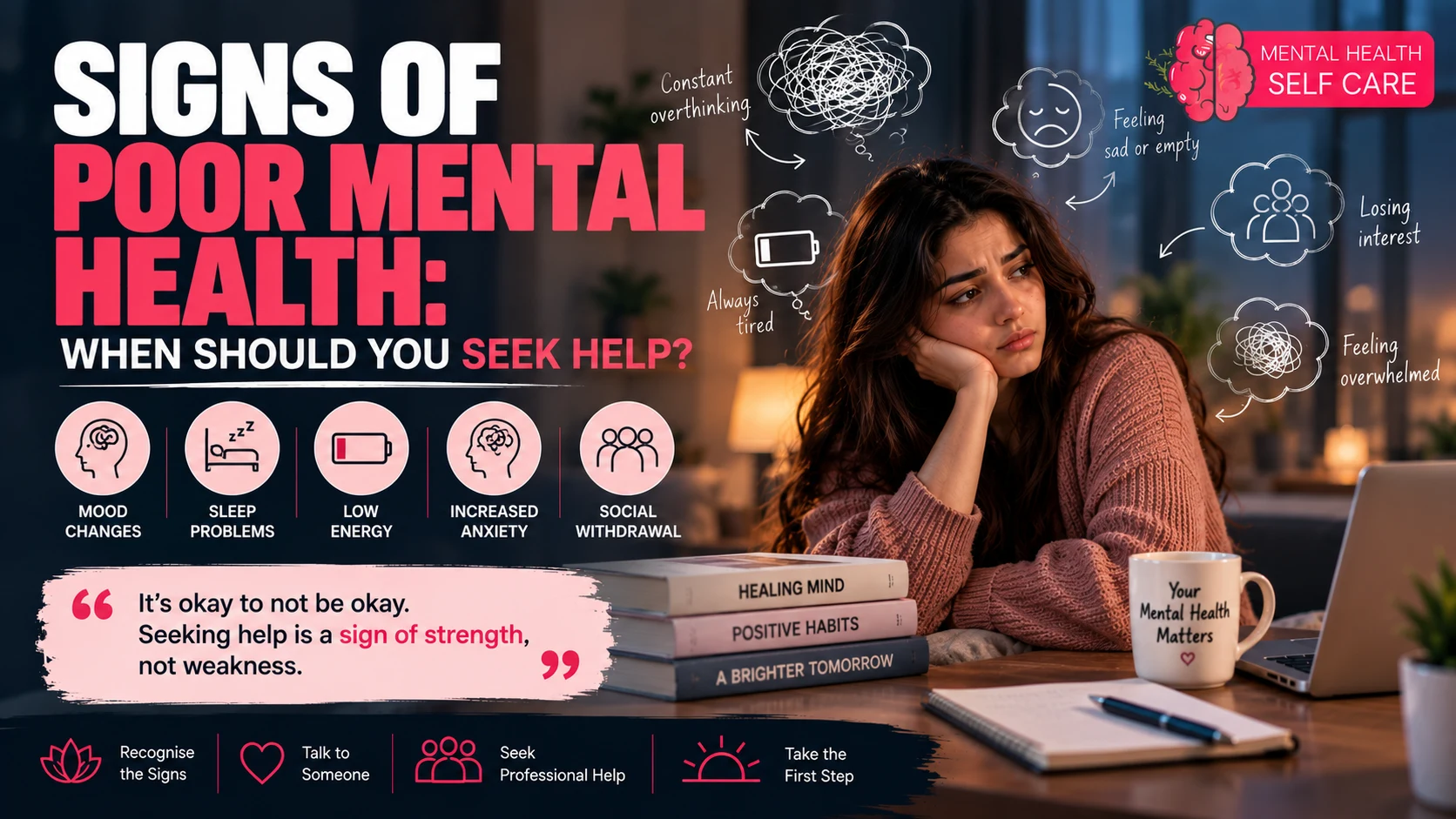
Right before your eyes, Poor Mental Health may manifest itself in the form of continual sadness, anxiety, irritability, loss of motivation, sleeping difficulties, emotional burnout, inability to focus, social isolation, or alterations in daily habits.
Despite the fact that everyone cannot avoid bad days, more attention should be given to mental health when emotional burdens continue to be difficult to cope with or make a signal that they are affecting work, relationships, sleep, studies, and other things that must be satisfied.
Poor Mental Health does not automatically mean that a person has a mental illness that is diagnosed. Emotional well-being can be temporarily impacted by stress, grief, difficulties in relationships, work strain, trauma, financial stress, loneliness, and significant life transitions.
Stress or unhappiness is not the issue. The question is whether these feelings build up persistently and affect your daily life. Early recognition of warning signs can contribute to the development of a smoother path to seek appropriate mental health support when emotional difficulties appear to be more difficult to manage.
Common Warning Signs
Poor Mental Health issues often progress over time. You might keep going at work, studying, caring for family, and doing chores while feeling increasingly drained inside. Watch for changes in mood, thoughts, sleep, energy, and behavior so you can get extra support.
Persistent Low Mood
People always feel sad sometimes, and in most cases, when disappointed, lost or having to bear some stressful events. It is more worrisome in cases where the sadness, emptiness, hopelessness, or emotional heaviness extends to weeks and begins to affect daily functioning.
To the point that you think nothing is wrong, you can lose interest in something that once was fun and become unable to feel motivated.
Low mood is an enduring condition that can be caused by a wide range of factors and cannot be considered depression. However, when it continues or becomes severe, a mental health expert can help you identify the type of support you may need.
Constant Anxiety
Frequent worry can be another sign of Poor Mental Health. You may constantly think about work, health, relationships, money, the future, or what could go wrong. It can also show up as physical symptoms such as a racing heart, muscle tension, stomach uneasiness, restlessness, or difficulty sleeping.
The new stressors of modern times may contribute to anxiety. As an example, Digital Anxiety Symptoms and AI Anxiety may be affected by having the feeling that people are always connected, overwhelmed with information, or not knowing what they want to do with their careers.
When anxiety becomes uncontrollable, you can seek counseling so you know how to recognize poor mental health and learn healthier coping.
Emotional Exhaustion
Emotional exhaustion can make routine tasks feel exceptionally hard.
You might be mentally tired at work, in conversation, with family, or at intercourse. The little issues will all seem huge, and you will be more petulant or peevish than usual.
This experience may be separate from dating app burnout, job burnout, caregiving burnout, or long-term relationship problems.
Mental exhaustion isn’t laziness. When you’ve lacked emotional resources for too long, that lack can become significant when you need to reduce unnecessary demands and find the right emotional support.
Changes in Daily Life
Mental health difficulties often become easier to recognize when they start changing ordinary behavior. Sleep, concentration, relationships, appetite, productivity, and social activity can all provide clues that emotional stress is becoming harder to manage.
Sleep Problems
Both Poor Mental Health and sleep problems can be affected by the other.
You may have difficulty falling asleep because your mind cannot stop thinking, wake up many times during the night, sleep longer than usual, or wake up feeling mentally exhausted.
It is normal to have occasional insomnia. Continuous change should be taken seriously since sleep disturbances have the potential to increase irritability, concentration impairment, and anxiety and emotional control.
Keeping a regular sleep schedule may help, but a health practitioner should manage persistent sleep problems, as medical issues can also contribute to drowsiness and sleep disturbance.
Poor Concentration
Concentration may be a challenge with mental stress.
When you reread the same email repeatedly, forget promises, can’t make choices, or can’t do something that wasn’t hard before, you fail to carry out the task.
This can happen due to anxiety, grief, burnout, emotional distress, or Mental Fatigue. You may lose concentration and therefore lose the ability to do it. You may simply be too clouded by emotional needs to think.
Mental health counseling can be implemented to explore the possible underlying stressors as concentration difficulties continue to be a problem going to work or studies.
Social Withdrawal
Wanting occasional time alone is healthy. But coming back and again avoiding friends, family, workmates or things that you enjoy doing is an indicator of emotional hardship.
Individuals can retreat due to fatigue, misunderstanding, anxiety, embarrassment or simply not wanting to narrate what is happening to them.
This isolation may be compounded by relationship problems. Along with Emotional Disconnection in Relationships or other problems with continuity of relationship communication, this can make someone feel lonely even in the midst of real people.
Recovery often requires a safe relationship and not total emotional aloneness.
Emotional Patterns to Notice
Not every warning sign is visible from the outside. Some people continue appearing productive while experiencing intense emotional pressure internally. Thoughts about self-worth, trust, control, and the future can provide important information about mental well-being.
Everything Feels Overwhelming
An easy task can feel enormous when the mind is exhausted. You may procrastinate, avoid clear-cut choices, or feel stressed by duties that once seemed normal.
This may occur following long-term chronic stress, Childhood Trauma Recovery, loss, a sense of career discontinuity, or significant life transitions.
Breaking tasks into smaller parts can relieve the burden in the short run. Nevertheless, when even the simplest everyday routines seem unbearable on a regular basis, it is better to address a professional mental health worker, as opposed to straining yourself to do it again on your own.
You Stop Asking for Help
Other individuals react to emotional stress by becoming overly self-reliant.
They might feel like they are weak by asking someone to support them or they might think that the rest of the people will later fail them. Hyper-Independence After Trauma may be linked to patterns that can cause a person to keep bearing emotional burden when they are in a position to receive assistance.
Independence is good, but itis wise not to reject help that can lead to isolation.
Talking with someone you trust, a professional counselor or another suitable medical professional, can offer a new perspective and ease the burden of keeping it a secret.
You Feel Unlike Yourself
The first warning sign is realizing you are no longer yourself. You may appear quite different in personality. You might even get oddly angry, indifferent, frightened, pessimistic, withdrawn, or numb.
Friends or family may notice changes even before you do. Temporary emotional responses don’t necessarily need treatment; however, if the personality or behavior change is significant, it is worth considering, especially if it lasts a long time or disrupts daily life.
When to Seek Help
You do not need to wait until your Poor Mental Health reaches a crisis before seeking support. Early help can help when symptoms persist, become difficult to control, or start affecting important areas of life.
Symptoms Keep Continuing
Professional assistance may be considered when anxiety and sadness, emotional exhaustion, excessive thought, sleep disturbances, or loss of motivation persist over a few weeks with no significant progress.
No one timeline fits them all. Intensity and impact matter as much as duration.
A mental health counselor might help you identify what is causing the emotional discomfort, while a psychologist, psychiatrist, or doctor may be the right choice when symptoms suggest an issue that needs a clinical diagnosis.
Daily Functioning Declines
Get further assistance when emotional issues disrupt work, education, bathing, eating, sleeping, associations or your capacity to fulfill your daily chores.
Depending on the issue, you might get online counseling, stress counseling, or any other professional care.
In case of severe and rapidly increasing symptoms, or self-harm or suicide, seek professional or emergency assistance as soon as possible and do not self-treat alone.
Why Choose Mental Health Self Care?
Mental Health Self Care provides personalized counseling for individuals dealing with Poor Mental Health issues, stress, anxiety, overthinking, grief, emotional exhaustion, relationship difficulties, and other challenges affecting everyday well-being.
500+ Counseling Sessions
Mental Health Self Care has completed 500+ counseling sessions, providing individualized support for a range of emotional and mental well-being concerns.
5+ Years of Experience
With 5+ years of counseling experience, Radheshyam More helps individuals understand emotional patterns, identify everyday stressors, and develop practical coping strategies through personalized counseling services.
50+ Video Testimonials
More than 50 client video testimonials reflect experiences shared by individuals who have received support through Mental Health Self Care. Every person’s Poor Mental Health issues are different, so outcomes and recovery timelines naturally vary.
Conclusion
Mental Health may be ill and manifest as anxiety, incessant sadness, emotional exhaustion, sleeping difficulties, social isolation, not being focused, irritability, or lack of identity.
When you have a hard week, it does not necessarily imply that you have a mental illness. However, you cannot disregard emotional struggles that persist, grow, and dominate major parts of day-to-day life. When someone is in crisis, they should not have to seek help.
Mental Health Self Care is an online mental health counseling service provider that provides personalized mental health counseling to those who are experiencing poor mental health, such as stress, anxiety, overthinking, grief, and emotional struggles, with Radheshyam More.
Identifying what helps or hinders your well-being and having the right support in place can be invaluable for continued growth, developing healthier coping mechanisms, and making better decisions about what to do next based on your mental health.