
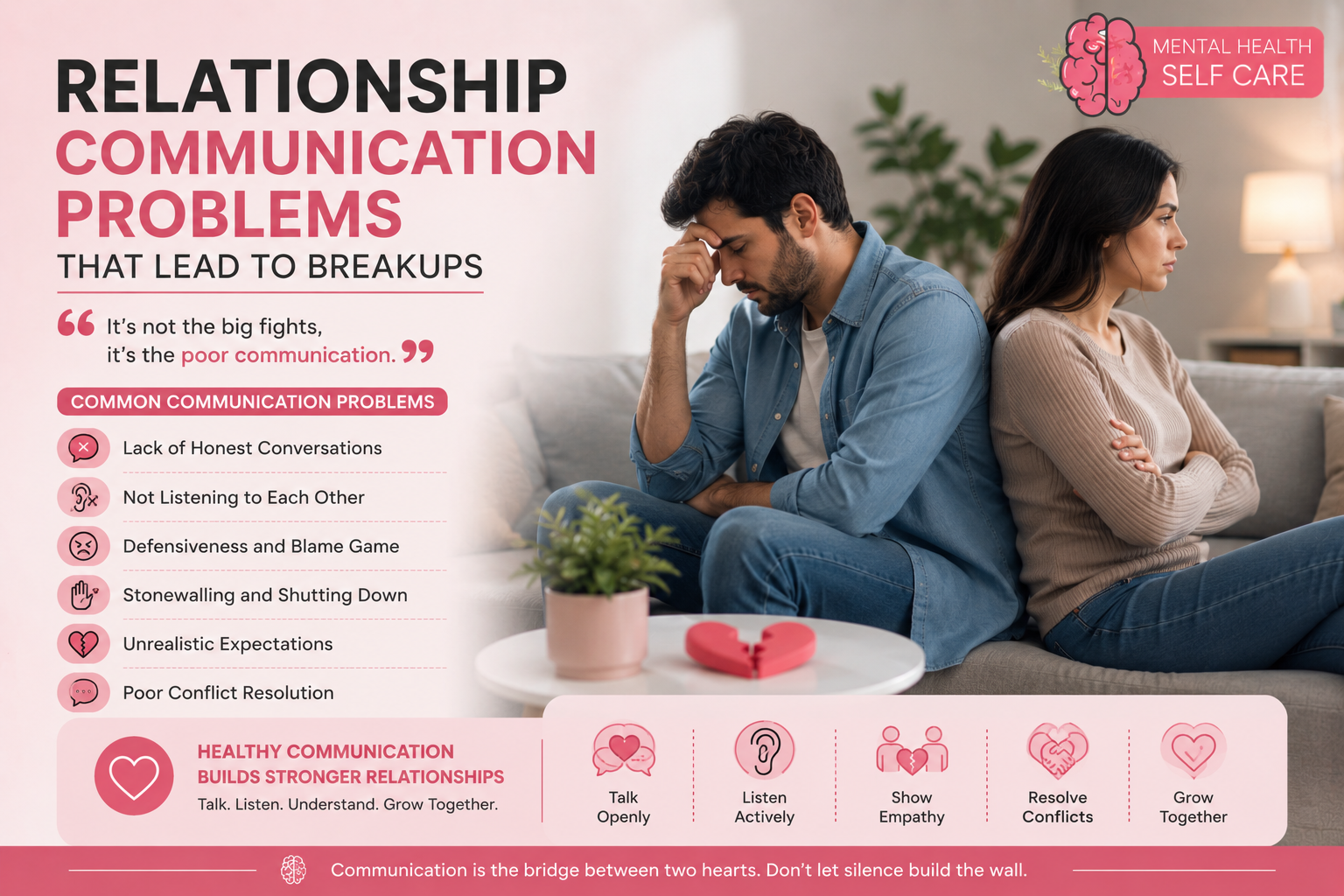
Relationship Communication Problems are among the leading causes of couples becoming emotionally distant, experiencing constant misunderstandings, and even breaking up. As soon as the partners do not communicate freely, listen attentively, and be honest with each other, even minor arguments between them can turn into significant issues in the relationship.
Early identification of Relationship Communication Problems give couples the chance to restore confidence, enhance emotional closeness, and prevent potentially harmful conflicts that could destroy their relationship.
The majority of relationships do not break up because love fades. They gradually deteriorate instead as communication becomes inadequate, emotional needs go unvoiced, and misconceptions remain unaddressed. Emotional distance emerges from busy schedules, stress, unrealistic expectations, and inadequate communication patterns, often without couples even realizing it.
The positive lesson is that healthy communication can be learned and practiced skillfully. Knowledge of the most prevalent Relationship Communication Problems is the first step toward forming stronger, healthier, and longer-term relationships.
Why Communication Matters
Healthy communication is more than just conversing daily. The aspects it enables couples to understand about each other include how each person feels, how to solve their problems respectfully, how to build trust, and how to enhance emotional intimacy. As communication falters, relationships become rife with assumptions, misunderstandings, and emotional frustration. By detecting problems in communication at an early age, one will find it easier to salvage the relationship before emotional distance is too entrenched to break.
Listening Without Understanding
Listening to respond is one of the most prevalent Relationship Communication Problems. When arguments arise, most couples become consumed with protecting themselves and fail to understand the other person’s emotions.
Consequently, discussions end up as arguments rather than opportunities to resolve issues. Active listening involves being patient, empathetic, and genuinely interested in what your partner is saying. As each individual feels heard, resolving conflicts will be much easier, and trust among the parties will be further built.
Avoiding Honest Conversations
Probably more couples do not want to speak about problematic issues, as they are scared of disagreements or even feel upset. Money, family, future, and emotional issues are often kept silent until they reach a point of distress, at which point frustration may strain the relationship. By not having these conversations, only a temporary peace is formed, and emotional pressure is swept under the carpet.
Through openness and respectful discussions, healthy relationships can be established, even when the issues under discussion feel awkward. Open and frank communication will make small issues massive Relationship Communication Problems.
Assuming Instead of Asking
Many relationships are a confused affair due to assumptions. Partners frequently presume what the other person might be thinking or feeling, rather than asking questions or seeking to understand. The assumptions often result in unnecessary misunderstandings, disappointment and emotional distance.
Reality is promoted through clear communication that promotes curiosity rather than judgment. Clearing up simple questions and reassuring each other about how to feel will avoid unnecessary arguments and help the couple understand each other, their expectations, and the BDEs.
Emotional Safety Disappears
People communicate openly only when they feel emotionally safe. When one partner frequently criticizes, interrupts, denies feelings, or becomes angry, the other partner may stop expressing their thoughts altogether.
Such an emotional silence is commonly mistaken for peace, but it mostly boils down to fear rather than healthy communication. Providing conditions in which neither partner is afraid of criticism or of saying something wrong to the other helps strengthen trust and considerably alleviate Relationship Communication Problems.
Common Relationship Communication Problems
Communication issues do not tend to develop overnight but grow over time. Repetitive practices over months or years gradually erode emotional attachment, as couples start to perceive each other as strangers even while living together. Being aware of these common Relationship Communication Problems enables couples to make positive adjustments before misunderstandings become entrenched as persistent emotional barriers.
Constant Criticism
Constructive feedback helps build relationships; persistent criticism undermines emotional confidence. By constantly discussing mistakes, weaknesses, or complaints, the partner who receives them begins to feel that people do not appreciate them and that the relationship is emotionally unsafe. In the long run, criticism is defensive rather than collaborative.
Instead of trading blame, have respectful conversations that encourage the couple to collaborate towards finding solutions. Healthy communication involves an interest in resolving problems without rendering the other person personally unsound.
Poor Conflict Resolution
Arguments are natural in any relationship, and how couples handle disagreements also determines whether the relationship is strengthened or undermined. Some couples are above conflict, and others re-run the same argument and fail to find a solution. Failure to resolve conflict usually results in both partners feeling frustrated and emotionally distant.
Being able to negotiate conflicts amicably, being mindful of the current issue, and seeking a middle ground will ensure that your Relationship Communication Problems are less of an issue and will not become a thorn in your side later on.
Lack of Emotional Expression
Most individuals find it hard to express their feelings freely due to fear of rejection or judgment, or they are vulnerable. They do not express that they are hurt, lonely, or disappointed but assume their partner can tell.
Regrettably, silent feelings often lead to misunderstandings, as partners cannot respond to what they remain unaware of. By telling the truth, one can experience the benefits of being understood, supportive, and emotionally close, rather than feel misunderstood and frustrated.
Technology Replaces Conversations
New Relationship Communication Problems are brought about by modern technology, which many couples underestimate. Excessive use of phones, social media, or job-related devices tends to reduce meaningful face-to-face interactions.
Time spent together may hardly involve any meaningful emotional conversation between couples, even after several hours of togetherness. In the long term, digital distraction diminishes closeness and emotional bonds. Devoting special time to converse without distractions will also help couples revive and improve their relationship.
How to Improve Relationship Communication
Healthy communication is not automatic. It is built upon dutiful work, respect to one another, and readiness to know each other. Couples who have severe Relationship Communication Problems can restore emotional intimacy by simply beginning to change, in small yet significant ways, how they communicate daily. It is not about avoiding disagreements but about framing them in a way that strengthens the relationship rather than weakens it.
Make Listening a Priority
Many people hear their partner’s words without truly understanding the emotions behind them. Effective communication begins with active listening, in which both partners focus fully on each other without interrupting or preparing a response. Paying attention to tone, emotions, and body language helps create deeper understanding. When individuals feel genuinely heard, they become more comfortable sharing their thoughts, leading to stronger trust and fewer Relationship Communication Problems over time.
Express Feelings Clearly
Expecting a partner to guess emotions often leads to disappointment and unnecessary misunderstandings. Instead of remaining silent or expressing frustration through anger, couples should communicate their feelings honestly and respectfully. Using calm language to explain emotions helps both partners understand the real issue rather than arguing over assumptions. Open emotional expression encourages empathy and creates an environment where problems can be solved together rather than ignored.
Resolve Problems Early
Paying little attention to minor conflicts hardly causes them to fade away. Other unresolved misunderstandings tend to escalate into greater emotional barriers. Resolving issues is always a good move because showing respect when confronted with them does not lead to resentment.
Couples who communicate early about the problems they are facing are more likely to come up with effective solutions and stay emotionally intimate. Frequent communication also helps the two partners feel appreciated, as their issues are addressed before they become excessive.
Spend Quality Time Together
Effective communication is hard when there is minimal meaningful time for partners to be together. Rigid timetables, workload, and online interruptions usually diminish the possibility of having a real talk.
Having a specific time when spouses can spend time together, without communicating with others, enables them to be reintroduced to each other and learn more about themselves and one another.
Even ordinary, everyday dialogues enhance trust, strengthen emotional closeness, and minimize several common Relationship Communication Problems.
Why Choose Mental Health Self-Care?
Relationship Communication Problems tend to build up over time, and creating them is very hard until it becomes apparent that the relationship is already suffering from emotional distance.
Mental Health Self-Care is an opportunity to work with a specialist and receive professional help to enhance communication, reconstruct trust, and deepen the emotional bond between a couple, with references to the practical counseling process and personalized approach. We aim to assist couples in developing better communication habits that will benefit the relationship’s long-term success.
500+ Counseling Sessions Successfully Completed
We have worked with individuals and couples experiencing communication problems, emotional disputes, relationship anxiety, and personal problems. Each counseling session is aimed at identifying the underlying causes of communication issues and providing effective skills to enhance emotional attachment and conflict management.
5+ Years of Relationship Counseling Experience
Mental Health Self-Care over the years has helped many people enhance their emotional awareness, improve their relationships, and break down barriers to communication. It is through this experience that we can offer realistic advice that considers both an individual’s emotional needs and the dynamic of a relationship as it evolves over time.
50+ Video Testimonials From Satisfied Clients
Our customers can demonstrate how much they have trusted Mental Health Self-Care through the positive feedback they have left. These are testimonials about how professional counseling has helped many couples regain trust, interact more freely, and develop healthier, happier relationships.
Trusted and Confidential Support
Each relationship is unique, which is why we offer tailored advice in a secure, confidential, judgment-free atmosphere. We facilitate honest discussions and help couples build healthier communication patterns that deepen emotional intimacy and mutual understanding.
End-to-End Relationship Guidance
We do not just end up helping to solve short-term communication problems. It is our mission to assist couples in building emotional resilience, enhancing conflict-resolution skills, fostering trust, and developing lasting communication strategies that enable healthier relationships in the years ahead.
Conclusion
A single argument or disagreement is rarely a cause of Relationship Communication Problems. Rather, they build up over time through poor listening, emotional distance, unmet expectations, unresolved conflicts, and unhealthy communication patterns. Unaddressed, these minor problems might ultimately lead to a loss of faith, a lack of emotional closeness, and a heartbreaking separation.
The optimistic aspect of it all is that communication can always be enhanced as long as the partners are ready to listen and collaborate. Minor adjustments such as being an attentive listener, being honest about one’s emotions, peacefully resolving conflicts, and sharing quality moments together can greatly help to strengthen a relationship.
Mental Health Self-Care will help individuals and couples address Relationship Communication Problems through professional counseling, personalized guidance, and relationship-management strategies. When properly supported, couples can regain trust, strengthen emotional bonds, and build a healthier, more enduring relationship.
FAQs
1. What are Relationship Communication Problems?
Relationship Communication Problems are difficulties that prevent partners from expressing thoughts, emotions, and concerns effectively. These may include poor listening, constant criticism, avoiding difficult conversations, misunderstanding each other, or failing to communicate emotional needs openly.
2. Can poor communication really cause a breakup?
Yes. Poor communication is one of the most common reasons relationships end. When couples repeatedly experience misunderstandings, unresolved conflicts, and emotional distance, trust and intimacy gradually decline, increasing the risk of separation.
3. What are the early signs of Relationship Communication Problems?
Common early signs include frequent misunderstandings, avoiding important conversations, feeling unheard, constant arguments, emotional withdrawal, lack of quality conversations, and difficulty resolving disagreements respectfully.
4. How can couples improve communication naturally?
Couples can improve communication by listening actively, expressing feelings honestly, avoiding assumptions, discussing problems early, respecting each other’s opinions, and spending regular, distraction-free quality time together.
5. Why do couples stop communicating openly?
Many couples stop communicating openly because of fear of conflict, previous negative experiences, busy lifestyles, emotional stress, lack of trust, or feeling that their partner will not understand their concerns.
6. When should couples seek professional relationship counseling?
Professional counseling is recommended when communication problems become frequent, emotional distance continues to grow, conflicts remain unresolved, or relationship challenges begin to affect daily life and emotional well-being.
7. Can relationship counseling improve communication?
Yes. Relationship counseling helps couples understand unhealthy communication patterns, improve emotional expression, develop better listening skills, resolve conflicts constructively, and rebuild trust for a healthier and more fulfilling relationship.
Pingback: Emotional Disconnection in Relationships: Why Couples Feel Lonely
Pingback: Dating App Burnout: Why Modern Dating Is Emotionally Exhausting