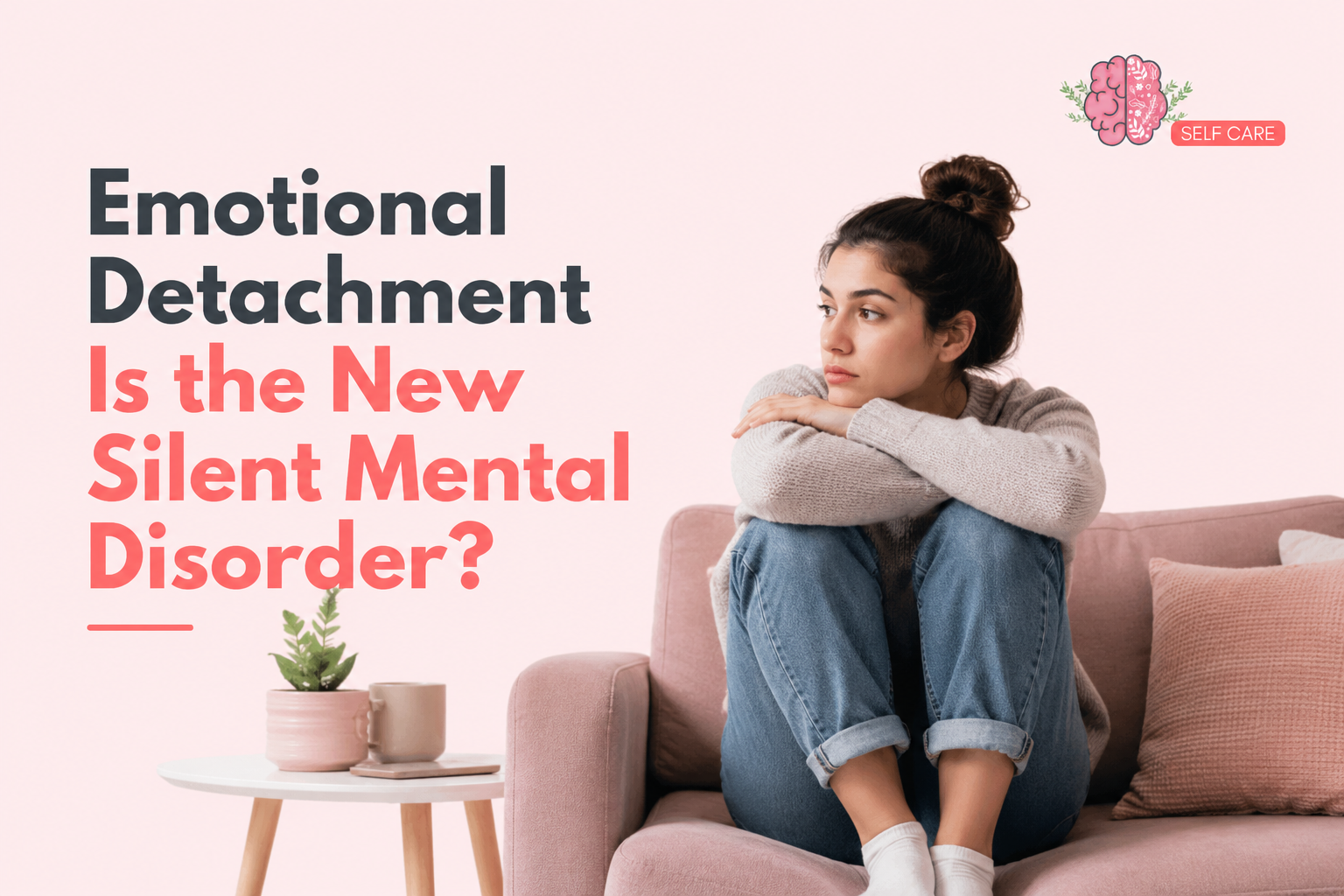
Why would so many people say I feel nothing anymore when all is well on the surface? They work, communicate with others, check social media, and do their everyday activities, yet somewhere on the inside, it does not work.
Emotional detachment will be one of the quietest mental battles for individuals of all ages in 2026. The risky aspect is that it usually remains unrecognized as people keep operating on the outside and losing touch with the inside.
Human beings are no longer stressed or anxious. Some are emotionally going dead. And since the process of emotional detachment takes time, the majority of people are unaware of the extent to which it is impacting their relationships, motivation, and mental stability until they are utterly disengaged with themselves.
That is why the contribution of a proficient Mental health counselor is gaining more significance in contemporary life.
What Do You Know About Emotional Detachment?
Emotional detachment occurs when an individual loses contact with feelings, relationships, or experiences that previously mattered to him or her. Not all the time is it intentional. It is formed in most instances as a psychological defense mechanism against the ongoing stress, emotional burdens, disillusionment, or burnout.
People experiencing emotional detachment may:
- Feel emotionally numb
- Avoid deeper emotional conversations
- Struggle to connect with others
- Feel disconnected from life itself
- Lose emotional excitement or motivation
A Mental health counsellor assists people to find these patterns before emotional disconnection develops into long-term emotional isolation.
Why Emotional Detachment Is Increasing in 2026
Modern lifestyles are creating emotional overload faster than emotional recovery.
- Constant stress and performance pressure
- Digital overstimulation
- Emotional suppression
- Fear of vulnerability
- Superficial online interactions are replacing deep connections
People are remaining mentally engaged at all times but gradually being slowly de-emotionalized in the background. This is one of the largest causes of emotional detachment, which is gaining prevalence worldwide.
How Emotional Detachment Affects Mental and Emotional Stability?
Emotional detachment has no impact on feelings alone. It gradually alters the way people live, their relationships, and they themselves.
Emotional Numbness Replaces Genuine Emotional Response
Less emotional intensity is one of the largest indicators of emotional detachment. Things that formerly induced joy, excitement, sadness, or emotional attachment start to feel one-dimensional. The mind begins to defend itself against the emotional overload by decreasing emotional responsiveness in general.
Relationships Start Feeling Emotionally Distant
Emotionally isolated people can still express themselves and socialize, but they cannot bond emotionally.
- Conversations feel surface-level
- Emotional intimacy weakens
- Vulnerability feels uncomfortable
This causes closeness in relationships despite people being physically close. An experienced Mental health counselor will help people reconnect emotionally at a slow but safe pace.
Motivation and Interest Begin Declining
When emotional attachment is lost, motivation tends to go down. Ambitions, interests and personal success no longer feel emotionally satisfying. Life becomes monotonous rather than purposeful. Such a lack of emotion diminishes interest in personal and professional work.
Emotional Suppression Creates Internal Exhaustion
A large number of emotionally detached people are not emotionally peaceful within themselves. They are full of emotions, yet they are repressing them.
- Avoiding feelings
- Ignoring emotional pain
- Staying emotionally guarded
With time, this oppression produces psychological exhaustion and psychological fatigue.
Overthinking Increases Despite Emotional Numbness
Although the emotions are depleted externally, the mind tends to be very active internally.
- Replaying conversations
- Overanalyzing situations
- Internal self-criticism
Emotional pressure builds up, and there is no emotional release due to this silent brain activity.
Real-Life Connection Starts Feeling Less Satisfying
The overstimulation of the brain through digitized means conditions it to react to rapid emotional stimulation and undermines the capacity to wait until an emotion is genuinely experienced. Consequently, real-life contacts can become emotionally draining or emotionally detached. This enhances emotional loneliness and isolation.
Emotional Detachment Weakens Self-Identity
When people lose emotional contact to a certain extent, they tend to lose the awareness of their emotional needs and desires as well as their identity.
- Feeling emotionally lost
- Not aware of what really matters anymore.
- Inability to interpret own emotions.
This brings about inner confusion and emotional instability.
Signs Emotional Detachment Is Affecting Daily Life
Emotional detachment is usually a silent process that is hardly noticeable at an early stage. When someone is emotionally disengaged, many people tend to think they are merely exhausted, have too many tasks, or are distracted.
It is important to recognize them at an early stage before emotional numbness turns into prolonged emotional isolation.
- You Feel Emotionally Numb Most of the Time: Cases that were previously emotionally responsive seem emotionally unresponsive or unreachable.
- Conversations Feel Forced Rather Than Natural: The initial socialization experience feels emotionally draining rather than fulfilling.
- You Avoid Emotional Vulnerability: It is awkward or uneasy to open up emotionally.
- You Feel Disconnected Even Around People: Emotional connection no longer comes from physical presence.
- Nothing Feels Deeply Exciting Anymore: The success, recreational activities, or ordinary events cease to be emotional payoffs.
Importance of Working With a Mental Health Counselor
Emotional detachment does not easily fade away since the patterns that make it happen tend to be active within one. It is here that an experienced Mental health counselor comes in so very handy.
A counselor assists people:
- Know patterns of emotional suppression.
- Rebuild emotional awareness
- Improve emotional expression
- Enhance real-life emotional attachment.
- Recover emotional balance without harm.
This produces real emotional recovery rather than the emotional distraction, which is temporary.
How a Mental Health Counsellor Helps Emotional Recovery?
Feeling better is not the only aspect of emotional recovery. It is about restoring emotional balance, reconnecting with yourself, and assisting the psyche in processing emotions in a healthier manner.
Most of us attempt to disregard emotional pain, divert our attention to work or social media, or even make ourselves productive. But emotional pressure is not eliminated by emotional suppression. It keeps it inside till emotional depletion, aloofness, or mental instability starts influencing day-to-day existence.
This is where an effective Mental health counselor comes in very handy.A counselor does not merely give advice. They assist people to learn about the patterns of emotions, cope with emotional overload and slowly restore emotional stability in a systematic and non-dangerous manner.
Identifies the Root Cause Behind Emotional Struggles
Not every situation creates the most emotional problems. They tend to be formed by recurrent stress, emotional stagnation, unresolved experiences, or dysfunctional mental processes.
A Mental health counsellor helps individuals identify:
- What is emotionally affecting them deeply
- Why emotional reactions feel overwhelming
- Which mental habits are increasing emotional exhaustion
The initial significant step towards emotional recovery is this awareness.
Helps Individuals Process Suppressed Emotions Safely
There are numerous cases of emotionally drained people who have spent years in denial of emotional expression.
- Hiding feelings
- Ignoring emotional pain
- Staying emotionally guarded
These repressed emotions build up internal pressure over time. A Mental health counselor will help to provide a secure setting in which people will be able to work through emotions rather than constantly repress them. This minimizes emotional stress and mental fatigue.
Rebuilds Emotional Awareness and Connection
Emotionally disconnected individuals often struggle to understand what they actually feel. Life starts feeling emotionally flat, repetitive, or numb.
Counseling helps individuals reconnect with:
- Their emotional needs
- Personal feelings
- Emotional triggers
- Genuine emotional responses
This restores emotional sanity and reinforces emotional bond with self and others.
Reduces Overthinking and Mental Overload
Emotionally overwhelmed individuals can have continuous internal dialogue.
- Replaying situations
- Self-criticism
- Emotional overanalysis
A Mental health counselor works towards calming such loops in the mind by teaching structured emotional processing and using healthier techniques of managing thoughts.This enhances clarity of mind and emotional stability over time.
Improves Emotional Communication and Vulnerability
People cannot communicate their feelings rightly, as it is not comfortable or safe to feel vulnerable. Counseling helps individuals:
- Express emotions more effectively.
- Be expressive without being scared.
- Develop more supportive emotional dialogues.
- Lessen avoiding behaviors.
This enhances relations and emotional attachment.
Helps Build Emotional Boundaries and Mental Protection
Emotionally sensitive people tend to take too much of the stress at work, in relationships or external circumstances.A Mental health counselor assists individuals to establish healthier emotional boundaries by instructing them:
- How to protect emotional energy
- How to prevent being emotional.
- How to strike a balance between emotional availability.
This helps to avoid emotional burnout and exhaustion.
Restores Emotional Stability Without Emotional Suppression
The idea of emotional control is often believed to suppress emotions. Emotional stability in fact is achieved by dealing with emotions the right way rather than evading them.
Counseling helps individuals:
- Remain cool in pressure.
- Handle emotions without emotional shutdown
- Improve emotional resilience
This establishes a healthier emotional equilibrium in the long run.
Creates Long-Term Emotional Recovery Systems
Instant motivation and short-term emotional satisfaction do not establish permanent recovery. Mental systems are necessary in the emotional healing.It is through the help of a good Mental health counsellor that people develop:
- Healthy emotional routines
- Improved stress management mechanisms.
- Long-term emotional awareness
- Healthy mental recovery practices.
This makes the continuation of emotional stability beyond the short-term emotional enhancement.
Why Choose Mental Health Self-Care?
Mental health self-care assists one to restore emotional attachment and clarity of mind with a well-organised assistance of a seasoned Mental health counselor.
500+ Counseling Sessions Focused on Emotional Recovery
People have managed to enhance emotional stability, connection, and clarity of mind with the help of systematic counseling systems.
5+ Years of Experience Handling Emotional Exhaustion and Mental Overload
Real-life emotional struggles are the basis of practical recovery methods.
Personalized One-on-One Emotional Recovery Support
Each person gets personalized advice judging by their emotional patterns and mental state.
Practical Daily Systems for Emotional Reconnection
Easy recovery methods assist in restoring emotional cognizance and stability on a regular basis.
Long-Term Emotional Balance Instead of Temporary Motivation
It is concerned with enduring emotional resilience and the functioning of the mind.
Conclusion
One of the most silent psychological battles that will be increasing in 2026 is emotional detachment. Human beings keep operating in the outside world but internally lose touch with feelings, connections and even themselves.
And since emotional shutdown is a gradual thing, most people are not aware of the damage until the point where life starts to become emotionally barren. But it is possible to re-establish emotional contact.
Through effective counseling by a trained Mental health counselor, people can reaccess their feelings, reestablish significant relationships, and regain emotional balance over time in a safe manner.
Mental Health Self-Care assists the emotionally numb person in shifting to emotional clarity through organized emotional recovery systems. Since the human mind was not created to live with no emotions all the time. It is created to experience, touch, and live.