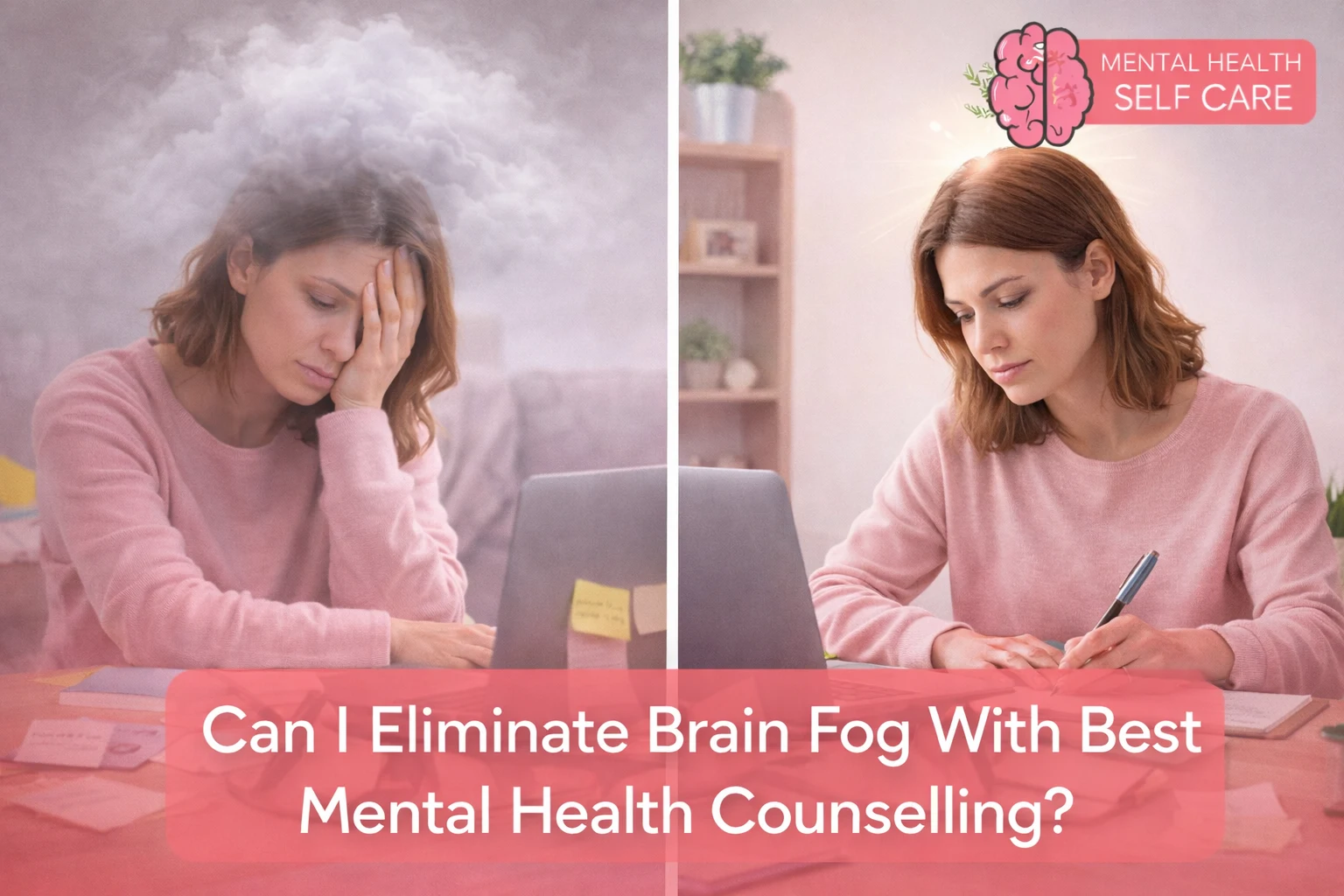
Did you ever sit in front of the screen of your laptop and have a clue of what you need to do but could not think clearly enough to begin? You are there in the workplace, but you feel retarded, foggy, and out of touch with your mind. Simple decisions feel heavy. Words don’t come easily.
This isn’t laziness. This isn’t a lack of skill.
And nothing that you can make right with coffee.
Brain fog is one of the most prevalent challenges for corporate workers, and it has silently become widespread in 2026. The blurring of mental clarity is slow, long work hours, constant alerts, emotional strain, lack of mental rest, and unrelieved inner pressure. The individuals continue to operate, but not optimally.
Best Mental Health Counselling comes here not as a final option, but as a viable option. When you pose the question as to whether Best Mental Health Counselling can actually eradicate brain fog, the answer is yes, as long as it is done in the right way, at the right time, and with the right approach.
What Is Brain Fog and Why Is It So Common in 2026?
The phenomenon of brain fog is not one-dimensional. It is a state of mind in which thinking seems slow, cloudy, and mentally draining. Employees usually refer to it as having a mental block or they are distracted or have their mind off, even though their day is full of activities.
The brain fog has found an ideal environment in 2026’s work culture. Excessive screen time, multitasking, repression of feelings, and zero time for mental rest place an excessive burden on the brain’s processing capacity.
Brain fog shows up through:
- Difficulty concentrating
- Forgetfulness
- Fatigue of the mind following rest.
- Weak thinking and slowness in thinking.
- Less creativity and problem-solving.
- Sense of alienation or mental stupor.
Mental health counseling does not address the problem of brain fog as superficially. It examines what is mentally congesting the system and why the brain is not working at its full clarity.
What Do You Know About Best Mental Health Counselling for Brain Fog in 2026?
Mental clarity, emotional processing, and cognitive balance are closely related to Best Mental Health Counselling in 2026. Mental load, which remains unaddressed, tends to cause brain fog rather than an intelligence or ability shortage.
Counselling assists people in realizing:
- What are some of the mental stressors that are overwhelming the brain?
- What emotionally exhausting patterns are at work?
- The influence of constant pressure on cognitive clarity.
- Why rest alone doesn’t always fix mental fatigue
Counselling does not compel one to concentrate; on the contrary, it eliminates mental obstacles. Rather than overworking the mind, it rejuvenates it. Such a change is what renders counselling efficient in getting rid of brain fog.
Core Focus Areas of Best Mental Health Counselling for Brain Fog
- Emotional decompression
- Identification of the patterns of stress.
- Clarity and priorities of thought.
- Mental overload reduction
- Sustainable mental recovery
How Brain Fog Affects Corporate Employees’ Daily Lives?
Brain fog doesn’t always stop people from working. It slowly reduces the quality of thinking and decision-making.
Employees with brain fog often experience:
- Slower speed of accomplishing simple tasks.
- Greater errors and doubt.
- Less confidence in meetings.
- Problems with the clear expression of thoughts.
- Unidentified emotional frustration.
This would result in a pressure cycle in the long run. Lack of concentration results in stress. The additional stress exacerbates brain fog. This cycle is broken internally through mental health counselling.
Can Best Mental Health Counselling Actually Eliminate Brain Fog?
The answer is yes, the best mental health counselling can help clear the brain fog when it is brought about by stress, emotional overload, burnout, anxiety, or long-term psychological strain. In most cases, brain fog in corporations is not due to physical exhaustion in isolation. It is mental congestion.
Best Mental Health Counselling works by:
- Clearing unresolved emotional stress
- Lessening the alertness of the mind at all times.
- Training the brain to decelerate gradually.
- Repairing natural intellectual cycles.
Rather than introducing new methods, Best Mental Health Counselling eliminates what is no longer a part of the mental space.
How Mental Health Counselling Helps Clear Brain Fog Step by Step?
Brain fog does not clear up through imposing concentration or working harder. It is cleared by letting the mind slack, disengage, and restructure itself. Best Mental Health Counselling is done in layers, which breaks off mental block after mental block rather than putting an added strain on the brain.
Step 1: Determining the Mental Load Preventing Clarity.
It is the brain fog usually caused by an excess of unprocessed mental load. The first place to start counselling is to find out what the mind has been carrying too long.
- Unresolved work stress
- Expectation emotional pressure.
- Threat of failure or inadequate performance.
- Months and years of accumulated mental clutter.
It is the time when the fog has ceased to be mysterious after knowing about the hidden burden.
Step 2: Slowing the Brain Out of Constant Alert Mode
A number of the employees are constantly alert. Best Mental Health Counselling helps the brain move out of survival mode.
- Lessens fight-or-flight behavior.
- Calms racing thoughts
- Reduces mental hypervigilance.
- Brings back inner calmness.
This step in itself usually affords a premature mental reprieve.
Step 3: Releasing Emotional Congestion
Mental energy is wasted on unexpressed emotions. Best Mental Health Counselling provides an emotional release.
- Safe expression of frustration and stress
- Processing suppressed emotions
- Emotional closure from past events
- Reduction in emotional heaviness
Mental clarity just comes from the loss of emotional weight.
Step 4: Reorganizing Thought Patterns
Brain fog is often similar to the brain’s scattering. Best Mental Health Counselling assists in restructuring thinking.
- Improves thought prioritization
- Reduces overthinking loops
- Brings mental order and direction
- Strengthens clarity in decision-making
It makes thinking purer and more effective.
Step 5: Restoring Mental Energy Without Pressure
Mental draining is not something that can be pushed out. Energy rebuilding is done through counselling.
- Promotes a good mental pace.
- Eliminates cognitive overload.
- Strikes a balance between work and rest.
- Supports sustainable focus
Vitality comes back without depletion.
Step 6: Training the Brain to Focus Again
Concentration is an ability that can fail under stress. Best Mental Health Counselling re-educates the mind.
- Enhances concentration on one task at a time.
- Makes one less distractible.
- Enhances psychological well-being.
- Improves work efficiency
Attention is no longer imposed.
Step 7: Creating Mental Boundaries to Prevent Fog Recurrence
Weak boundaries result in brain fog returning. Mental boundaries are reinforced by counseling.
- Well-defined distinction between work and rest.
- Lessened emotional carryover.
- Better mental health after work.
- Overload insurance.
Understandability is simplified.
Step 8: Stabilizing Mental Clarity for the Long Term
The last step ensures that the brain fog does not return under pressure.
- Stronger self-awareness
- Early identification of mental overloading.
- Long-term clarity habits
- Mental resilience building
Employees do not clear their brain fog. They are taught how to guard their sanity.
Which Employees Are Most Likely to Experience Brain Fog?
The brain fog is particularly widespread among:
High-Performing Corporate Employees
- Long working hours
- Constant responsibility
- Minimal mental downtime
Employees Facing Chronic Stress
- Ongoing deadlines
- Job insecurity
- Emotional suppression
Employees Experiencing Burnout
- Emotional exhaustion
- Mental numbness
- Loss of motivation
Employees With Anxiety or Overthinking Patterns
- Continuous internal dialogue
- Fear-based thinking
- Difficulty mentally switching off
Best Mental Health Counselling addresses all these patterns at their source.
How Long Does It Take to Eliminate Brain Fog With Counseling?
The timeline depends on severity and consistency, but realistic expectations matter.
Mild Brain Fog
Estimated Timeline: 2 to 3 weeks
- Improved focus
- Reduced mental heaviness
- Clearer thinking
Moderate Brain Fog
Estimated Timeline: 1 to 2 months
- Noticeable cognitive clarity
- Better decision-making
- Reduced mental fatigue
Severe or Long-Standing Brain Fog
Estimated Timeline: 3 to 6 months
- Deep mental reset
- Emotional processing
- Long-term clarity
Why Best Mental Health Counselling Works Better Than Quick Fixes
Quick fixes mask symptoms. Best Mental Health Counselling removes causes. Unlike stimulants or forced productivity methods, counselling:
- Doesn’t overload the brain
- Doesn’t depend on constant motivation
- Doesn’t suppress emotions
- Builds internal mental balance
Best Mental Health Counselling is based on sustained clarity and not a flash of temporary clarity.
Why Choose Mental Health Self-Care to Eliminate Brain Fog?
Brain fog can not be removed through motivation or quick fixes. It is cleared when there is less mental load, the emotional pressure is processed, and the brain gets time to rest effectively. Mental Health Self-Care is designed with that as its express purpose, with structure, timelines, and quantifiable progress rather than vague assurances.
1. 90% Focus on Real Corporate Brain Fog Triggers
Stress, overthinking, and emotional overload are the leading causes of most brain fog in working people.
- The majority of the sessions (9 out of 10) are about mental pressure at work.
- Time deadline pressure, anxiety, and decision stress.
- Created to match corporate procedures and expectations.
This makes counseling remain practical and relevant.
2. 3-Phase Counselling Framework for Mental Clarity
The clarity-restoration framework is accomplished by Mental Health Self Care.
- Phase 1 (Weeks 1-2): Mental detoxification and release of stress.
- Phase 2 (Weeks 3-6): Dwelling on recovery and mind arrangement.
- Phase 3 (Weeks 7-10): Stability and relapse prevention.
Clients are aware of the way the clarity is being restored.
3. 30–60 Minute Sessions Built for Busy Minds
The long sessions usually contribute to fatigue. Brief and targeted meetings are better.
- 30, 45, and 60-minute options
- 65% of clients prefer midweek sessions.
- Minimal cognitive overload per session
The state of mind becomes better without the additional use of energy.
4. Under-15-Minute Daily Tools for Brain Fog Reduction
The counselling does not stop with the talk.
- Daily mental declutter practices under 10–15 minutes
- Simple focus-reset techniques
- Thought-calming routines usable during workdays
5. Noticeable Mental Lightness in 2–4 Weeks
Consistency produces visible mental shifts.
- Reduced mental heaviness within 14–28 days
- Improved concentration and recall
- Faster decision-making at work
Progress is felt, not just discussed.
6. 1-on-1 Confidential Counselling With Zero Distractions
Brain fog often worsens when people feel unheard or judged.
- 100% one-to-one counselling
- No group pressure
- Safe, private mental space
Conclusion
There is nothing like brain fog as personal failure. It is a psychological cue demanding attention. In 2026, disregard of that message will only serve to increase mental overload and emotional distress. The positive fact is that brain fog is not irreversible.
Best Mental Health Counselling provides an easily understandable road back to mental acuity, emotional sanity, and assured thought. Employees may get back on track with their minds without coercing them into being productive through organized assistance, working with emotions, and rebuilding their minds.
Mental Health Self-Care is one of the best support systems to rely on when professionals experience mental cloudiness and cognitive fatigue. With the guidance of Radheshyam More, a special mental health counsellor who helps employees clear mental overload and regain inner clarity, people are beginning to learn how to think again, work with confidence, and live with mental comfort.

