What happens when the greatest issues in your life are not externally noticeable?
You’re working, socializing, showing up every day… but internally, things feel off. You are tired unnecessarily. You do not think slowly. You lose inspiration. You are out of touch, despite things appearing to be okay.
That is the way the majority of severe Mental Health issues start. Quietly. Gradually. Without obvious warning signs.
In 2026, individuals are not only fighting the outside world. They are facing internal overload, continuous thinking, suppression of emotions and deprivation of mental rest. They do not remain small when neglected. They develop and impact your choices, relationships, career, and the quality of your life.
The reality is simple. The fact is plain. Some Mental Health Issues may gradually control your life, unless you address them. Not immediately, but gradually. And the hurt is usually more than what people anticipate.
We will deconstruct the most important things that you should comprehend and tackle at an early age.
What Do You Know About Mental Health Issues?
Mental Health Issues are patterns or conditions that influence the way you think, feel, behave, and react to life. They are not so radical and noticeable. Their manifestation is felt by many in some insidious forms.
Such signs include:
- Constant overthinking
- Lack of motivation or energy
- Emotional instability
- Difficulty focusing
- Lacking any idea of why I am overwhelmed
The issue is not to get such experiences periodically. It is a matter of concern when they are patterns.
That is when Mental Health Problems begin to influence everyday life.
Why Mental Health Issues Are Increasing in 2026
Contemporary life is so structured that it puts mental pressure on one.
- Constant computer stimulation
- Absence of mental relaxation
- Excessive demands and benchmarking
- Stress at work and ambiguity
- Poor expression of emotions
All this provides a psychological condition in which Mental Health Issues can enter the human mind and multiply rapidly.
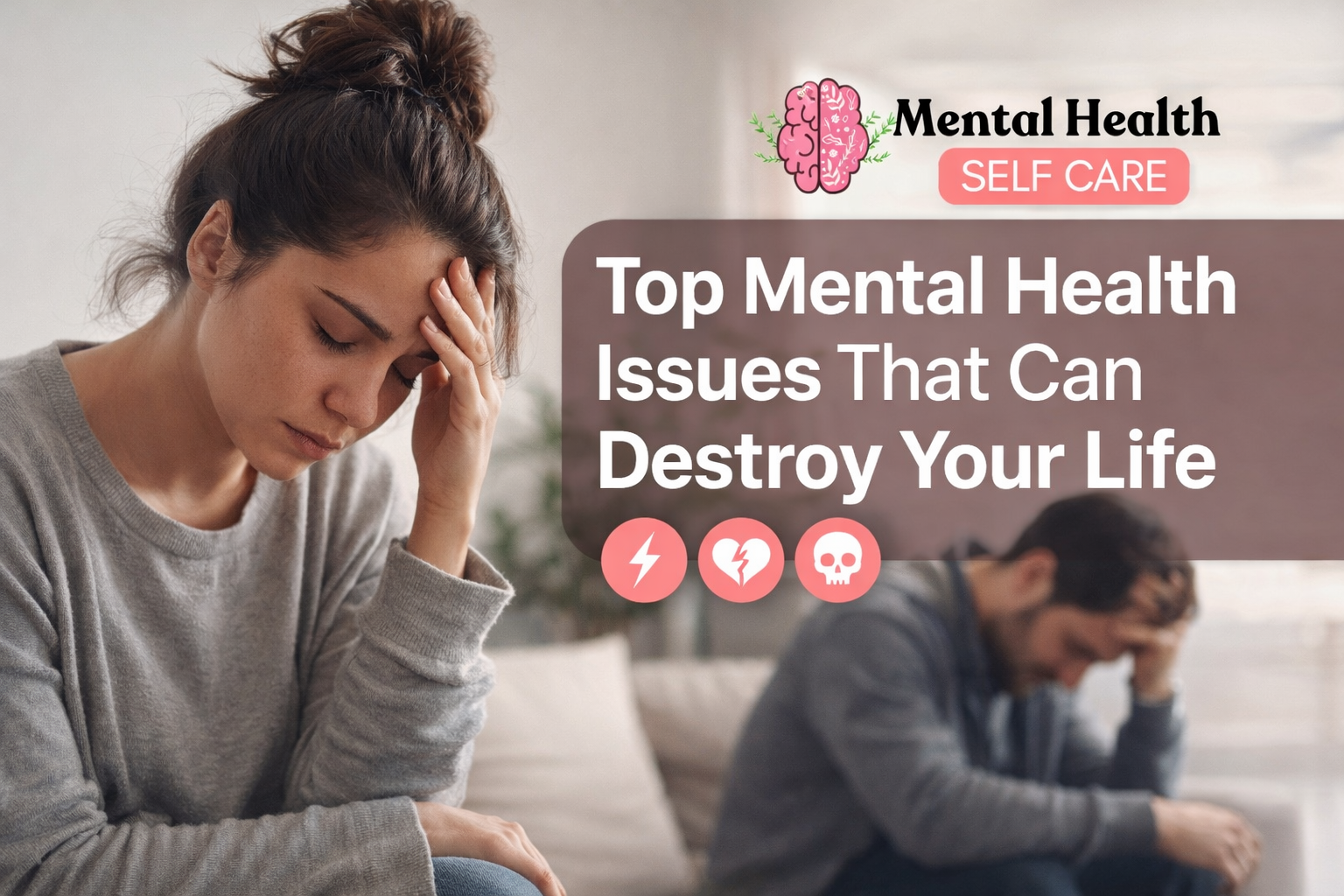
Top Mental Health Issues That Can Destroy Your Life
The conditions are not mere clinical situations. These are patterns, which when not taken into consideration, can affect any sphere of your life.
1. Chronic Overthinking
One of the most common and harmful Mental Health Issues in the modern world is overthinking.
- Never-ending mind cycles.
- Rewinding the events in history.
- Being concerned about what might happen.
- Lack of ease when deciding.
Impact:
- Mental exhaustion
- Poor decision-making
- Increased anxiety
Gradually it creates a loss of clarity and confidence.
2. Anxiety and Constant Mental Restlessness
Fear is what keeps your mind alert.
- Racing thoughts
- Physical tension
- Difficulty relaxing
- Unfounded apprehension
Impact:
- Sleep disruption
- Reduced focus
- Emotional instability
This is among the rapidly expanding Mental Health Issues in the world.
3. Depression and Emotional Numbness
Depression is not simply sadness. It is the disconnectness.
- Low energy
- Interest lost
- Emotional emptiness
- Demotivation
Impact:
- Reduced productivity
- Social withdrawal
- Reduced levels of life satisfaction
When unattended, it emerges as one of the worst Mental Health Problems.
4. Burnout and Chronic Stress
Burnout occurs when the stress is repeated and uncontrolled.
- Constant fatigue
- Irritability
- Reduced performance
- Emotional exhaustion
Impact:
- Career decline
- Physical health problems
- The loss of interest in life
This is mainly prevalent among the working professionals.
5. Low Self-Esteem and Self-Doubt
Everything depends on how you view yourself.
- Constant comparison
- Anxiety of failure
- Avoiding opportunities
- Negative self-talk
Impact:
- Missed opportunities
- Poor decisions
- Lack of strong personal boundaries
It is among the most silent yet effective Mental Health Issues.
6. Addiction to Digital Stimulation (Dopamine Overload)
Contemporary addiction is not necessarily a substance. It’s stimulating.
- The use of the phone all the time.
- social media addiction
- Little attention span
- Difficulty focusing
Impact:
- Reduced productivity
- Mental fatigue
- Discipline deficiency
It is a covert cause of most Mental Health Problems in the present day.
7. Emotional Suppression
It does not mean that they are not felt by not expressing them. It is the place where they are deposited.
- Avoiding tricky discussions
- Keeping emotions inside
- Disregarding emotional distress
Impact:
- Emotional hysterics
- Increased stress
- Relationship problems
This tendency gradually gathers steam.
8. Lack of Purpose and Direction
Losing your way is psychologically exhausting.
- Poor clarity of objectives
- Feeling stuck
- Low motivation
Loss of contact with everyday job.
Impact:
- Reduced confidence
- Increased anxiety
- Emotional instability
It is among the Mental Health Issues that are the most ignored.
9. Social Isolation and Loneliness
Having human beings around does not necessarily imply connection.
- A sense of being lonely in groups
- Absence of meaningful conversations
- Emotional distance
Impact:
- Anxiety and depression
- Less emotional support
- Reduced levels of life satisfaction
10. Decision Fatigue and Mental Overload
The decisions, the input too many.
- Difficulty choosing
- Mental exhaustion
- Constant confusion
Impact:
- Delayed actions
- Poor judgment
- Increased stress
The issue is becoming increasingly popular with contemporary life.
How These Mental Health Issues Affect Your Life
The combination of these patterns forms:
- Reduced productivity
- Poor relationships
- Low confidence
- Continuous intellectual exhaustion
- Confusion
Mental Health Issues do not only make an impression upon your head with time. They influence the whole life. Focused on real transformation, it helps people overcome harmful habits, sharpen focus, and regain control of their lives using a blend of neuroscience-based methods, mentorship, and inner growth practices.
Early Signs You Should Not Ignore
- Unjustifiable unending fatigue
- Difficulty focusing
- Increased irritability
- Interest lost
Experience of being overwhelmed often.
These are pre-emptive indicators. Putting a blind eye on them enables Mental Health Issues to expand.
How to Prevent These Mental Health Issues from Taking Over
The majority of Mental Health Problems do not begin as large problems. They start with tiny, repetitive events, dismissed stress, perpetual ruminations, emotional blocks or obscurity. The greatest failure by most individuals is to wait until things become serious.
Prevention does not have anything to do with doing something extreme. It is about controlling your mind until it starts to get out of control.
Let’s break this down into a practical system that actually works.
1. Build Daily Mental Awareness (5–10 Minutes Check-In)
You are unable to repair what you are unaware of.
Begin with a basic daily examination:
- What do I think the most about today?
- Does it serve me or is it debilitating me?
- What is my mental status at this moment?
The habit will aid you in detecting the early warning signs of Mental Health Issues before it turns into a pattern.
2. Control Input Before It Controls Your Mind
What you watch in the newspaper is what you think.
- Minimize social media scrolling
- Do not watch the news all the time
- Eliminate multi-tasking and overload
Excessive stimulation gives rise to excess thoughts. It is one of the ways of stabilizing your mind and eliminating Mental Health issues.
3. Create a Simple Daily Structure
Mental anarchy is caused by an unstructured day.
- Regulate your waking up and sleeping time
- Prep your important tasks
- Make your day unsurprising
Organization minimizes overthinking and decision fatigue, which are the primary causes of Mental Health Issues.
4. Release Emotions Instead of Storing Them
suppressed feelings do not fade away. They accumulate.
- Get someone to talk to you
- Write on a regular basis
- Accept how you feel without negating it
By releasing emotions, there is no internal pressure and this is among the greatest causes of long term Mental Health Problems.
5. Move Your Body Daily (Even 15–20 Minutes)
Physical pressure must be an outlet of mental pressure.
- Take a walk, stretch or do some light exercising
- Do not spend all day long sitting around
Exercise will also aid in relieving stress hormones, and will keep your system in check.
6. Set Boundaries to Reduce Mental Overload
Giving yes to all will result in burnout.
- Keep more commitments to a minimum
- How to say no without feeling guilty
- Save your time and energy
Well-established boundaries help to avoid stress and ensure that Mental Health Issues do not grow.
7. Stop Trying to Solve Everything at Once
Overthinking escalates when you do everything at once.
- Attend one issue at a time
- Take tiny, conscious steps
- Do not practice mental multitasking
Certainty removes anxiety. Make it simple, and it does not get too complicated.
8. Prioritize Sleep Like a Non-Negotiable
An exhausted brain is prone to stress and anxiety.
- Have a regular sleeping time
- No screens at bedtime
- Allow your mind to slack
One of the most effective protective measures against Mental Health Issues is a good sleep.
Why Choose Mental Health Self Care to heal from mental issues?
Mental Health Issues are not merely a question of knowing what is wrong. It is being able to have a definite mechanism to rectify it. Their problems, overthinking, stress, anxiety, and their lack of clarity are most likely known to most people. What they lack is an organized mechanism of getting out of it.
Mental Health Self Care is different there. It does not simply provide dialogues. It offers a sequential process to make mental problems get healed in a clear, consistent, and practical way.
1. 3-Phase Mental Recovery System (30–90 Days Structured Plan)
Mental Health Self Care has an obvious sequence of step instead of haphazard suggestions.
- Phase 1 (Weeks 13): Recognize patterns and minimize mental load
- Phase 2 (Weeks 4 -8): Develop emotion regulation and clarity of thought
- Phase 3 (Weeks 9-12): Build long term mental and stability
With this kind of structure you will not only feel better in the short run but you will heal your mental problems in a long lasting manner.
2. 100% One-on-One Sessions Focused on Your Reality
Your Mental Health Problems are not universal. Your triggers, habits and experiences are specific to you.
- Individualized learning sessions according to your condition
- None of group pressure or superficial advice
- Form a profound concentration on your thinking patterns
- Safe, non-judgmental atmosphere
Such a degree of individualization spurred the actual cognitive healing.
3. 30–60 Minute Focused Sessions Without Overwhelm
Elongated, inability to structure the sessions may contribute to mental exhaustion.
Mental Health Self Care will provide:
- The 30, 45 and 60-minute sessions
- Correct direction at all the sessions
- Real world results rather than speculations
- Little, readily-implementable wisdom
In every session you have, you need to make your thinking not harder but simpler.
4. Under-15-Minute Daily Mental Reset Techniques
The actual life is hectic. You require things that fit in your day.
- Thought-reset practices (10 to 15 minutes)
- Interruption methods: stress, overthinking
- New clarity building practices daily
- Techniques of emotional regulation
These are the tools that would assist you in dealing with Mental Health Issues not only during the sessions but in real time.
5. 70% Focus on Root Cause, Not Just Symptoms
The majority of patients make attempts to manage the symptoms without being aware of their causes.
Mental health Self Care is concerned with:
- Behind what you are thinking, there are emotional triggers
- Habits that result in stress and anxiety
- Pressure and expectations inside the company
- Circulating loops of behavior
Mental problems may be healed permanently and more easily when the root causes are handled.
6. Noticeable Improvement Within 3–4 Weeks
Through regular meetings, one is likely to witness:
- Less overthinking in 23 weeks
- Increased emotional control
- Greater attentiveness and clarity
- Reduced stress intensity
It is a gradual development that is clearly quantifiable.
Conclusion
Mental pain is not always dramatic. Majority of Mental Health Problems have their silent start, which is repetitive stress, continuous obsessions, suppressions of emotions, and inability to focus. Uncontrolled, they do not simply influence your mood. They shape your choices, your relationships, performance and your course of life.
It is not just awareness that will make the difference between being stuck or making steps. It is a purposeful action.
That is precisely where Mental Health Self Care makes the difference. Rather than leaving you with information and momentary inspiration, it provides you with a systematic framework to cure yourself of mental problems step by step. The approach is designed with life outcomes, rather than theory, through targeted 1-1 sessions, practical implementation, and a life transformation outline of 30-90 days.
The people are not simply stressing or overthinking under the guidance of Radheshyam More. They are reconstructing their clarity, increasing their emotional restraints and recovering their confidence in the way they think and act.
Being determined to have control over your mind not once but regularly then Mental Health Self Care is not a choice but a necessity. It is the support system that will enable you to go through confusion to clarity and struggle to stability.