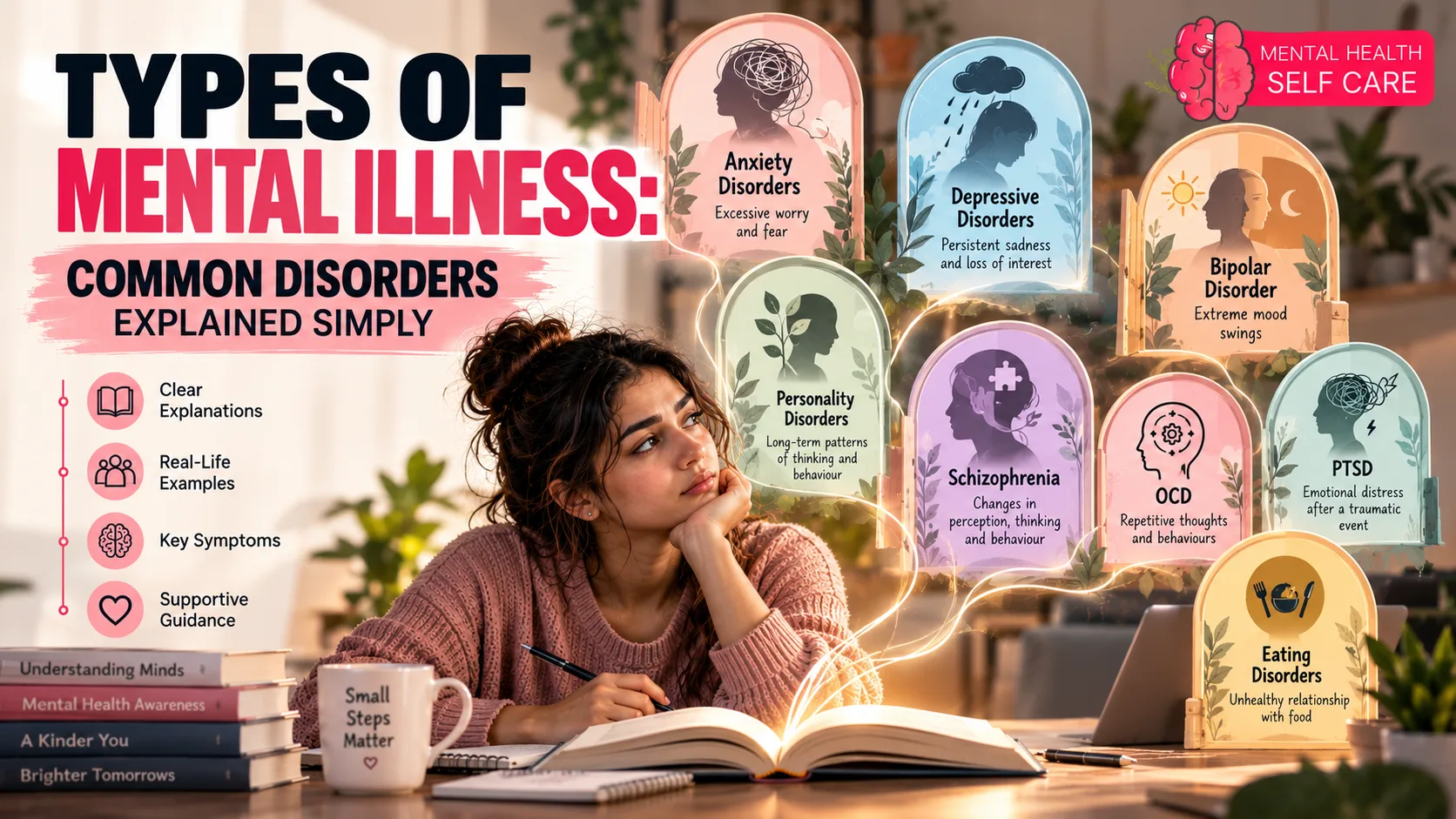
Among the varieties of Mental illness, the following types can be listed but are not limited to: anxiety disorders, depression, bipolar disorder, obsessive-compulsive disorder, post-traumatic stress disorder, eating disorders, and schizophrenia, just to name a few, which impact thoughts, feelings, and behavior as well as day-to-day functioning. Mental illness is not always present in all individuals in a common form, and symptoms may vary from mild to severe.
Some primarily affect mood, while others involve thinking, fear, eating, concentration, or reality testing. We can become acquainted with the common Types of mental illness, and it will be easier to inform someone that he or she may need help.
However, reading symptoms online is not a substitute for a professional assessment. If emotional or psychological difficulties begin affecting work, relationships, sleep, studies, or everyday life, mental health counselling or an evaluation from an appropriately qualified mental health professional may help.
Common Mental Health Disorders
Types of Mental illness include a number of different mental illnesses, although some of these disorders are much more often diagnosed than others. They all have various symptoms, causes, and treatment interventions. Knowing the basics of the differences can help people to see mental health more accurately without thinking that one incidence of stress, depression, or anxiety is a sign of a mental disorder.
Anxiety Disorders
Anxiety disorders are typified by an excessive amount of fear, worry, or nervousness that can no longer be controlled. An individual can suffer from racing thoughts, restlessness, muscle tension, bad sleep, lack of concentration, or even physical symptoms like a racing heart.
Some of the examples of conditions that belong to this category are generalized anxiety disorder, panic disorder, social anxiety disorder, and specific phobia. Occasional anxiety is normal, but often the anxiety does not disappear; even when it alters normal life, that may require an expert to evaluate it.
Anxiety counseling is able to help with coping and managing emotions, whilst other individuals might also require clinical therapy.
Depression
Depression is more than feeling sad for a few days. It can be described as low mood (regular), loss of interest, loss of energy, poor concentration, sleep or appetite, hopelessness, and no drive.
The symptoms may interfere with work, studies, relationships, and self-care. There are various types of depression: major depressive disorder and persistent depressive disorder.
Those who experience chronic depressive symptoms should obtain appropriate assistance. The overall diagnosis and treatment should be done by qualified health care workers, but emotional support may be provided to them by means of depression counseling.
Bipolar Disorder
Bipolar disorder is a condition that is marked by extreme changes in mood, energy, activity, and functioning. Individuals can undergo mood swings of depression and unusually high or elevated spirits, which are referred to as mania or hypomania.
In these episodes, a person may get very little sleep, talk fast, become overly confident, become hyperactive, or take hasty actions. Normal mood swings cannot be compared with bipolar disorder. It is a health issue that demands professional diagnosis and treatment.
Thought-Related Conditions
Particularly, some of the Types of Mental Illness are mostly characterized by repetition of thoughts and compulsive actions, perception alterations, or inability to differentiate some of the experiences from reality. These conditions are often misunderstood because they may not always manifest as clear symptoms.
OCD
OCD is a series of undesired repetitive thoughts, images, or urges known as obsessions and repetitive behavior or mental performance termed compulsions.
Examples include repeatedly checking locks, washing hands, counting, seeking reassurance, or repeating phrases in his/her head, which makes him/her anxious. OCD is not fond of sanity and order. When symptoms consume a lot of time or interfere with day-to-day life, it is important to seek evidence-based therapy with a qualified professional.
Schizophrenia
Schizophrenia is a Types of Mental illness that may affect perceptions, emotions, behavior, and thinking. The symptoms can be hallucinations, delusions, poor thinking, decreased motivation, or problems with social functioning.
The condition has been misinterpreted and should not be diagnostically swept under the carpet by itself, especially when the behavior is abnormal. Professional judgment can also apply in initial cases where symptoms reflect a significant change in perception, thinking, or functioning. Psychiatric treatment and follow-up are often incorporated to treat it.
Trauma and Stress Disorders
Stressful experiences can affect mental health in different ways. Some people recover naturally with time and support, while others develop symptoms that continue affecting everyday life. Trauma-related conditions can influence sleep, emotions, concentration, relationships, and the body’s response to perceived danger.
PTSD
It can cause post-traumatic stress disorder if an individual witnesses a traumatic incident. Symptoms might consist of painful memories, nightmares, avoidance, emotional numbness, hypervigilance, irritability, or constantly feeling unsafe.
Not all people who go through trauma develop PTSD. Professional testing is needed when symptoms persist and interfere with normal functioning.
The necessity to work through the difficult experiences can be enhanced by the presence of evidence-based psychological treatment and trauma counseling to assist people with healthier coping responses.
Stress-Related Problems
Chronic stress may not be a mental disease in itself, but mental and physical health can be greatly affected by the constant levels of stress. People may feel tired, irritated, have headaches, experience sleep disorders, have difficulty concentrating, or feel overwhelmed.
If stress is not dealt with, it may aggravate preexisting mental illness. Interventions to help people recognize stressors and develop more realistic coping strategies may include stress counseling, lifestyle changes, healthy boundaries, and professional support.
Other Mental Health Conditions
Types of Mental illness include many conditions beyond anxiety, depression, and trauma. Some disorders affect eating patterns, personality, attention, or emotional regulation. Proper assessment matters because similar symptoms can appear across different conditions.
Eating Disorders
Eating disorders involve severe eating behavior issues, body image, or food-weight attitudes. Some of them are anorexia nervosa, bulimia nervosa, and binge-eating disorder.
These conditions may impact both mental and physical health and turn out to be medically dangerous. Mental health and medical professionals may be needed for treatment. They should not be seen as mere dieting issues or issues of will.
ADHD
Attention-deficit/hyperactivity disorder, or ADHD, can result in a deficiency of focus, system, impulsiveness, and energy expenditure. ADHD may persist into adulthood in affected children.
Adults may experience time management issues, forgetfulness, procrastination, unfinished tasks, or attention problems. The fact that a problem is similar to anxiety, depression, poor sleep, or constant stress makes ADHD a problem that should be evaluated by a professional person.
When to Seek Support
Every Types of Mental illness requires different kinds of care. Some people may benefit from counseling, while others benefit from psychological therapy or psychiatric assessment, medication, medical treatment, or a combination of both.
Symptoms can harm normal functioning and become acute or chronic; in that case, seek professional help rather than self-diagnose. Online counseling, mental health assistance, and professional counseling could be utilized at the first stage in treating emotional problems and determining the extent of care that might be appropriate.
Conclusion
Types of Mental illness include anxiety disorders, depression, bipolar disorder, OCD, PTSD, schizophrenia, eating disorders, ADHD, and various other disorders that may impact the thought process, feelings, actions, and day-to-day functioning.
Awareness of these disorders can help; they should not be self-diagnosed or defined by symptoms alone. The right professional care should be available for any mental health issues, especially if they are ongoing or severe.
Mental Health Self Care offers online counseling, anxiety support, stress counseling, and individual emotional guidance with Radheshyam More. When various Types of Mental illness affect your everyday life, it can help you become more emotionally fit and find healthier coping methods with the right professional support.