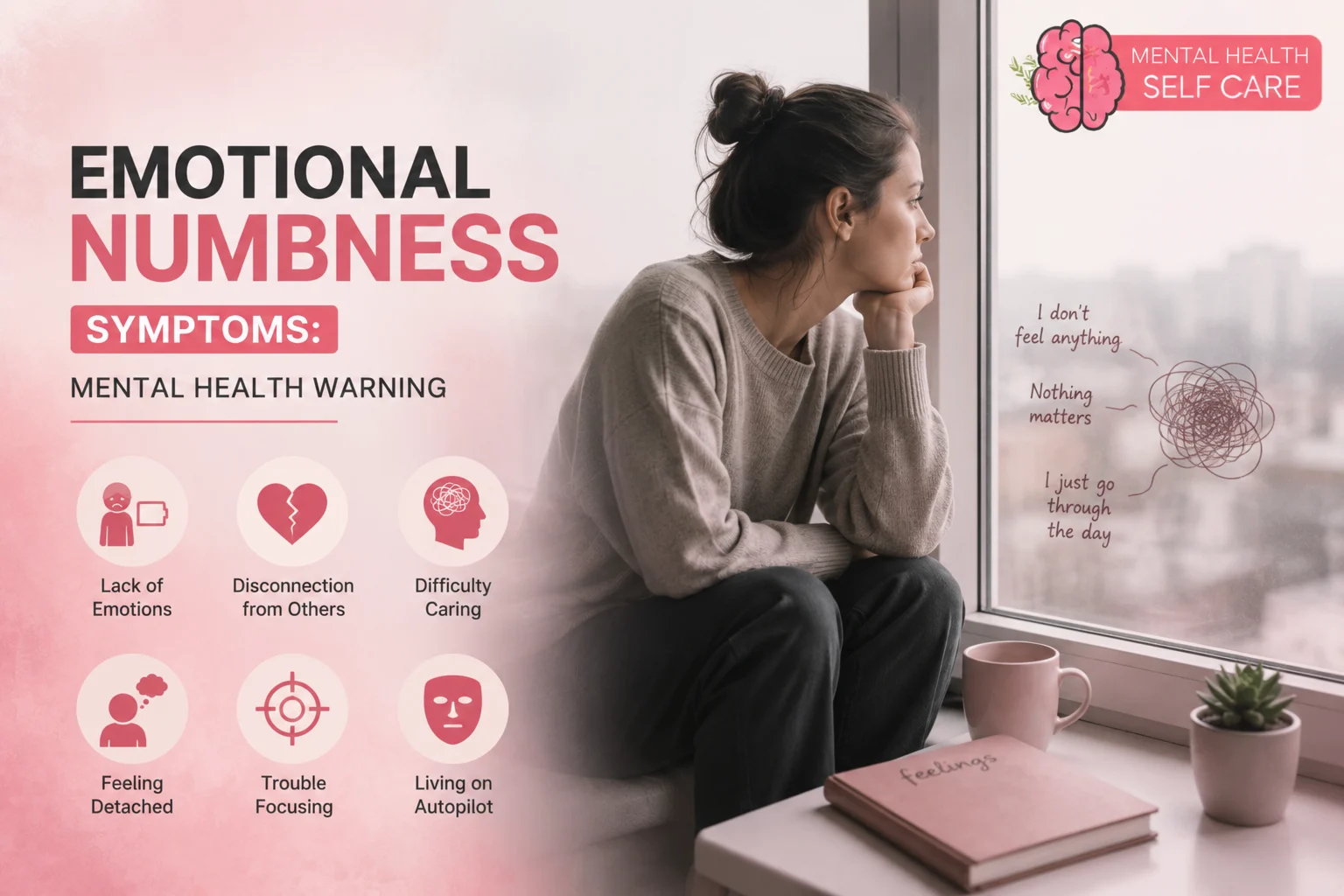
The symptoms of Emotional Numbness have not been taken care of, as they are not always able to express themselves due to sadness, anxiety, and emotional breakdown. Rather, people who develop Emotional Numbness Symptoms might be out of touch with their feelings, relationships, and everyday life, finding it challenging to feel happy, excited, sad, and/or to have any connection to their emotions.
Such symptoms are progressive and thus have affected several people before they begin to affect their psychological and interpersonal relationships, as well as their general quality of life.
The majority of individuals relate mental health challenges to clear visual displays like tears, anxiety, or apparent sadness. Yet such complete insensitivity to emotion is, in a way, one of the most ominous red flags. The majority of them continue to believe they are all fine, yet feel disconnected from themselves and the world around them.
This unspoken emotional dissociation may affect individual relationships, motivation, choices, and mental health. Knowledge of Emotional Numbness Symptoms is important, as emotional and psychological differences can be effectively avoided with timely diagnosis.
What Are Emotional Numbness Symptoms?
Emotional numbness is a state of being disconnected from feelings. Emotions are dulled, remote, or nonexistent rather than occurring naturally.
People experiencing Emotional Numbness Symptoms often describe feeling:
- Empty inside
- Emotionally disconnected
- Detached from life
- Unable to feel excitement
- Uninterested in things they once enjoyed
Emotional numbness is not a mental health condition itself. Instead, it tends to be the alarm that the psyche is grappling with stress, a traumatic event, anxiety, depression, burnout, or emotional exhaustion.
Why Emotional Numbness Is Becoming More Common in 2026
Modern lifestyles place tremendous pressure on emotional well-being. People are constantly exposed to:
- Work stress
- Financial pressure
- Social media comparison
- Relationship challenges
- Information overload
The mind sometimes protects the emotions by turning them off as a defense measure against an ever-increasing emotional pressure. This can temporarily decrease emotional pain; however, it also decreases positive emotions, which can cause Emotional Numbness Symptoms.
Common Emotional Numbness Symptoms Nobody Notices
When people talk about emotional numbness, many believe that it is the absence of feeling. In practice, the symptoms may manifest in mild forms and be mistaken for stress or fatigue.
You No Longer Feel Excited About Things You Once Enjoyed
Among other things predominantly considered Emotional Numbness Symptoms is the loss of interest in anything that previously caused pleasure. Leisure activities, successes, travel to other places, and friends could not lead to the same emotional reaction. People can still get involved in such activities; it’s just that the satisfaction lacks emotion.
Happiness Feels Temporary or Distant
Individuals with emotional numbness will still have good times, but their joy is small or insubstantial. Even significant achievements do not provide long-term satisfaction. This lack of emotion is among the first Emotional Numbness Symptoms.
You Feel Disconnected From Relationships
Emotional attachment constitutes a significant aspect of healthy relationships. Emotional numbness can lead to feelings of being alienated by relatives, friends or lovers. Discussions turn into a routine, and emotional intimacy begins to withdraw.
Crying Becomes Difficult
Most people who have the symptoms of the Emotional Numbness state that they wish to cry but cannot. The emotional response to the emotionally painful situation is blocked or suppressed even in the state of emotionally painful situations.
You Feel Like You Are Simply Going Through the Motions
Life starts as repetitive and automatic. Individuals can wake up, do things, go to work and do routines without being emotionally involved in what they are doing.
Emotional Reactions Become Delayed
People can even become unemotional in certain situations, rather than reacting emotionally at that specific time. Emotional reactions are either extremely delayed or nonexistent.
You Stop Looking Forward to the Future
Future plans, dreams, and goals can lose their emotive value. Throughout the period during which the tasks are performed, interest in the future prospects begins to diminish.
You Feel Detached From Yourself
Feeling out of touch with your thoughts, feelings, and self is among the most worrisome symptoms of Emotional Numbing. It is something people will at times say they feel like they are looking at, but not the ones who are going in their life.
What Causes Emotional Numbness Symptoms?
Understanding the root causes can help individuals identify why emotional numbness develops.
Chronic Stress
Long-term stress places the brain under constant pressure. With time, emotional responses might be suppressed as a survival mechanism.
Depression
Depression is wrongly thought to always bring sadness. In fact, one of the most prevalent Emotional Numbness Symptoms of depression is emotional numbness.
Anxiety Disorders
The consistent feeling of anxiety may overpower the nervous system, finally causing the shutting down of emotions and feeling detached.
Emotional Trauma
Previous emotional traumatic experiences usually lead to the brain suppressing emotions to defend itself against emotional pain.
Burnout
Emotional energy can be exhausted by job or personal burnout to the extent that emotional responses decline considerably.
Unresolved Emotional Pain
The ability to ignore emotional issues over prolonged periods can also add up to emotional numbness and detachment.
How Emotional Numbness Affects Daily Life
Emotional numbness can quietly influence almost every aspect of life.
Reduced Motivation
It is hard to remain motivated towards goals and responsibilities without emotional involvement.
Relationship Difficulties
Friends, family, and partners might be emotionally distanced when the individual with numbness is around.
Lower Productivity
Mental disengagement often reduces concentration, creativity, and decision-making abilities.
Increased Isolation
People may withdraw socially because interactions feel emotionally draining or meaningless.
Declining Mental Health
When emotional numbness remains unaddressed, it can contribute to worsening depression, anxiety, and emotional distress.
Which Individuals Are Most Vulnerable to Emotional Numbness Symptoms?
Certain groups are more likely to experience emotional numbness.
High-Achieving Professionals
The constant pressure to deliver might ultimately lead to emotional exhaustion and disengagement.
People Experiencing Chronic Stress
Continuous stress will slowly deplete emotional resources.
Individuals Recovering From Trauma
Emotional shutdown is likely to be more common with traumatic experiences.
Caregivers and Parents
Emotional numbness can be caused by continuously putting others on the first list and failing to address his/her emotional needs.
Individuals Suppressing Their Emotions
Individuals who fail to express emotions are more susceptible to Emotional Numbness Symptoms in the long run.
How to Overcome Emotional Numbness Symptoms
Recovery is possible when emotional numbness is recognized and addressed early.
Acknowledge What You Are Experiencing
The initial one is to understand that emotional numbness is not healthy emotional states. Awareness gives the chance to recover.
Reduce Chronic Stress
Restoration of emotional balance can be achieved by identifying and controlling the primary sources of chronic stress.
Reconnect With Meaningful Activities
Although fun might not seem possible at first, pursuing hobbies and engaging in positive activities will aid emotional recovery.
Improve Sleep and Physical Health
Emotional regulation and brain health are helped with quality sleep, physical activity, and a well-balanced diet.
Allow Yourself to Feel Emotions
Emotional numbness tends to be reinforced by avoidance of emotions. It is a significant aspect of recovery to learn how to safely process emotions.
Seek Professional Support
A mental health expert can also assist in determining the underlying causes of Emotional Numbness Symptoms and recommend strategies to aid recovery.
Why Choose Mental Health Self-Care?
Mental Health Self Care helps individuals identify, understand, and overcome Emotional Numbness Symptoms through structured emotional recovery programs and professional support.
500+ Counseling Sessions Successfully Completed
Extensive experience helping individuals improve emotional awareness and mental well-being.
5+ Years of Mental Health Experience
Dedicated support for emotional recovery, stress management, depression, anxiety, and personal growth.
50+ Video Testimonials
Real stories from individuals who have successfully improved their emotional health.
Trusted and Reliable Support
A compassionate and personalized approach focused on long-term recovery.
End-to-End Emotional Recovery Guidance
Support from assessment through recovery and emotional wellness maintenance.
Conclusion
Among the most ignored red flags of mental health struggles are Emotional Numbness Symptoms. Since they usually occur over time, many people do not tend to notice that emotional detachment, dearth of excitement, and emotional insensibility can be signaling something more important, which is emotional distress.
Lack of attention to the Symptoms of Emotional Numbness may affect relationships, productivity, happiness, and overall mental well-being. On the positive side, emotional numbness is temporary. Emotional connection can be renewed through awareness, healthy lifestyle changes, emotional processing, and appropriate support.
Mental Health Self Care offers professional counseling, recovery treatment, and humane assistance to assist the person overcome Emotional Numbness Symptoms and recover emotional stability, confidence, and satisfaction in life.