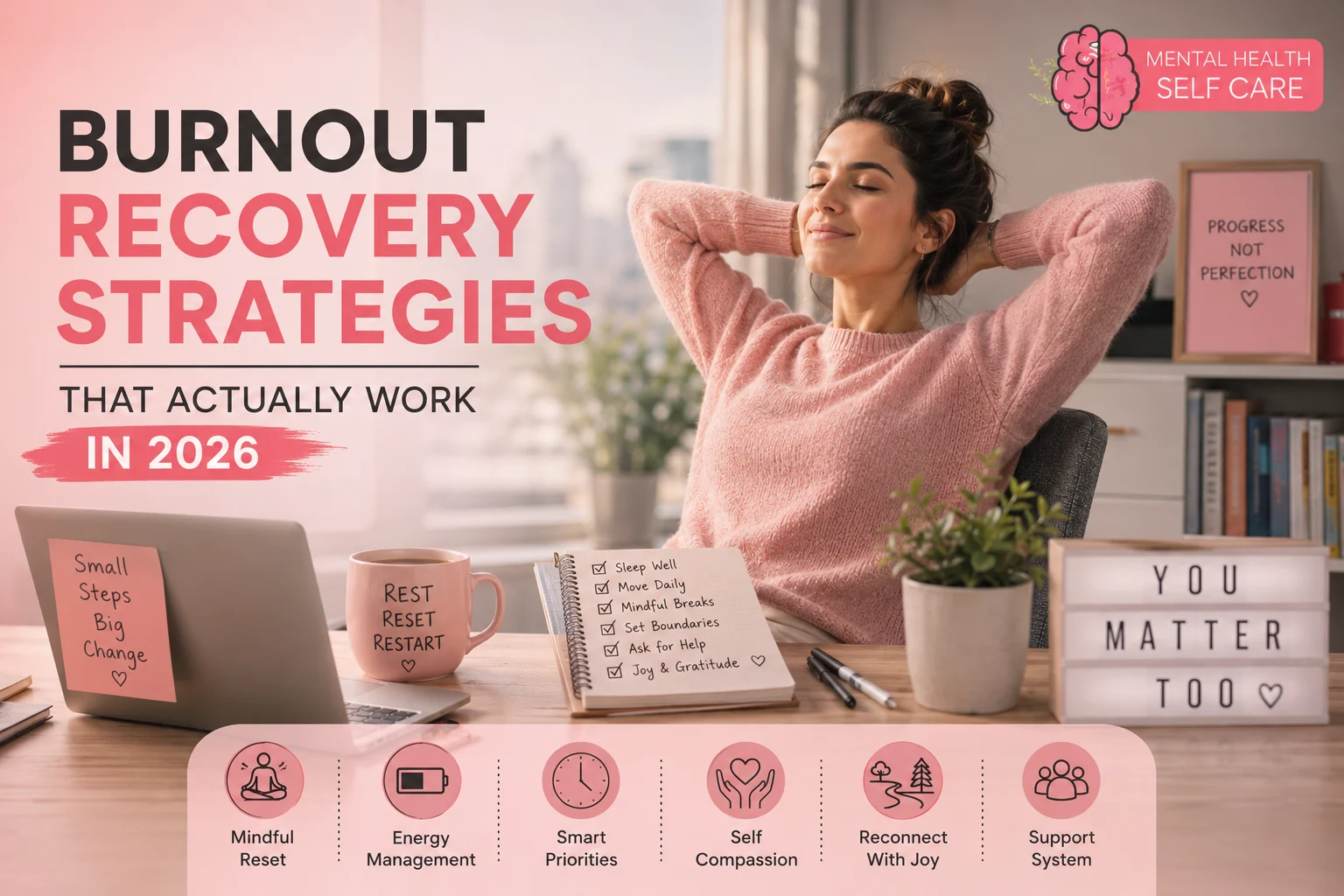
Burnout Recovery Strategies empower those who are tired and worn out emotionally, mentally, and physically after a long stretch of stress, strain, and pressure. Successful Burnout Recovery Strategies emphasize restoring mental energy, emotional stability, physical well-being, and overall well-being rather than just rest, which is a short break. In the absence of adequate recovery, burnout may persist, affecting productivity, relationships, motivation, and long-term mental health.
Burnout is now one of the most significant but misconceived mental health issues in 2026. The majority of society views burnout as something that affects only professionals who work long hours, whereas, in fact, anyone who is under constant stress may suffer from burnout.
Vulnerable people are employees and business owners, students, parents, and caregivers. The issue is that many people try to avoid burnout rather than address it appropriately.
As much as temporary relief might offer short-term benefits, there is no real recovery without taking action. To restore energy, focus, emotional stability, and quality of life, knowledge of Burnout Recovery Strategies that really work can help a person recover.
What Is Burnout?
Burnout is physical, emotional, and mental exhaustion that is due to stress and excessive demands. It may build up over time due to the following:
- Chronic workplace stress
- Emotional overload
- Constant responsibilities
- Inadequate recovery period
- Unrealistic expectations
Burnout, in contrast to temporary fatigue, affects people’s daily thinking, feelings, and functioning. By enrolling in a brain rewire course, you can find peace in life and eliminate all the mental health issues.
Why Burnout Is Increasing in 2026
The conditions of modern lifestyles predispose one to more frequent burnout than ever before. This rise is because of a number of reasons:
- Always-connected work environments
- Increased financial pressure
- Social media comparison
- Vanishing boundaries of remote working
- Rising performance expectations
- Some individuals may live several years in survival mode without noticing how their mental health is severely impacted by stress.
Signs You May Be Experiencing Burnout
Before exploring recovery solutions, it is important to recognize the warning signs.
- Constant Exhaustion: You feel tired even after resting or sleeping.
- Lack of Motivation: Tasks that once felt meaningful now feel overwhelming.
- Emotional Detachment: You feel disconnected from work, relationships, or daily activities.
- Increased Irritability: Small problems trigger frustration more easily than before.
- Difficulty Concentrating: Focus, memory, and productivity begin declining.
- Feeling Trapped: Responsibilities feel endless, and relief seems impossible.
- Physical Symptoms: Burnout can contribute to headaches, muscle tension, fatigue, and sleep disturbances.
Burnout Recovery Strategies That Actually Work
Recovery requires more than simply taking a few days off. The most effective Burnout Recovery Strategies focus on addressing the root causes while helping the mind and body heal.
Prioritize Recovery Instead of Productivity
Trying to be as productive as possible during burnout recovery is one of the biggest pitfalls people can fall into. The focus should be on recovery. This implies granting permission to yourself to:
- Slow down
- Rest without guilt
- Reduce unnecessary obligations
- Focus on healing
Improve Sleep Quality
One of the most essential Burnout Recovery Strategies is sleep as much of the recovery is done in the brain during sleep.
- Improving sleep may involve:
- Being consistent with sleep habits.
- Limiting screen time in the evening.
- Establishing a warm-up Time to Bed.
- Limiting caffeine late in the day
Healthy sleep enhances emotional control, cognitive sharpness, and the body’s rest.
Set Stronger Boundaries
Many individuals burn out because they are unable to protect their time and energy. Clear boundaries can be
- No more, say no more.
- Limiting overtime work
- Reducing unnecessary commitments
- Guarding individual recovery time.
Well-built boundaries will avoid additional depletion.
Rebuild Physical Health
The body and mind recover together.
Regular physical activity can:
- Reduce stress hormones
- Improve mood
- Increase energy levels
- Support better sleep
Even moderate activities, such as walking, can significantly support recovery from burnout.
Stop Measuring Your Worth Through Productivity
Many individuals experiencing burnout tie their self-worth directly to achievement. This creates constant pressure to perform. One of the most valuable Burnout Recovery Strategies is learning that personal value exists beyond productivity and accomplishments.
Reconnect With Enjoyable Activities
Burnout often causes people to abandon hobbies and personal interests. Recovery involves reintroducing activities that create enjoyment, curiosity, and fulfillment. These activities remind the brain that life is more than responsibilities and obligations.
Reduce Digital Overload
Constant notifications, emails, and social media exposure can keep the nervous system in a heightened state of alertness.
Reducing digital stimulation helps:
- Improve focus
- Lower stress levels
- Increase mental clarity
- Support emotional recovery
Digital boundaries have become one of the most effective Burnout Recovery Strategies in modern life.
Address Emotional Stress Directly
Most individuals pay attention to physical fatigue but not emotional fatigue. Burnout usually comes most of the time due to emotional needs that are not addressed over longer periods of time. Emotional processing, such as reflection, journaling, discussion, or professional help, may enhance rapid recovery.
Create Realistic Expectations
Perfectionism contributes significantly to burnout.
Recovery becomes easier when individuals learn to:
- Accept mistakes
- Focus on progress
- Set achievable goals
- Release unrealistic standards
This reduces ongoing mental pressure.
Seek Professional Support
In some cases, burnout can become so severe that it cannot be addressed on its own. Through professional assistance, people may receive assistance:
- Identify burnout triggers
- Develop recovery plans
- Improve stress management
- Rebuild emotional resilience
Support brings structure and responsibility in the recovery.
Which Individuals Are Most Vulnerable to Burnout?
- High-Achieving Professionals: Constant performance pressure increases the risk of burnout.
- Business Owners and Entrepreneurs: Responsibility and uncertainty create ongoing stress.
- Healthcare Workers: Emotional demands and long hours contribute significantly to burnout.
- Parents and Caregivers: Caring for others often leaves little time for self-care.
- Students: Academic pressure and future concerns can lead to burnout symptoms.
How Long Does Burnout Recovery Take?
Recovery timelines vary depending on:
- Severity of burnout
- Duration of stress exposure
- Lifestyle habits
- Support systems
- Overall health
Mild Burnout
Recovery may take several weeks with proper self-care.
Moderate Burnout
Many individuals require a few months to regain full emotional and mental balance.
Severe Burnout
Recovery can take several months or longer, especially when burnout has significantly affected physical and emotional health.
Conclusion
Burnout is not just being exhausted at the end of a hectic week. It is a severe condition of emotional, mental, and physical fatigue that can touch on all spheres of life if it is not addressed. The good news is that it can be cured with the right approach.
The most successful strategies for burnout recovery include restoring energy and emotional health, establishing healthier boundaries, restoring physical health, and confronting the origins of stress. Healing will require time, but each tiny step will be a step towards recovery.
Mental Health Self-Care is an organized approach that provides professional advice and individualized recovery strategies to help individuals overcome burnout and reclaim their lives. With support and determination, one can overcome exhaustion and build an even healthier, more balanced future.
FAQs
1. What are Burnout Recovery Strategies?
Burnout Recovery Strategies are viable tactics that can help individuals to revive themselves from the emotional, mental, and physical exhaustion due to persistent stress. All these plans will help improve sleep, reduce stress, restore energy levels and emotional balance, and create healthier work-life boundaries, resulting in long-term recovery.
2. How do I know if I am experiencing burnout?
The most common symptoms of burnout include constant tiredness, disillusionment, emotional depletion, road rage, lack of ability to concentrate, sleep disturbance and being overwhelmed by daily chores. When symptoms last for weeks or months, they can be signs of burnout rather than normal stress.
3. How long does burnout recovery take?
The recovery timeline varies with the severity of burnout. Mild burnout can be ameliorated within several weeks, whereas moderate to severe burnout requires a few months. Adherence to the best Burnout Recovery Strategies can accelerate recovery and help prevent future instances of burnout.
4. Can burnout affect physical health?
Yes. Burnout may be a cause of headache, neck tension, fatigue, digestive disorders, lowered immunity, and trouble sleeping, as well as exposure to a high risk of a variety of stress-associated diseases. That is why it is significant to reduce burnout at an early stage both mentally and physically.
5. What is the most effective burnout recovery strategy?
There will be no one-size-fits-all solution. Nonetheless, among the best burnout recovery strategies are improving sleep quality, establishing healthier boundaries, minimizing excessive stress, engaging in regular physical activity, prioritizing recovery time, and seeking professional assistance when necessary.
6. Can I recover from burnout without leaving my job?
In many cases, yes. More frequently, people may recover by making modifications to workload control, work habits, limits, and stress-control measures, or even by simply stepping away from the job. Yet, if the work environment is the primary source of constant stress, it may be necessary to make bigger career choices.
7. When should I seek professional help for burnout?
Professional support should be considered if signs of burnout manifest in your relationships, work performance, sleep, mood, or daily activities. Burnout triggers can be identified with the assistance of a mental health professional who can create specific Burnout Recovery Strategies and offer long-term recovery and emotional resilience guidance.