Why could so many teenagers always feel heavily fatigued, energy deficient and unable to concentrate despite being otherwise healthy?
They wake up tired, can hardly remain active, lose interest in their studies, and often feel mentally slow. These symptoms are usually overlooked or blamed on lifestyle, when in many cases, the real cause is Anaemia in Teens, a common but often ignored condition during adolescence.
The growing trend of poor diet, disruptions in eating patterns and the consumption of fast foods and low level of nutrition awareness towards anaemia among teens is making it a widespread issue in 2026. The adolescence years are the most crucial to development both physically and psychologically. The absence of necessary nutrients in the body such as iron, directly influences the level of energy, focus and emotional stability.
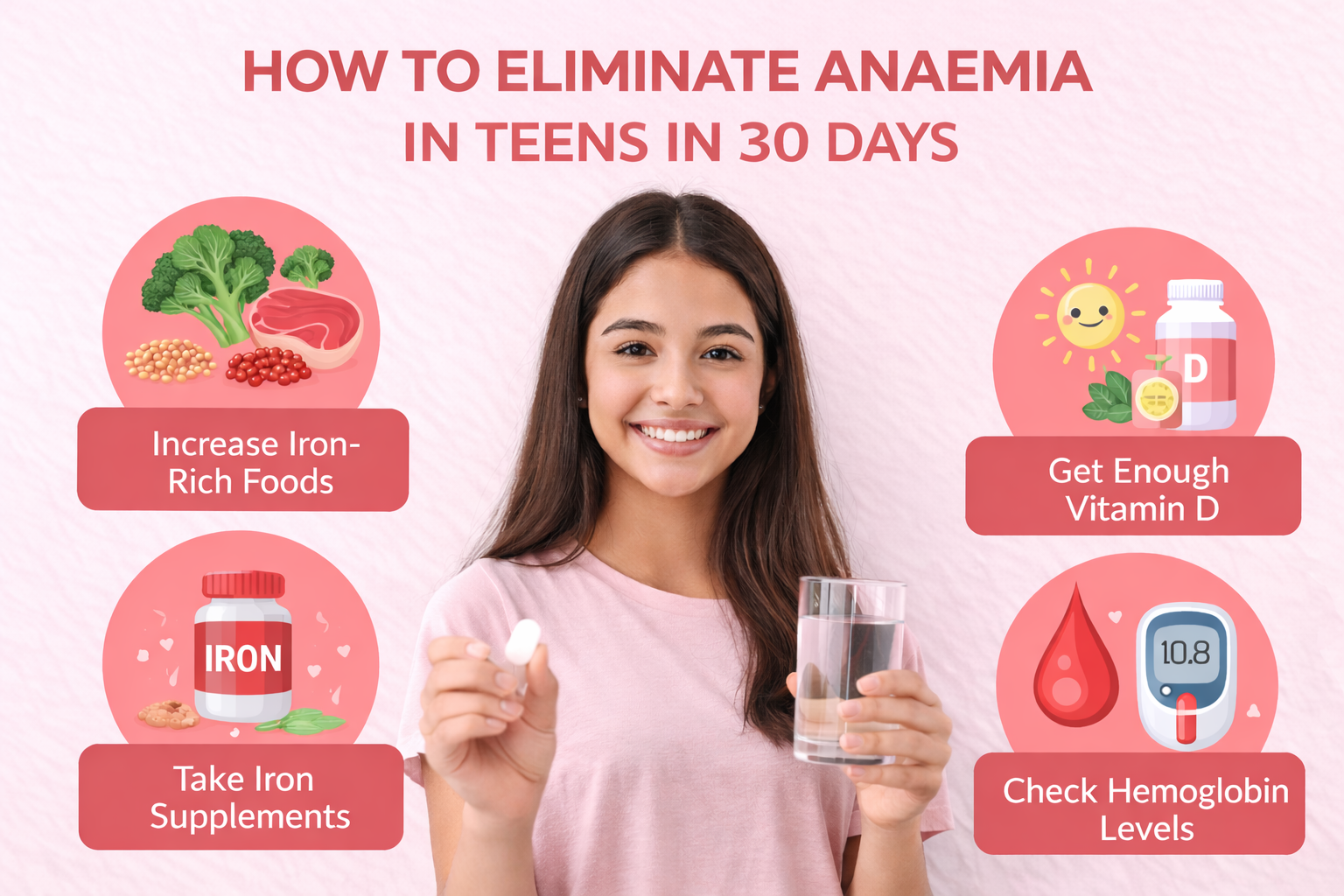
The positive side is that through the proper strategy, anaemia among the teens may be resolved within a span of 30 days. It demands a mixture of healthy food, change of routine and habit. This is not about quick fixes. It is concerning organized healing that enables the body to regain its strength in bits.
What Do You Know About Anemia in Teens?
Anemia in teens occurs when the body is not well equipped with healthy red blood cells or hemoglobin to help in the body’s transportation of oxygen. This leads to a loss of energy and over working of the body.
Common symptoms include:
- Continuous exhaustion and frailty
- Pale skin or lips
- Difficulty concentrating
- Painful breathing during exercise
- Frequent headaches
- Low mood or irritability
Not only academics but also the emotions of teenagers can be affected by this condition. This is why it is desirable to take care of anemia among teenagers.
Why Anaemia in Teens Is Increasing in 2026
Being affected by anaemia in teens has a number of lifestyle reasons:
- Eating irregularly or skipping meals
- Vast intake of processed and junk food
- Low intake of iron-rich foods
- Screen time instead of physical activity
- Poor sleep patterns
The habits slowly decrease nutrient levels in the body and this exposes a teenager to anemia.
Can Anaemia in Teens Be Improved in 30 Days?
Yes, but in an appropriate sense.
Although the recovery process may take longer and last longer depending on the severity, observable anaemia improvement in teens can occur in 30 days through:
- Increasing iron intake
- Enhancing nutrient intake
- The creation of routine exercises
- Lessening iron-blocking habits
It is all about consistency, not intensity.
Mental health counselling for anaemia focuses on managing anxiety, stress, and emotional challenges linked to low hemoglobin levels. It helps individuals cope better while supporting overall recovery and well-being.
30-Day Plan to Improve Anaemia in Teens
The focus of improving the situation on anemia in teens in 30 days does not lie in a radical transformation. It is about regular, repetitive practices that slowly replenish iron, enhance absorption and replenish back energy. It does not happen overnight because once the appropriate inputs are provided on a daily basis the positive changes begin to manifest themselves within a few weeks.
Well, we can work this down into a step-by-step plan that can work in reality during one week at a time.
Week 1: Awareness, Correction, and Foundation Building
Target: Cessation of additional deterioration and the initiation of fundamental recovery.
Here is where the greater number of teens fall amiss, they attempt to mend it all at one time. Week 1 is the one concerning the cleaning-up habits cleaning and introducing necessary nutrition.
Focus Areas:
- Set schedule in meals (do not skip breakfast)
- Limit junk and processed food
- Start basic iron-rich intake
What to include daily:
- 1 serving of green leafy vegetables (spinach, methi)
- 1-2 dates or little jaggery consumption
- 1 serving of beans, chickpeas or dal
- 1 fruit such as pomegranate or banana
Habits to build:
- Eat 3 proper meals daily
- Drink enough water
- Sleep at least 7–8 hours
What improves:
- Slight reduction in fatigue
- Better appetite
- Preliminary stabilization of energy
This week forms the groundwork on how to ameliorate anaemia among teens.
Week 2: Iron Boost + Absorption Optimization
Purpose: Boost iron consumption and make sure that this is absorbed by the body.
A lot of adolescents who take iron do not absorb it. This is the week that aims at rectifying that.
Add to routine:
- Orange, amla, lemon water Vitamin C in food (lemon water)
- Micronutrients Iron + vitamin C (spinach + lemon)
Strictly avoid around meals:
- Tea or coffee within 1 hour
- Packaged snacks
Upgrade meals:
- Add beetroot, lentils and sprouts
- Add nuts such as almonds or peanuts
Habits to strengthen:
- Eat meals on time
- Do not have long intervals between meals.
What improves:
- Better nutrient absorption
- Slight increase in stamina
- Weakness or less dizziness
This is the phase that enhances anemia curing in adolescents.
Week 3: Strength Building and Routine Stabilization
Concentration: Change nutrition into energy and make it consistent.
It is time to start responding. This week is centered around translated better nutrition to actual strength.
Daily routine:
- Light physical activity (2030 min walking or physical activity)
- Consistent meal timing
- Hydration (6–8 glasses of water)
Add to diet:
- Breakfast with a high level of iron (poha with peanuts, vegetable upma)
- Lunch (dal, roti, vegetables)
- Evening snacks (fruits, nuts)
Lifestyle changes:
- Limit the amount of time spent before bed on the screen
- Sleep and wake at fixed times
What improves:
- Observable rise in energy
- Improved focus in research
- Reduced mental fatigue
This measure enhances the recovery of anemia in the teenagers and builds steam.
Week 4: Stability, Maintenance, and Performance Improvement
Intention: Prevention of relapse and lock in.
The last week will be on ensuring the improvements do not disappear.
Focus areas:
- Carry on the diet without interruption
- Maintain daily routine
- Monitor energy and mood
Refine habits:
- Plan meals in advance
- This is because you should not revert to junk food patterns
- Be regular with sleeping and movement
Optional additions:
- Iron supplements (recommended only)
- Frequent health examination where necessary
What improves:
- Fixed energy levels in the day
- Better academic focus
- Higher mood and confidence
- Stronger physical stamina
At the conclusion of this stage, teenage anemia can be effectively and quantitatively improved.
Weekly Progress Snapshot
- Week 1: Reduction in fatigue, increase in appetite.
- Week 2: Improved absorption, weaker.
- Week 3: Vigor and concentration are enhanced.
- Week 4: Stability, consistency, and confidence return
Best Foods to Improve Anaemia in Teens
The best and natural mechanism of treating anaemia among teens is through food. However, this is the point on which the majority of individuals make their mistake, they concentrate solely on the iron rich foods without comprehending the absorption, combinations and consistency.
Iron is not the only thing that the body requires. It requires that it has the correct combination of nutrients, consumed in the correct manner, at the correct period. With the establishment of that balance, recovery is quicker and is more consistent.
Let’s break this down clearly.
1. Iron-Rich Foods That Directly Improve Hemoglobin
These serve as the basis of enhancing anemia in adolescents. They aid in raising the iron level in the body and this is directly correlated to the production of red blood cells.
Best options:
- Green leafy vegetables spinach, methi, etc
- Beetroot (stabilizes the blood)
- Lentils (dal), chickpeas and kidney beans
- Soybeans and tofu
- Jaggery (natural iron source)
- Dates and raisins
How to consume effectively:
- Eat no less than one food rich in iron every main meal
- Turn things around every day so as not to be predictable
- Eat fresh instead of processed
These kinds of foodstuffs refill the iron gradually by taking them regularly.
2. Vitamin C Foods That Boost Iron Absorption
This is what is important to note, iron alone is insufficient. To be able to absorb Vitamin C, the body requires it.
In the absence of this, anaemia among teens may not be optimally addressed with an excellent diet.
Best Vitamin C sources:
- Lemon and lemon water
- Oranges and sweet lime
- Amla (very high in Vitamin C)
- Tomatoes
- Guava
How to combine:
- Add lemon to either dal or vegetables
- Consume the fruit right after mealtime
- Add uncooked salads to the meals
This basic combination can increase the efficacy of iron absorption two times.
3. Energy-Boosting Foods to Reduce Fatigue
Anaemia does not merely reduce iron, but it depletes the energy. These are the foods that assist in the restoration of stamina during the recovery process.
Best options:
- Bananas (quick energy source)
- Whole grains (roti, brown rice, oats)
- Nuts such as almonds, peanuts, walnuts
- such seeds as sunflower and pumpkin
Benefits:
- Improve daily energy levels
- Reduce weakness and fatigue
- Support active lifestyle
These foods enable the teens to work normally as well as enhancing anemia among the teens.
4. Protein-Rich Foods for Blood Cell Production
Protein plays a role in the production of healthy red blood cells.
Best sources:
- Eggs
- Milk and curd
- Paneer
- Lentils and pulses
- Lean meat (if non-vegetarian)
Why it matters:
Favors the manufacture of hemoglobin
Enhances the strength of the body
Helps faster recovery
Absence of sufficient protein reduces the pace in which anaemia is improved among teens.
5. Fruits That Support Blood Health and Digestion
Fruits are not only a source of vitamins, they enhance digestion that is also crucial in the absorption of nutrients.
Best fruits:
- Pomegranate (which is commonly associated with the health of blood)
- Apples
- Bananas
- Papaya
Benefits:
- Improve digestion
- Support iron absorption
- supply energy shops with natural sugars
The daily intake of fruits contributes to the consistency in the recovery.
6. Traditional and Natural Additions That Help
There are quite basic standard foods that will lend themselves quietly to improvement.
Useful additions:
- Jaggery with roasted chana
- Dates soaked overnight
- In moderation beetroot juice
- Sprouts salad
These can be non-problematic to introduce and well effective in the long run.
7. Foods to Avoid That Block Iron Absorption
This is as important as the food to consume.
Some foods decrease the process of absorption in the body and can delay the healing process of anaemia in adolescents.
Avoid or limit:
- Immediately after meals, tea or coffee
- Packaged and junk food
- Excess sugar and soft drinks
- Highly processed snacks
Rule to follow:
- Never take tea/coffee one hour before or after meals.
8. Ideal Daily Food Structure for Anaemia in Teens
In order to make this work, a simple everyday plan would be:
Morning:
- Soaked dates or raisins
- Fruit (banana or apple)
Breakfast:
- Poha / peanuts mix / vegetable upma / eggs.
Lunch:
- Roti + dal + green vegetables
- Salad with lemon
Evening Snack:
- Nuts or fruit
Dinner:
- Protein and vegetable light meal.
Habits That Worsen Anaemia in Teens
It is also necessary to avoid some habits.
- Skipping breakfast
- Regular eating of junk food
- Consumption of tea/coffee following meals
- Sleeping late
Lack of physical activity
The elimination of these habits contributes to acceleration of improvement.
When to Seek Medical Support
Where lifestyle changes are effective, there are cases that need medical intervention.
Seek help if:
- Fatigue is severe
- Symptoms persist after 30 days
- Dizziness or weakness is frequent
A combination of medical assistance and lifestyle adjustments is the best intervention in anemia among teens.
Role of Mental Health in Anaemia Recovery
Fatigue also does not only have a physical impact but it also has an influence on the mind.
There are potential signs and symptoms in teenagers with anaemia, and they include:
- Low motivation
- Irritability
- Difficulty focusing
- Reduced confidence
Mental support has a significant recovery value.
Why Choose Mental Health Self Care for Support?
There is Mental Health Self Care, which assists the teenagers get over the mental strain of hopelessness and insufficiency.
1. Emotional Support for Low Energy Phases
- Helps reduce frustration
- Improves mental clarity
2. Structured Guidance for Daily Routine
- Builds discipline
- Encourages consistency
3. Confidence Building
- Helps teenagers feel capable again
- Improves self-belief
4. Focus Improvement Techniques
- Supports academic performance
- Reduces mental fatigue
Conclusion
Anemia among teens is not an impossible occurrence as it seems, and this condition can be treated with the correct approach. With the help of correct nutrition, regular habits, and psychological assistance, visible progress will be achieved in 30 days.
The key is not perfection. It is consistent.
Paying attention to minor everyday changes, teenagers will be able to re-energize and restore their powers, become more concentrated and balanced in their day-to-day life. It becomes not only possible, but also sustainable to recover from anaemia in teens with the help and awareness.
Because when the body gains strength, the mind follows.